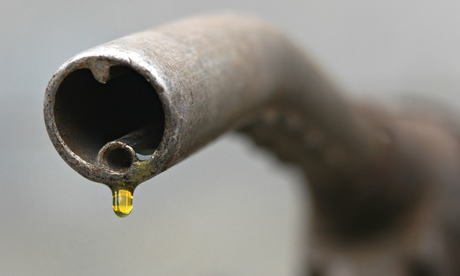
Plunging prices at Britain’s petrol pumps could drag inflation below zero in the runup to May’s general election, according to forecasters the Ernst and Young Item Club, putting fresh pressure on Labour’s claim that households are facing a “cost of living crisis”.
Crude oil prices have halved since last summer and inflation in the UK has declined sharply as a result, hitting just 0.5% in December.
Item’s Peter Spencer said falling prices in shops and on forecourts in early 2015 would be a “shot in the spending arm” for consumers, boosting economic growth, which he expects to be 2.9% in 2015. “Not every economy will be a winner from oil prices collapsing, but the UK certainly is,” he said.
The Tories have seized on falling inflation to ridicule Labour’s focus on a cost-of-living crisis. But Ed Miliband has insisted he will stick to his guns. He told the Yorkshire Post last week: “I think most people feel, yes it’s good that petrol prices have fallen, but it doesn’t sort out the fundamental problems of this economy and the fundamental reasons why people are hard-pressed.”
Item’s prediction comes as Mario Draghi, president of the European Central Bank, prepares to unleash the radical policy of quantitative easing (QE) at its council meeting on Thursday, in a bid to combat sliding prices and looming recession across the eurozone.
The ECB is expected to announce it will buy at least €500bn of eurozone government bonds from banks and other investors with electronically created money, hoping to keep long-term interest rates low.
Green campaigners in the UK are urging European policymakers to take a different approach. In a paper published today, the Green New Deal group, which includes the Green party and the Tax Justice Network, calls for the money created by the ECB to fund environmentally friendly technologies and new green infrastructure to create jobs and growth, not to buy up bonds.
A Green New Deal group member, Caroline Lucas MP, said: “Next week the UK and the rest of Europe stand at a crossroads. They can go down the usual QE path that benefits the banks and the asset rich, or they can ensure a greener future funded by a massive ‘green infrastructure QE’ programme and the effective collection of unpaid taxes.”