If we’d closed our eyes we might have imagined we were standing below coastal cliffs, rather than among crowds wandering through the Sunday market on the quayside. The cacophony of hundreds of pairs of kittiwakes, nesting on the iron girders of the Tyne bridge and stone ledges of surrounding buildings, has become so familiar many passersby barely give them a second glance.
But there are few places where the behaviour of these attractive gulls can be seen at such close quarters.
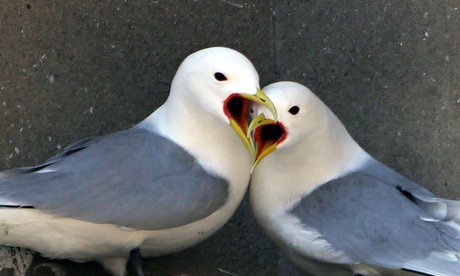
We stood next to the old Guildhall and watched the ritual greetings of a pair nesting just three metres above our heads. There was something touchingly human about their display of affection; first the excited clamour, as though greeting a long-lost friend, then a display of rubbing beaks and mutual preening.
The birds seem not to be universally welcomed by occupants of the concrete and chrome development at the quay. It says much for the good nature of this city that guano-spattered pavements, sporadic bouts of ear-splitting noise and a faintly fishy aroma, are tolerated with a degree of pride once Geordies realise they are hosting the largest inland nesting colony of kittiwakes worldwide.
But there’s another quieter, sylvan, side to Newcastle’s credentials as a wildlife friendly city, as we found when we continued our walk down to a tributary of the Tyne, once a byword for industrial pollution. The last petals were falling from the blossom in the community orchard at Ouseburn city farm as we crossed the old humpback stone bridge and walked under the Byker viaducts.
Hawthorn hedges planted around the sheep pastures on the site, which was once a refuse tip, had been neatly laid over the winter, the plants’ shoots partially cut and interwoven to produce a stockproof barrier.
Such hedge-laying skills are seldom seen in rural Britain, let alone in the heart of a city. The last time they were practised here might well have been in the days before technology, coal and capital turned Newcastle into a powerhouse of the industrial revolution.