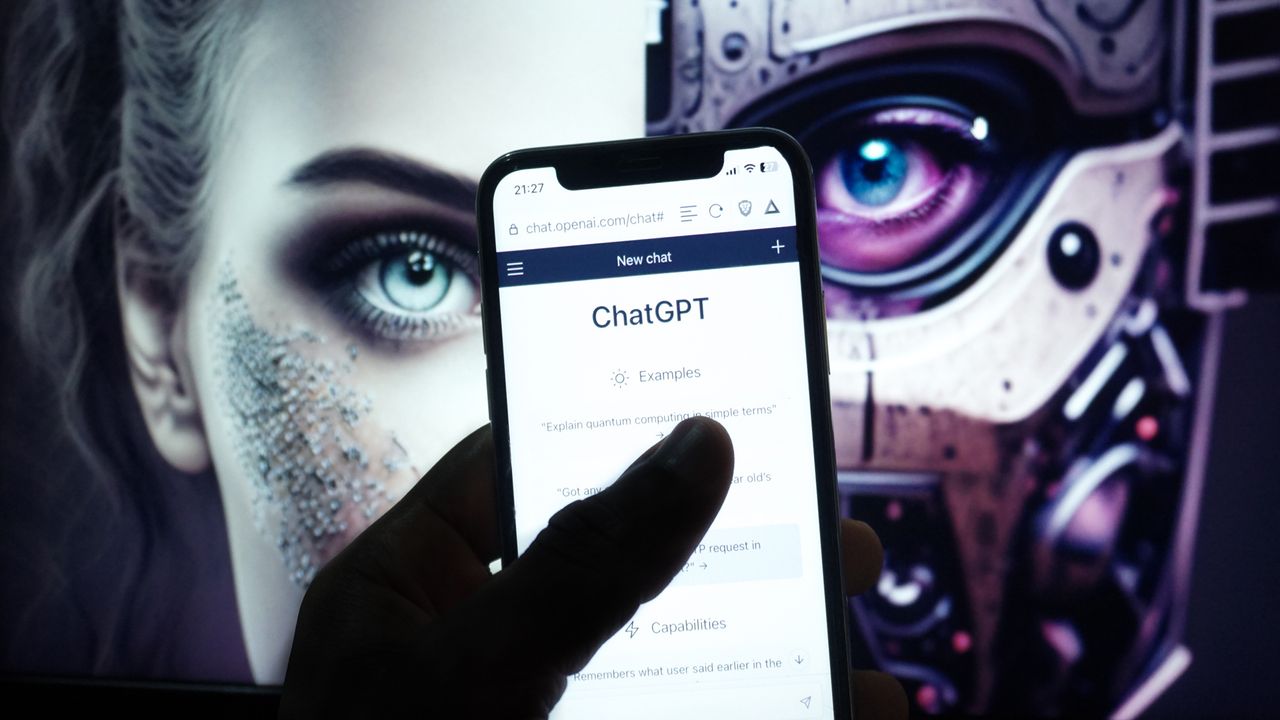
Since ChatGPT’s explosive debut in late 2022, millions of people have used it to help write everything from emails and essays to wedding vows and apology texts.
But now, researchers are noticing something surprising: AI is doing more than helping us write to a point of actually changing the way we speak.
A recent analysis by researchers at the Max Planck Institute, highlighted in Scientific American, reveals that words commonly used by ChatGPT, like “delve,” “tapestry” and “nuance,” are showing up more frequently in everyday conversation.
After examining over 700,000 hours of transcribed podcasts and YouTube videos, researchers found a statistically significant uptick in GPT-style vocabulary, even in people who may not realize they’re parroting a chatbot.
Welcome to the era of AI-inflected speech.
Why this is happening

Large language models like ChatGPT are trained on vast amounts of data, and their outputs reflect a specific, polished tone, one that leans academic, thoughtful and often verbose.
If you’ve ever asked ChatGPT to rewrite something, you’ve likely seen words like “explore,” “compelling” or “robust” pop up.
Now that AI tools are becoming a default writing assistant for everything from school assignments to Slack updates, those patterns are starting to seep into human language — not just online, but out loud.
“The language of ChatGPT is infectious,” said Jon Kleinberg, a computer scientist at Cornell University. “People are drawn to it because it feels authoritative.”
And that draw is measurable: in one example, use of the word “delve” jumped 51% since ChatGPT’s public release.
The pros: better communication, especially for learners

This influence isn’t all bad. In fact, educators are already seeing how ChatGPT can boost clarity, especially for English language learners or students who struggle with structure.
One study from Smart Learning Environments showed that students who used ChatGPT as a writing coach improved their coherence, vocabulary range and grammar.
“AI is helping users write more clearly and confidently,” said Christine Cruzvergara of Handshake, who studies how AI is reshaping entry-level jobs. “That can be empowering, especially for people who feel intimidated by formal writing.”
For non-native speakers, AI-generated language can offer a consistent model to follow; a kind of real-time tutor that never gets tired.
The cons: we might be losing our voice

But there’s a flip side. As AI becomes a silent co-author in our day-to-day lives, our personal writing styles may begin to fade. If everyone’s emails, social posts and even texts start to use the same GPT-style phrasing, we risk sounding less like ourselves and more like… well, a chatbot.
This is especially true in emotionally charged moments. Some people using AI to help write heartfelt messages, like breakups or apologies, may find their partners appreciate the sentiment, but the writing itself often feels "off." Essentially, the extra polish comes at the cost of emotional nuance.
There’s also the question of linguistic diversity. ChatGPT, like many AI tools, defaults to Standard American English.
Over time, that could diminish the use of regional dialects or cultural idioms, subtly eroding the richness of human expression.
Should we be worried?

Probably not. But, this is certainly a wake-up call reminding us to be more aware. AI isn’t replacing our voice, but it is influencing it.
Just as the internet once reshaped slang and shortened attention spans, AI is now adding its own fingerprint to the way we communicate.
If you rely on ChatGPT or similar tools, it’s worth revisiting what you’ve written. Does it sound like you? Could it use a personal anecdote, a bit of humor, or a sharper edge?
Think of AI as a helpful first draft, not the final word.
The takeaway
AI is making us more articulate, but maybe a little less human. As tools like ChatGPT continue to shape how we write and speak, the challenge isn’t to reject them but to remember who we are without them.
Because while ChatGPT can help you craft a flawless sentence, only you can make it feel real by adding your own human touch.
Follow Tom's Guide on Google News to get our up-to-date news, how-tos, and reviews in your feeds. Make sure to click the Follow button.