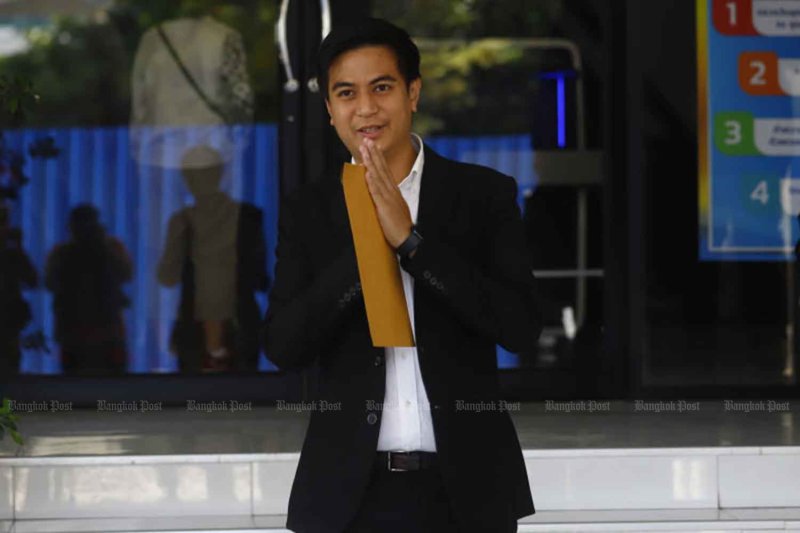
A fully elected Constitution Drafting Assembly (CDA) remains a viable option for charter reform, says People's Party (PP) list-MP Parit Wacharasindhu, after Constitutional Court judges clarified that a recent ruling does not bar the public from directly electing members of such a body.
In a Facebook post on Saturday, Mr Parit said a meeting on June 18 between MPs, senators and judges clarified ruling No.18/2025 and provided greater flexibility in designing the constitution-writing process.
The ruling says the public cannot directly elect those who draft a constitution. The judges' remarks were not part of a formal ruling by the full court but were offered as guidance on how the decision should be understood.
Mr Parit said the judges explained the restriction applies only to a committee responsible for drafting the constitution's content, not to a publicly elected CDA.
He said the clarification supports the party's proposal for an elected CDA and gives lawmakers more options in designing the process.
"This clarification is highly significant because it helps ease concerns among members of parliament and gives political parties more options," he said.
Mr Parit said the party may revise its charter amendment bill to include a fully elected CDA following the clarification.
The opposition party earlier submitted two constitutional amendment bills proposing mechanisms for drafting a new constitution.
Bhumjaithai (BJT) list-MP Nikorn Chamnong cautioned against treating the clarification as a formal Constitutional Court ruling.
He said any charter rewrite must stay within the framework of the 2017 Constitution and previous court rulings, including referendum requirements.
Mr Nikorn said he supports a model in which parliament selects members of the drafting body while ensuring public participation, in line with the party's amendment bill.
Mr Nikorn also questioned the value of electing a CDA whose members would have no direct role in drafting the charter, saying it would not amount to genuine public participation.