CHARLOTTE, N.C. _ A day after President Donald Trump vowed to move the Republican National Convention, Charlotte's city attorney said Wednesday the city is still "moving forward as if the convention will be in Charlotte."
"We do need to clarify the intentions of the RNC in terms of exactly what they plan on doing here in Charlotte," City Attorney Patrick Baker told reporters. "Right now, as of this very moment, all the parties are moving forward as if the RNC will be in Charlotte. But ... what the convention actually looks like could change, but we're moving forward."
Baker said he's talking to GOP and convention officials Thursday. "We need to hear from the RNC in very plain terms what their expectations are as it relates to fulfilling their obligations under the contract," he said.
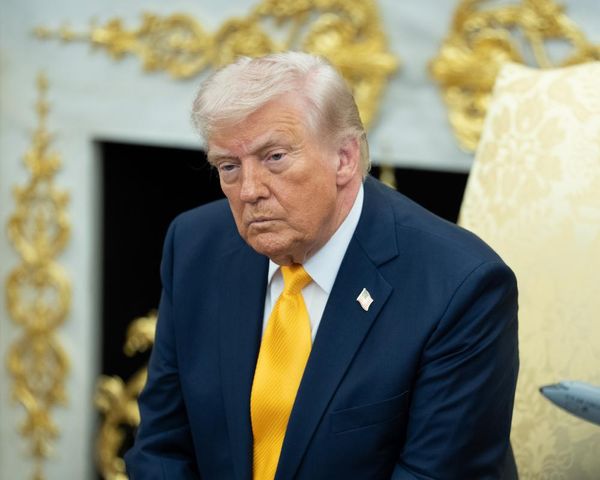
Baker's comments came a day after Trump tweeted that because Gov. Roy Cooper can't guarantee full attendance at Charlotte's Spectrum Center, "we are now forced to seek another State to host the 2020 Republican National Convention." The four-day event is scheduled to start Aug. 24.
Cooper, a Democrat, had told the president that because of the coronavirus pandemic he couldn't guarantee a packed arena would be allowed.
In a conference call Wednesday night, the Republican National Committee's executive committee voted to continue talks with Charlotte even while looking at other cities.
"The RNC's Executive Committee has voted unanimously to allow the official business of the national convention to continue in Charlotte," said RNC Communications Director Michael Ahrens. "Many other cities are eager to host the president's acceptance of the nomination, and we are currently in talks with several of them to host that celebration."
The situation appears to leave the convention in limbo, even as party leaders scramble to find a new host city. They're set to visit Nashville Thursday. They're also planning to tour New Orleans, Jacksonville, Orlando, Dallas and Phoenix, an RNC official told McClatchy.
In a statement shortly after the president's Tuesday night tweets, GOP Chairwoman Ronna McDaniel said Charlotte would continue to host the "official business of the convention."
That could include everything from meetings of the platform and rules committees to the actual roll-call nominations of President Donald Trump and Vice President Mike Pence.
Trump's acceptance speech would come elsewhere. It would be the first time a party convention has been held in two cities since 1860, when Democrats met first in Charleston and then, after a dispute over their slavery plank, in Baltimore.
At least part of the convention business would be held in Charlotte to abide by the city's contract with the GOP's Committee on Arrangements, party officials told The New York Times. There is no concrete definition of what constitutes a convention in the contract.
"There are various obligations of the parties," Baker said Wednesday, "and as the City of Charlotte, we have met all of our obligations. But ultimately ... there is the expectation that each party will continue to perform as scheduled under the contract."
Asked if the city would stop spending money on the convention, Baker said, "That's one of the concerns we have."
"We're now at June 3. This is high-gear season for the convention. That's why it's important to understand exactly what the communications that came out yesterday mean going forward."
He said the city already has spent $14 million that it expects to be reimbursed by a federal security grant.
Trump and Cooper have engaged in a high-profile sparring match over the convention, with the Democrat Cooper insisting on patience while the data and science on the virus develop, and Trump and Republicans demanding that he be allowed to speak to a packed arena in August, regardless of the public health unknowns.
Nationally, Democratic governors have been slower to reopen their states' economies than Republicans, who have followed the president's lead in pushing to lessen pandemic restrictions. All the states that officials have discussed moving the RNC to are led by Republicans.
Tariq Bokhari, one of two Republicans on the City Council, said the city and convention are bound by contract, at least for now.
"Right now, contractually speaking, we as a city, and the Republican National Convention as an organization _ two parties which don't include the governor or the president _ we are still locked into a very tight financially obligated contract," he said. "So until someone breaks that contract, we have to continue moving forward."
Unless Cooper and the RNC reach a last-ditch compromise, Bokhari said, he believes that within the next 48 hours the RNC will figure out a path to hold the convention's administrative procedures and formalities in Charlotte, while holding the flashy speeches in another city.
He said that could meet the RNC's contractual obligations while funneling the economic gains that the city anticipated from the event to another city.
"They have all the leverage and we have everything to lose," Bokhari said. "Let's figure out how to let calmer minds prevail here and bring people back to the table."
Trump's tweets threw into question nearly two years of planning for the convention, which at one time was expected to draw 50,000 people to the city and generate more than $150 million in economic benefits, which to many businesses loomed as a lifeline amid an economic downturn.
How much of the convention "official business" would remain in Charlotte is unclear.
"Technically all a convention needs to do is to nominate a president and pass the rules that are going to govern the party until the next convention," said Philip Klinkner, government professor at New York's Hamilton College. "My guess is the RNC is going to streamline everything. You're not going to see a lengthy debate about rules, credentials or a platform. You could get it done in an afternoon."
A two-city format means that both parties will host non-traditional conventions. Democrats are planning a more virtual convention in Milwaukee the week before Republicans are set to gather.
"It does break precedents but these are unprecedented times," said political scientist Sandy Maisel of Maine's Colby College. "What the president is doing is finding a way he can get the kind of press and attention he wants to from this convention, and the Democrats are still trying to figure that out."
Josh Putnam, a North Carolina-based political scientist who blogs about the presidential selection process, said this year "is going to potentially usher in a new era of these."