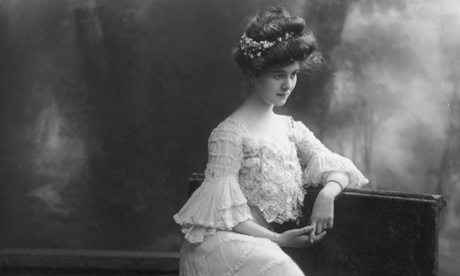
The House of Worth, with which is incorporated that of Paquin, is a hundred years old. It has given the Victoria and Albert Museum some 23,000 drawings from its records, and a selection from these is now on show. Apart from a gap over the eighties they provide a continuous history of fashion. Unfortunately no dresses are to be seen; the habit of putting labels in them is comparatively recent.
Charles Frederick Worth was the first person to make women come to him to be told what to wear. Previously dressmakers went to the houses of ladies and accepted instructions. Worth was the first fashion dictator. A Lincolnshire man who had been a punter and an apprentice at Swan and Edgar’s he risked offering Princess Metternich a couple of dresses at £12 a time and won the custom of the Empress Eugénie. Those crinolines in which she parades over the sands of Trouville in Boudin’s paintings are certainly his creations.
Worth’s firm face and wandering moustache are recorded with deadly realism in a photograph. His subjects have quiet faces and enormous and elegant crinolines in the sixties; bustles make them a trifle odd in the seventies, and fake flowers and massive bows make them a matter of upholstery soon after. It is strange how these drawings can sometimes call up the ghost of a woman looking triumphantly beautiful, and at others the grumbling voice of a husband wondering why and how she could make herself look so preposterous. A group of deliberately fancy dresses of 1865 is charming in its official fantasy. One good lady has an Egyptian crinoline and another must be Eve because she has let her hair down and is wrapped up in a snake.
The faces inside the clothes smirk sweetly in the seventies, leer alarmingly under dark lids in the twenties, and are carefully blank in the forties and fifties. Stomachs (or should it be bellies?) are abnormally pulled back in the nineties - a hangover of the Grecian bend - and abnormally shoved forward in recent days. Bosoms go in and out according to taste and fancy rather than anatomy, but are at their most incredible at about the turn of the century, when they jutted out like wide, sloping shelves.
Over the period waists expand, contract, rise and fall, and fade away entirely in ways which justify completely the wildest phrases about the mystery of woman. The show is an invaluable corrective to any ordinary person’s memory of fashion and corrects the dubious history supplied by the stage. Men should note that no new invention can be wilder than those which have gone before; and that many of the most outrageous, viewed in a calm, historical perspective, are rather beautiful.