Summary
- Politicians from all wings of the political spectrum have united to pay tribute to Charles Kennedy following the news that the former Lib Dem leader died at his home at Fort William in Scotland yesterday. He was 55. Colleagues and opponents alike have expressed deep sadness at the news, and their tributes have stressed Kennedy’s decency, his good nature, his remarkable gifts as a communicator, his popularity, the courage (and, in hindsight, wisdom) of his opposition to the war against Iraq and that fact that under his leadership in 2005 the Lib Dems achieved their best general election result since the party was formed in the late 1980s. Dozens of tributes are here on this blog, but you can also find a round-up here.
-
The cause of Kennedy’s death has not been announced, although Kennedy’s struggle with alcoholism was well-known and led to his resignation as Lib Dem party leader nine years ago. But the police have said there were no suspicious circumstances. There are conflicting accounts of Kennedy’s mood following his defeat in the general election. Alex Salmond, the former SNP leader, told Sky earlier that this was a “very dark time” for Kennedy. (Salmond has also been strongly criticised by some commentators for saying Kennedy was not fully committed to the Better Together campaign last year.) But others have said Kennedy was in good form after the election (see 10.03pm and 2.03pm) and Kennedy himself was making plans for his political future (see 9.02am and 1.30pm.)
That’s all from me for today.
My colleague Jamie Grierson will be writing the politics blog tomorrow because I’ve got to be away for family reasons.
Thanks for the comments.
Updated
Here’s David Cameron paying tribute to Charles Kennedy.
Alex Salmond, the former Scottish first minister, is not the only person to get into trouble over his Charles Kennedy tribute. I’ve mentioned the row about his comment about Kennedy not being fully committed to the Better Together campaign already. (See 1.06pm.) On the scale of political insensitivity, this seems a relatively minor blip, although that has not stopped Alex Massie going into full attack mode in a post for Coffee House. And now it transpires that a Labour member of the Welsh assembly, Jenny Rathbone, has been criticised for describing Kennedy’s death on Twitter as a “sad end to demise of Lib Dems”.
Chris Rennard, who was the Lib Dems’ chief executive when Charles Kennedy was leader, has written a tribute on Facebook. Here’s an extract.
[Kennedy] had the courage to leave Labour, to be part of a new party, the SDP, trying to bring hope to British politics, the courage to help it to form the Liberal Democrats, and then the courage and skill to lead it in united opposition to the unprincipled and illegal invasion of Iraq ...
Many of us tried to help him deal with his health problems and much regret that we failed. When I was chief executive, and the party was becoming divided over them, I told him that what the party really wanted was “Charles Kennedy without alcohol.
The tragedies ... go some way to explaining the extraordinary stress under which Kennedy found himself in recent years, culminating in the death of his father last month.
His mother, Mary, had died in 2013. A year later – close to the anniversary of their mother’s death – his older brother, Ian, was paralysed after a fall in his kitchen, leaving him in need of 24-hour care.
A sense of devotion and duty meant Kennedy regarded himself as his family’s primary carer, and wrestled with the pressure of supporting his paralysed brother and elderly parents exacerbated his struggle with alcoholism and what many of his friends and allies feared were periods of undiagnosed depression.
His friends and senior officials within the party complained privately that he was unwilling to seek or accept professional help for his alcoholism; some suggested his depressive bouts and drinking were accepted within the Lochaber community as a private matter rather than a source of shame.
But the drinking, depression and his sense of family duty meant he was frequently called off events and appointments and the party was constantly worried he would fail to appear at speaking engagements.
Updated
Following the anecdote about Charles Kennedy and Nicola Sturgeon bunking off to watch Trainspotting (see 2.51pm), here is what the Trainspotting author Irvine Welsh has to say about Kennedy.
Whatever your politics, (and no politician will always get it right or be beyond criticism) Charles Kennedy was one of the good guys.
— Irvine Welsh (@IrvineWelsh) June 2, 2015
Charles Kennedy saw through the bullshit of the Iraq war and spoke up, while other immoral cowards danced along or kept quiet.
— Irvine Welsh (@IrvineWelsh) June 2, 2015
Charles Kennedy was one of the few politicians who could turn an appearance on Have I Got News For You into an electoral opportunity, as I mentioned earlier. (See 12.58pm.) Richard Wilson, the show’s executive producer, has issued this tribute.
Charles Kennedy was one of the few politicians prepared to appear on Have I Got News For You and show himself as he really was. His popularity was due, in part, to the fact that he really was a decent person with a sense of humour, especially about himself.
Here’s the full quote from Nicola Sturgeon on her moment playing hookie with Charles Kennedy in Australia. (See 10.57am.) She said:
I have some very fond personal memories of Charles. I had the privilege of spending some time with him on a political study visit that we made together to Australia in the mid-1990s.
Perhaps my fondest memory from that visit - if perhaps a slightly bizarre memory - was of the two of us skiving off one day to watch Trainspotting in a Melbourne cinema.
I think we were the only two Scots in the audience at that time, so we drew some very strange looks from other people as we were uproariously laughing at lots of jokes that nobody else in the cinema were even beginning to understand. That’s a small, but very special memory that I certainly will always treasure.
It is said that Charles Kennedy was the only Lib Dem MP who voted against going into coalition when the parliamentary party met to decide this in 2010. That was who I remembered it this morning. But a correction sent out by the Press Association alerted me to the fact that this was wrong. Kennedy abstained, rather than voted against, and he was not alone.
The FT’s Jim Pickard says two Lib Dem MPs also abstained: John Pugh and Andrew George.
So turns out that three Lib Dems abstained against coalition but only Kennedy went public. Others were Pugh and Andrew George am told.
— Jim Pickard (@PickardJE) June 2, 2015
Here’s Paddy Ashdown on Charles Kennedy.
Lord Maclennan, the former SDP leader and a friend of Charles Kennedy’s, told the World at One that he thought Kennedy would stay in national politics after the election. There was speculation that Kennedy would go to the Lords, although quite how many peers Nick Clegg will be allowed to nominate is not clear, because there 100 Lib Dem peers already, and their general election performance will not make it easy for them to claim they deserve more.
Maclennan also said that he had lunch with Kennedy 10 days ago. Kennedy was in London to see his son. “He was in good form,” Maclennan said.
Shirley Williams, the former Lib Dem leader in the Lords, was on the World at One speaking about working with with him when he was party leader. She said his drinking caused serious problems, but that his talent mostly compensated for this.
You could never be quite sure [whether] he would show up on a great occasion, and you were always living with uncertainty, always wondering if he was going to be there. There were occasions when he did not come at all, or he came and he was not really in a fit state to deal with the issues he was trying to talk about. But he was so wonderful when he did get there that you forgave almost everything. He was just a staggering human being.
She also said Kennedy was a “really truly great man, a man at one time I would have thought might one day be one of the best prime ministers that the United Kingdom had ever had”.

The Independent’s Sean O’Grady, who used to work for the Lib Dems, has written a tribute to Charles Kennedy. He says Kennedy was not very strategic, but that this was not necessarily a problem.
His politics weren’t mine; he was too europhile for a start. He didn’t strategise and he didn’t philosophise (his one book on the subject had been ghost written). He was, though, a great tactician. He would have carried on campaigning to the left of Labour, but would not have governed to the right of Labour, the mistake Nick Clegg made (as identified by Blair).
It is usually thought a weakness, a party leader not having a strategy - the Kennedy approach - something that would push a party like the Lib Dems up a dead end. To which Charles might well say, ruefully, “well look at us now”.
Here’s a Guardian video with some key moments from Charles Kennedy’s career.
Charles Kennedy was president of the European Movement from 2004 until his death. Peter Luff, the European Movement chair until 2010, paid this tribute.
When I had the pleasure of inviting Charles to become the president of the European Movement in 2004, he accepted with alacrity and enthusiasm and did all he could in parliamentary speeches and during his many television appearances, to promote not just the cause but the European Movement itself. He attended European Movement meetings throughout the country and his contributions were always full of the warmth and wit for which he was so well known.
In the last post he wrote on his blog, after the election, Kennedy said he was looking forward to playing a prominent role in the EU referendum campaign. He wrote:
Nick [Clegg], I do hope, will be able to contribute with gusto to the great European debate which is now looming.
It is one, as a Liberal Democrat, in which I wish to be actively engaged myself.
The next few years in politics will come down to a tale of two Unions – the UK and the EU. Despite all the difficult challenges ahead the Liberal Democrat voice must and will be heard.
We did so over Iraq; we can do so again. Let us relish the prospect.
On the Newsnight blog Marc Williams has posted a quote from Charles Kennedy’s maiden speech in 1983. As Williams says, the words would not be out of place in the Commons today. Here’s an excerpt from the speech.
During my campaign people of my age and younger said consistently that they would not vote because their votes simply no longer matter and because no government or member of parliament cared a whit about their problems and their striving for employment. That is disturbing for all of the parties and all hon members. Those who will contribute most to British democracy in the future are extricating themselves from the system already because they believe that it is no longer relevant. Part of the solution to that is electoral reform, but even more urgent is the need for a more tolerant, caring and compassionate government.
The Telegraph has now got a story about Alex Salmond being “castigated” for his comment about Charles Kennedy not being fully committed to the Better Together campaign - see 12.19pm - (although the people doing the castigating are just members of the public on Twitter, plus one Labour councillor).
Alex Salmond is being rightly castigated for his appalling reaction to Charles Kennedy's sudden death hours ago: http://t.co/PKf2CKThaz
— Christopher Hope (@christopherhope) June 2, 2015
And, just one cue, Boris Johnson, another politician who has used HIGNFY as a springboard for national fame (see 12.51pm), has paid tribute to Charles Kennedy.
Very sad to hear about Charles Kennedy. I knew him for 20 years as a man who was good fun & kind - thinking of his family most of all today.
— Boris Johnson (@BorisJohnson) June 2, 2015
Charles Kennedy was one of the first politicians to make a success of appearing on Have I Got News For You. Here is a Guardian video with a clip showing Kennedy chairing a 2002 episode.
David Cameron tweeted about Charles Kennedy earlier today (see 8.42am), but now he has recorded a clip for broadcasters. He said Kennedy was “taken from us far too soon”.
[Kennedy] was someone of immense ability and it’s not that often in politics that someone comes along with brains, talent, wit and bags of humanity, and Charles had all of those things.
The Lib Dem blogger Mark Pack was written a nice post about why Charles Kennedy was so liked.
It includes this tweet, from three years ago, which, as Pack says, “captures much more about his political life than a long policy document or detailed chronology”.
Years ago I wrote to Charles Kennedy & asked him who his favourite muppet was. I've just found his reply. A lovely man pic.twitter.com/jxahBmnJ
— Phil Lucas (@PhilLucas) July 19, 2012
Alex Massie has also written a fine tribute to Charles Kennedy for the Spectator. In it, he takes issue with Alex Salmond’s claim that Kennedy was not fully committed to the Better Together campaign. (See 12.19am.)
In truth, Kennedy’s final years were a sad business as, beset by drink, he shambled into pitiable irrelevance. The Better Together campaign dearly wished Charlie Kennedy could have played a leading role in last year’s referendum campaign, if only to present a more human, more charming, more relaxed kind of Unionism. Alas, it was not to be. Not because Kennedy was soft on the national question – no matter what Alex Salmond, rather contemptibly, says today – but because he was in no state to play that part. This too occasioned profound sadness.
My colleague Martin Kettle’s tribute to Charles Kennedy is excellent. Here is an excerpt, but do read the whole thing.
At his best, Kennedy had the ability to rise above the crowd and speak for his times in easily expressed and easily understood language. His ability to cut through the evasions and cliches of modern politics was a quality so many others struggle to emulate, often without success. He also had a great and natural sense of humour, unusual in a very private man such as he. It made him one of the few politicians who could master every form of television interview or appearance without looking awkward.
Two such memories stand out and show him at his best. The first was his apparently effortless ability to put into words some of the most complicated issues of modern UK identity politics, when he described himself as comfortable with himself as a Highlander, a Scot, a Briton and as a European. It worked because it was true. He was the same man in Fort William and in Brussels. He didn’t need to put on an act to be consistent. Whatever Charles’s inner demons, he had a facility of mind and speech that others could only dream of.
The other was his decision, as leader of the Liberal Democrats, to oppose the war in Iraq. This was self-evidently the right decision on principle. But it was a big call for the Liberal Democrats. It took the party out of its comfort zone. Kennedy wasn’t a natural street politician in the way he was a natural studio politician or a parliamentarian, and he swithered about the decision. I like to think the Guardian editorials urging him to put himself at the head of the anti-war campaign helped to push him over the line. But he did it, and in 2005 he was rewarded with the best election result the Liberal Democrats had ever seen – and possibly will ever see. When he was tested he did the right thing. It was the mark of a leader.

Updated
In another interview, Alex Salmond, the former Scottish first minister, said that he did not think Charles Kennedy was fully committed to the Better Together campaign last year. He said:
In terms of the independence referendum, I don’t think his heart was in the ‘Better Together’ campaign.
Paul Waugh disagrees.
From my own contact with him, Charles Kennedy's heart was very much "in" the campaign to keep Scotland in the United Kingdom.
— Paul Waugh (@paulwaugh) June 2, 2015
At the start of business in the Commons John Bercow, the Speaker, paid this tribute to Charles Kennedy.
It is with great sadness I must report to the House the death of the former member for Ross, Skye and Lochaber, Charles Kennedy. Charles represented his constituency in its various forms in this House for almost 32 years, it is moreover a matter of record that he led his party, the Liberal Democrats from 1999 to 2006, achieving the best parliamentary representation of his party in this House in living memory
On a personal note, I was always grateful to Charles for his support, encouragement and co-operation. I think I carry the House with me in saying Charles Kennedy was a principled, progressive and passionate politician and very importantly a proud parliamentarian.
In an age of pervasive cynicism about politics and politicians, Charles had that rare and uncanny capacity to cut through with large numbers of voters of all political persuasions and of none, right across the country.
He was doubtless assisted in that by his obvious sincerity, his relaxed style and his geniality.
I know he was widely liked and respected in all parts of this House and he will be sadly missed.
The House will want, I’m sure, to join me in offering our heartfelt condolences to his family and friends.
It will be appropriate today for there to be very brief references to Charles and I hope the House will more widely take my lead when I say that tomorrow, after prime minister’s questions, there will be a dedicated session of tributes where people can say what they think and feel and remember about our departed colleague, Charles Kennedy.
Huffington Post’s Paul Waugh says Bercow was close to tears.
Speaker Bercow fighting back tears as he says Commons will mourn passing of 'our departed colleague Charles Kennedy'
— Paul Waugh (@paulwaugh) June 2, 2015

Lord Razzall, the Lib Dem peer and best man at Charles Kennedy’s wedding, told Sky News that Kennedy’s drinking problems should not be over-stated.
One of the problems with what’s happened is the public will assume that Charles was always drunk. That’s absolutely not true. He had huge periods of time when he never touched a drink ... He clearly had to fight demons, as people say. On the other hand, he had a grip on them and for a large periods of his political life they were totally under control.
Two Lib Dem former cabinet ministers have paid tribute to Charles Kennedy.
This is from Vince Cable, the former business secretary.
I am shocked and saddened to hear of his death. He was one of the outstanding political figures of his generation.
He led the Lib Dems to its two most successful election results, in 2001 and 2005.
He gave leadership not just to the party but to the country in opposition to the Iraq war, an episode which reflected his shrewd political judgement and political courage under attack.
One of his strengths was an ability to communicate through an easy conversational style with clarity and wit, appealing in particular to a younger generation otherwise disengaged from politics.
In an era when politics is about spin and positioning he was unspun and principled, uncompromisingly internationalist and a firm believer in fairness and social justice.
And this is from Danny Alexander, the former chief secretary to the Treasury.
On this desperately sad day, my thoughts are with Charles’s family.
Charles was a Highlander through and through, a great liberal, and one of the most talented politicians of his generation. He achieved a great deal for the communities he loved in the north of Scotland, and he gave courageous leadership to the opposition to the Iraq War.
One of the many consequences of this tragic, untimely loss is that our country will not have the benefit of his sane, principled and persuasive voice in the debates about Scotland and Europe - two issues he cared passionately about. We will miss him more than words can say.
Nick Clegg, the outgoing Lib Dem leader, paid tribute to Charles Kennedy early this morning. (See 6.31am.) In an interview on the BBC, he went even further.
In my view, Charles Kennedy on form, on a good day when he was feeling strong and happy, had more political talent in his little finger than the rest of us put together and that’s why everyone felt and still, of course, feels today, it was just so tragic to see someone with such huge gifts also struggle, as many people do, with the demons that clearly beset him and the problems that he acknowledged he had with alcohol.
And here is some video of Clegg paying tribute to Kennedy.
Updated
Here are some more political tributes to Charles Kennedy.
Lib Dem tributes
From Sal Brinton, the Lib Dem president
#CharlesKennedy had iron will of standing up for what he believed, coupled with a relaxed human touch. Dreadful loss pic.twitter.com/iPZmZrzrSL
— SalBrinton (@SalBrinton) June 2, 2015
From Jo Swinson, the former Lib Dem MP
Devastated by news of Charles Kennedy: much-loved in the Lib Dem family and far beyond; sharp-witted yet kind, brave, champion of liberalism
— Jo Swinson (@joswinson) June 2, 2015
From Willie Rennie, the Lib Dem leader in Scotland
With that cheeky smile, Highland voice and a few simple words, Charles Kennedy captured the political hearts of the nation.
— Willie Rennie (@willie_rennie) June 2, 2015
Labour tributes
From Kezia Dugdale, the Scottish Labour deputy leader
Politics has just lost one of its most principled and best advocates. Very sorry to hear Charles Kennedy has passed away
— Kezia Dugdale (@kdugdalemsp) June 2, 2015
From Jim Murphy, the Scottish Labour leader
My thoughts are with the family and many friends of Charles Kennedy this morning. Scotland, and the whole UK, has lost a political giant.
— Jim Murphy (@JimForScotland) June 2, 2015
From Douglas Alexander, the Labour former cabinet minister
Bereft at news of Charles Kennedy. He was a warm, decent & generous Scot. Our politics and our national life is a lot poorer this morning.
— Douglas Alexander (@Douglas4Paisley) June 2, 2015
From Chuka Umunna, the shadow business secretary
So very sad to hear of the passing of Charles Kennedy. In many ways non tribal and knew how to connect politics to people. A great loss
— Chuka Umunna (@ChukaUmunna) June 2, 2015
From Ian Murray, the Scottish MP
Charles Kennedy was simply an all round wonderful person. He had that unique talent that when he spoke everyone listened. A sad sad loss.
— Ian Murray (@IanMurrayMP) June 2, 2015
Conservative tributes
From Ruth Davidson, the Scottish Conservative leader
Saddened by the news of Charles Kennedy, whose decency, humanity & warmth shone out of him. A great political intellect & a gentle spirit.
— Ruth Davidson MSP (@RuthDavidsonMSP) June 2, 2015
From Grant Shapps, the international development minister and former party chairman
Thoughts are with Charles Kennedy's family on the sad news today. He was one of the friendliest & most dedicated people I knew in politics.
— Grant Shapps (@grantshapps) June 2, 2015
From Liam Fox, the former defence secretary
A truly tragic loss. We debated together from University to the Commons. A great talent denied to us. @charles_kennedy
— Dr Liam Fox MP (@LiamFoxMP) June 2, 2015
From Alan Duncan, the former international development minister
Very sad news about Charles Kennedy. Everyone liked him - always amusing and never with a bad word for anyone else.
— Alan Duncan (@AlanDuncanMP) June 2, 2015
From Zac Goldsmith, the MP
So sad to hear about Charles Kennedy. He was such a decent, civilised and likeable man. He will be greatly missed.
— Zac Goldsmith (@ZacGoldsmith) June 2, 2015
SNP tributes
From Tommy Sheppard, the MP
So sad to hear Charlie Kennedy has departed this earth. Man of principle. Politics will be a lot duller without him.
— Tommy Sheppard (@TommySheppard) June 2, 2015
From John Nicolson, the MP
Very sad to hear about Charles Kennedy. I heard him first as a young student and was inspired by his wit and charisma.
— JOHN NICOLSON (@MrJohnNicolson) June 2, 2015
Alex Salmond, the former Scottish first minister, has described Charles Kennedy as the most generous person he has met in politics, and a “great man”.
Charles Kennedy was by far the most generous person I have ever met in politics. Sad loss of a great politician and, above all, a great man.
— Alex Salmond (@AlexSalmond) June 2, 2015
On Sky Salmond said that Kennedy was “taken from us by an illness that he had that eventually defeated him”. For an alcoholic, the House of Commons was probably the worst place to work, Salmond said.
Charles’s problem was that he had an addiction. He had an alcohol problem. And that’s basically what unfortunately and tragically has consumed his political career and robbed us of an outstanding talent.
The House of Commons probably is the worst place in the world for somebody with an alcohol problem, particularly in the 1980s and 1990s when Charles went into the House of Commons. You are talking about being far, far away from home, many hundreds of miles from home, in convivial company, with easily available cheap alcohol, in that time virtually on a 24-hour basis ...
We should not regard his career as a failure. It had many remarkable achievements. And he has been taken from us by an illness that he had that eventually defeated him.
Nicola Sturgeon has begun her speech on the EU in Brussels with a warm tribute to Charles Kennedy, who she describes as “one of the most talented politicians of his generation”. She remembers “skiving off” with Kennedy during a trip to Australia in the mid-90s to watch the film Trainspotting.

Gordon Brown says Kennedy was 'one of the most gifted and personable leaders of our time'
Gordon Brown, the Labour former prime minister, has issued his own tribute to Charles Kennedy. In it, he reveals that he once tried to recruit him to Labour.
One of the greatest debaters, orators and communicators who brought humour to politics, Charles Kennedy was a man who effortlessly combined rock-solid principles with a personality that was always open to argument and ready to listen.
Possessing the warmest and most engaging of Scottish highland personalities, coupled with a natural charm that made him popular among even those who disagreed with him, he will be remembered as one of the most gifted and personable leaders of our time.
The first time I met Charles in 1983 – we entered parliament from Scotland at the same time - I had recognised his ability and asked him to join the Labour Party. He politely declined. The last time I was in touch with him was to pass on condolences when his father, with whom he remained very close, sadly died just before the 2015 election.
No one will forget the skills Charles demonstrated - with his undoubted ability to debate, lead and persuade - in bringing the Liberal Democrats to life, in arguing against the Iraq War and in putting the case for Scotland in the UK and Britain in Europe.
He was a man who had even greater potential that will now forever remain unfulfilled and his loss will be felt deeply by all of us, particularly those who care about progressive values.
My thoughts, and those of Sarah, are with his family and his young son of whom he was intensely proud.
Alistair Carmichael, the Lib Dem former Scottish secretary, has posted a tribute to Charles Kennedy on his blog. Here’s an excerpt.
Much has already been said about his personal warmth as an individual and his ability, as a result, to connect with voters. All that is undoubtedly true but I hope that he will be remembered for a lot more. His political judgement on the decision to go to war in Iraq was a textbook example of how to balance political principle with the demands of national political office. Likewise, his determination not to be drawn in to the inquiries set up after the war by the then Labour Government set him apart from the political establishment. I shall miss him greatly.
There will be full tributes to Charles Kennedy in the Commons tomorrow, the Daily Record’s Torcuil Crichton reports.
Speaker Bercow will say a few words of tribute to Charles Kennedy when the Commons sits at 11.30am. Full tributes after PMQs tomorrow
— Torcuil Crichton (@Torcuil) June 2, 2015
Kennedy 'proved to be right on Iraq', says Prescott

Lord (John) Prescott, Labour’s deputy prime minister at the time of the Iraq war in 2003, has said history would be kind to Kennedy after he was “proved to be right on Iraq”.
In a tweet on Tuesday morning Prescott, who voted in favour of the war, said: “So sad to hear of Charles Kennedy’s passing. He proved to be right on Iraq. History will be as kind to him as he was to others. A great loss.”
Kennedy’s opposition to the war, which saw him appear at the massive anti-war rally in Hyde Park in February 2003, was one of two momentous stands the former Liberal Democrat took in his 32 year political career. Both still resonate to this day.
So sad to hear of Charles Kennedy's passing. He proved to be right on Iraq. History will be as kind to him as he was to others. A great loss
— John Prescott (@johnprescott) June 2, 2015
In his second stand, 2010 Kennedy was one of the few Lib Dem MPs to vote against Nick Clegg’s decision to form a coalition with the Conservatives. He declared that the move drove a “strategic coach and horses” through the ambitions of his political hero and mentor Roy Jenkins to realign the centre left.
- You will be able to read the full version of this article on the Guardian’s politics feed shortly
Updated
So many of the tributes to Charles Kennedy have described him as gentle-hearted, kind and generous soul, Jessica Elgot writes.
But former Lib Dem MP Evan Harris told the Guardian that often overlooked was Kennedy’s nerves of steel in the face of intense pressure, throughout his political career. His backbone was his defining characteristic, Harris said.
When he stood up to David Owen over the merger of the SDP and the Liberal party, he was under huge pressure. He was only 28, facing down the man who had been his political mentor. That took great courage.
Then of course, there was his opposition to the Iraq War. In the re-writing of history, people forget how difficult that was, standing up to the entire political establishment, and against public opinion which was very much in favour of the war. He was surrounded by heckling and haranguing on all sides of the house and he stood his ground.
Here are some tribute to Charles Kennedy from journalists.
From the Independent’s Steve Richards
Awful news about Charles Kennedy.. He was always friendly, never grand, politically brave and such an important distinctive voice.
— steve richards (@steverichards14) June 2, 2015
@bbcnickrobinson right to stress Kennedy's political judgements- right to oppose Iraq and fatal partnership with Tories: Brave, big calls.
— steve richards (@steverichards14) June 2, 2015
From the Herald’s Iain Macwhirter
Been on radio reflecting on Charles Kennedy. Can't think of many politicians who'd generate such sincere warmth and affection.
— Iain Macwhirter (@iainmacwhirter) June 2, 2015
Charles Kennedy was a damned good leader too, lest we forget. 62 seats in 05. Stood firm on Iraq. True social democrat.
— Iain Macwhirter (@iainmacwhirter) June 2, 2015
From the BBC’s James Naughtie
Terribly sad news of the death of Charles Kennedy.....a very melancholy moment
— James Naughtie (@naughtiej) June 2, 2015
From the Sunday Times’s James Lyons
Spent the 01 election with Charlie Kennedy. He was never less than charming and had last plane where smoking was allowed (and encouraged)
— JamesLyons (@STJamesl) June 2, 2015
From the Guardian’s Owen Jones
So so saddened about Charles Kennedy. Remember him for courageously opposing Blair's catastrophic Iraq war. In real life, warm and charming.
— Owen Jones (@OwenJones84) June 2, 2015
‘On song, he was the best of us by a mile’
Paddy Ashdown was on LBC radio this morning as well as the Today programme (see 9.17am), and managed to be very eloquent – despite his voice betraying a great deal of emotion – about Kennedy’s ability to reach beyond the “conventional circle of politics”.
In an age when politicians are manicured and perfectly prepared, Charles spoke in a language ordinary people understood and reached beyond the circle of politicians to a much wider audience. And for that reason he was loved, and will be missed way beyond the conventional circle of politics.
Ashdown also said his successor as Lib Dem leader will be remembered as the only person who was right on Iraq.
You can listen to the full interview, with Nick Ferrari, here:
Updated
In a statement Tony Blair has described Charles Kennedy’s death as “an absolute tragedy”.
Charles’ death is an absolute tragedy. He came into Parliament at the same time as me in 1983. He was throughout his time a lovely, genuine and deeply committed public servant. As Leader of the Liberal Democrats we worked closely together and he was always great company with a lively and inventive mind. I am very saddened indeed by this news.
In the light of what Lord Oakeshott said about Charles Kennedy’s health (see 10.01am), it is worth pointing out what Alastair Campbell (who was better informed on the subject) said in his blog. (See 9.02am.)
We were all a bit worried about him after the election. Indeed, ‘is Charles going to be ok?’ was one of the questions Fiona asked me most often during the campaign, and, on the night the exit poll made it clear his safe seat was gone, ‘is Charles ok?’ became an inquiry of a very different nature. Representing the people of Ross, Skye and Lochaber meant so much to him. Last Christmas was the first time he said to me that he felt it was possible he might lose. But we took comfort from the fact that a year earlier, at the same time, we were worrying that the referendum on independence might be lost ...
Going by the chats and text exchanges before and after his election defeat, he seemed to be taking it all philosophically. Before, he took to sending me the William Hill odds on his survival, and a day before the election I got a text saying ‘Not good. Wm Hill has me 3-1 against, SNP odds on, they’re looking unstoppable.’ Then he added: ‘There is always hope … health remains fine.’ Health remains fine – this was a little private code we had, which meant we were not drinking.
A week later, health still fine, we chatted about the elections, and he did sound pretty accepting of what had happened. Here and now is probably not the place to record all his observations about all the various main players of the various main parties north and south, but he said in some ways he was glad to be out of it. I am not totally sure I believed him, but he had plenty of ideas of how he would spend his time, how we would make a living, and most important how he would continue to contribute to political ideas and political life.
Lord Oakeshott, who resigned from the Lib Dems after being involved in a botched attempt to replace Nick Clegg with Vince Cable last year, told Sky News that the Lib Dems would be in much stronger position if Charles Kennedy had stayed leader. He said that Kennedy’s achievement in 2005, when the party won 62 seats, was its best result for 82 years.
I’m certainly not going to see a result like that for the Liberal Democrats in my lifetime. I doubt if anyone listening to this programme will, I’m afraid ...
Let’s be frank. If he had had not had a drink problem, he would be the leader of the Liberal Democrats today, and the Liberal Democrats would be in a far, far stronger position.
That was a reference to the fact that Kennedy was one of the few MPs who did not support the party going into coalition in 2010. (Kennedy explained why in this Observer article.)
Oakeshott also said that, when he last saw Kennedy before the election, he knew he was not well.
It was drink that got him. Terribly, terribly sad. But it is a terrible disease. I last saw him on a bus a few weeks before the election coming in. And we had a very good chat. But he clearly wasn’t at all well.
Updated
Watch Kennedy's 2003 Stop the War speech - video
Charles Kennedy explains his opposition to the Iraq war at a Stop the War rally in Hyde Park in February 2003. The then Liberal Democrat leader tells the crowd he is not persuaded by the case for war and calls the evidence provided by the government “misleading”.
Kennedy says the Liberal Democrats could not support a war without a second UN resolution based on “authoratitive fact” from weapons inspectors. This resolution was never obtained.
Updated
Lembit Opik told the Guardian earlier that there should be better support for MPs who lose their seats. (See 9.21am.) Paul Goodman, the ConservativeHome editor and former MP, has made a similar point in an interesting blog this morning on Charles Kennedy’s death.
Surveying former MPs is a developing cottage industry, and I took part in a study shortly after standing down from the Commons in 2010. The academic who was conducting it told me that those she interviews take leaving Parliament in two different ways. Those who leave voluntarily tend to swim. Those who leave under compulsion – in other words, who are thrown out by the voters – are in danger of sinking
This rang true to my experience of speaking to and dealing with MPs who have been ejected from their seats – and the aftermath of last month’s elections, in which a few Conservative incumbents were beaten, has done nothing to change my mind.
To many former Parliamentarians, losing their seats has the force of marriage breakdown – of rejection by those to whom they have committed themselves in front of the eyes of the world. This is irrational. In most cases, the former MP has been defeated because his Party was less popular than the one that won, at least in his seat.
Ed Miliband, the former Labour leader, says Charles Kennedy’s death is a “tragic loss”.
Charles Kennedy was a principled, decent man who stood up for what he believed.His death is a tragic loss.My heart goes out to his family.
— Ed Miliband (@Ed_Miliband) June 2, 2015
Close friends of Kennedy’s have today rejected allegations that he was drunk on one of his final national media appearances, on Question Time on 12 March this year - allegations fuelled on Twitter after he appeared confused and befuddled, at times stumbling over his words.
They have revealed that Kennedy was in shock after being told shortly before going on air that his very frail and elderly father Ian, 88, had been hospitalised in an emergency, after suffering repeated falls last year. He had broken his hip and was about to go into emergency surgery.
Rather than cancel the show and fly home, Kennedy decided to follow through. His friends are adamant Kennedy was not drunk on air: he knew never to drink before a broadcast. “That was Charlie being upset beyond belief and distracted,” said Conn O’Neill, Kennedy’s election campaign manager.
Intensely protective of his family, his aides said Kennedy had refused to allow them to make that public, despite the damage to his reputation, to avoid seeming to be using his family as an excuse and to maintain their privacy.
After his older brother, also Ian, had been paralysed in a fall a year ago, Kennedy had been his father’s main carer. His father died soon afterwards, in early April, forcing Kennedy to suspend his general election campaigning and leaving him distraught.

Updated
Here are three pictures showing the scene outside Charles Kennedy’s home at Fort William.


MPs suffer a devastating loss upon leaving parliament and can find it difficult to fill the void, former Lib Dem Lembit Opik, who lost his seat in 2010, has told my Guardian colleague Jessica Elgot.
Opik said he hoped that Kennedy’s legacy would be a better support network for MPs who have personal troubles, and for those finding it hard to cope with losing their seats after making “enormous personal sacrifices” to work in politics.
The sad thing is that he really could have been the man to de-stigmatise the taboo of alcoholism. But people were obsessed with pushing him out, when he could have been not just a great leader but also a role model to the millions of people struggling with the same thing.
These are the same colleagues who are now coming out to pay tribute. Where were they before? Where were when people were making fun of his drinking?
Updated
Paddy Ashdown, Charles Kennedy’s predecessor as Lib Dem leader, was on the Today programme talking about Charles Kennedy. We’ve already quoted a tribute (see 7.44am), but on the Today programme Ashdown made the point that Kennedy was able to achieve remarkable popularity despite being that much-derided phenomenon - a career politician.
The odd thing is that they say today ‘nobody has experience outside politics’; Charles had no experience outside politics, he was actually elected at the age of 24 – to all our surprises, but his surprise as well. And one of the problems about the House of Commons is it does rob you of your youth if you go in that young and no doubt that has an effect on all personalities. But the question is: did he rise above that? Was he able, despite that, to be able to make contact with ordinary people, well beyond the circle of politics? Answer: yes, and very powerfully so.
I’ve taken the quote from PoliticsHome.

Updated

Author and broadcaster Muriel Gray, who had known Kennedy for over 20 years and shared a love of the Highlands with him, said:
Charles was a thoroughly decent man, witty, clever kind and thoughtful, without the tiniest shard of mendacity. Given the current climate of nasty politics calling him one of our most talented politicians would almost be an insult. He was a talented, altruistic political thinker, not a self interested operator. Most of all a man who always meant well, struggling with a terrible illness. He leaves a huge gap in politics, one he filled with humour, kindness and intelligence.

Alastair Campbell, Tony Blair’s former communications chief, has paid tribute to Kennedy. Campbell and Charles Kennedy were close friends - their families would meet up on holiday in Scotland - and he was one of the first to hear the news about Kennedy’s death yesterday.
One thing they had in common was a struggle with alcohol and, in a long, insightful and generous blog, Campbell says that at some point he might write more about this if Kennedy’s family don’t mind. Instead, in the blog, Campbell focuses on the qualities that made Kennedy special.
Here’s an extract.
For some years, my family has spent either Easter, or Christmas and New Year, sometimes both, in Charles’ former constituency and he, his wife Sarah before they split up, and their lovely son Donald would always come over, sometimes to stay. I always think one’s own children’s judgement of friends is a good indicator, and my kids, used to politicians in their lives and often seeing straight through them, saw right into Charles for what he was – clever, funny, giving, flawed. My Mum could listen to him all day. ‘I think you’re marvellous on Question Time,’ she would purr about some programme she had remembered from months earlier. She always took his side when I was trying to persuade him he would be a ‘natural on twitter,’ and he felt it was all a bit silly and new fangled. I helped him set up his twitter account. Fair to say he never quite moved that far from his initial assessment.
Mother and children enjoyed his robustness in braving whatever storms were lashing outside ‘to nip out for a wee bit of fresh air,’ otherwise known as a cigarette. Coming as they do from a maniacally exercising family, they appreciated his studied indifference to all forms of heavy exercise. ‘I’ve never actually been to the top of Ben Nevis,’ he said proudly and to great hilarity of the mountain on our doorstep, which had been on his doorstep all his life. They liked the way he advised on where the next long walk should be, ‘but I’ll probably stay and read a book.’
I think they also appreciated that Charles, such a passionate and eloquent opponent of the war in Iraq, was nonetheless unwilling to join those who when it came to their view of Tony Blair or of me, could never see beyond that issue. Charles knew that it was possible to disagree with people without constantly feeling the need to condemn them as lacking in integrity or values; though he was not averse to making a few cracks about historic events down the road in Glencoe.
Campbell also reveals that Kennedy sent him this text after the general election.
Fancy starting a new Scottish left-leaning party? I joke not.
It is not clear from the blog how serious Kennedy was being.
Do read the whole piece. It’s very good.
Updated
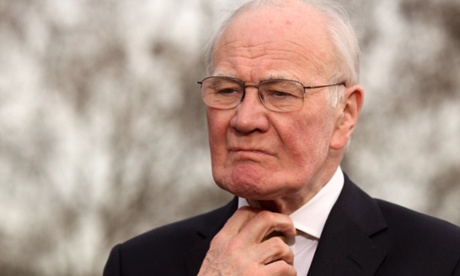
Sir Menzies Campbell, the former Lib Dem leader, entered the Commons in the same decade as Kennedy, although he was a generation beyond him. He told the Guardian:
The twenty years between us meant nothing, because we had the heritage of Glasgow University - we were both presidents of the union. We also had a common view of the importance of the highland tradition.
Campbell described what was considered by some a weakness in Kennedy as a strength.
He was regarded by the public as not like other politicians because of his distaste for adversarial politics. That strengthened his appeal as well as giving rise to a deep respect.
Campbell said that his last memory of Kennedy was in the Commons asking a question of David Cameron at prime minister’s questions before the general election, and expressed his shock at the loss of his seat earlier this month. “I thought that he was going great guns. The result must have come as as much of a shock to him as to anyone else,” Campbell said.
Updated
David Cameron says he is “deeply saddened” by Charles Kennedy’s death.
I'm deeply saddened by the death of Charles Kennedy. He was a talented politician who has died too young. My thoughts are with his family.
— David Cameron (@David_Cameron) June 2, 2015

Good morning. I’m taking over from Claire now.
It is conventional for politicians to pay tribute when one of their number dies, but it is unusual for the tributes to be as warm and heartfelt, and as universal, as they have been this morning. Here is a further selection from Twitter.
Lib Dem tributes
From Greg Mulholland, the Lib Dem MP
Just heard the very sad news about Charles Kennedy. Charles was leader when I got elected. A huge loss. Thoughts & prayers with his family.
— Greg Mulholland (@GregMulholland1) June 2, 2015
From Jim Wallace, the Lib Dem former deputy first minister of Scotland
Deeply saddened by the death of my friend Charles Kennedy. A gifted man of great principle and the common touch. We'll miss him greatly.
— Jim Wallace (@jrwallace54) June 2, 2015
From Julian Huppert, the former Lib Dem MP
Incredibly sad to hear of the death of Charles Kennedy. A great and decent man, full of insight and humour. He will be very much missed #fb
— Julian Huppert (@julianhuppert) June 2, 2015
From Kirsty Williams, the Welsh Lib Dem leader
Heartbroken at the news of the death of Charles Kennedy, a courageous talented inspiring lovely witty principled man. Thinking of his family
— Kirsty Williams (@Kirsty_Williams) June 2, 2015
From Andrew George, the former Lib Dem MP
Charles Kennedy was a towering and outstanding politician of our age. Brilliant, principled, agile, humorous, generous, considerate /...
— Andrew George (@AndrewGeorgeLD) June 2, 2015
From Martin Horwood, the former Lib Dem MP
Very sad news about Charles Kennedy. Eloquent LibDem, great pro-European and internationalist. Genuinely nice bloke. pic.twitter.com/ZLEgfyAl0v
— Martin Horwood (@MartinChelt) June 2, 2015
From Matthew Oakeshott, the peer and former Lib Dem peer
How best to pay tribute to Charles Kennedy? Fight for Europe,equality,fair votes and unity against the Tories, as he did to his dying day.
— matthew oakeshott (@oakeshottm) June 2, 2015
Labour tributes
From Jack McConnell, the Labour former Scottish first minister
Stunned to learn that Charles Kennedy has died. Talented, principled and extremely likeable over the 35 years since we first met. Very sad.
— Jack McConnell (@LordMcConnell) June 2, 2015
From Andy Burnham, the shadow health secretary
Politics always seems to lose the people it needs most. Charles Kennedy was warm, generous, genuine & principled. Will miss him greatly.
— Andy Burnham (@andyburnhammp) June 2, 2015
From Yvette Cooper, the shadow home secretary
Terribly sad news that Charles Kennedy has died. Deeply thoughtful man as well as so warm & funny to talk to. Thoughts with his family
— Yvette Cooper (@YvetteCooperMP) June 2, 2015
From Liz Kendall, the shadow care minister
So very sad about Charles Kennedy. Met him on @bbcquestiontime: a clever, thoughtful & kind man who'll be missed by politicians on all sides
— Liz Kendall (@leicesterliz) June 2, 2015
From Mary Creagh, the shadow international development secretary
So very sad to hear of Charles Kennedy ' s untimely death. A great orator and wit, huge loss to his party. My thoughts are with his family.
— Mary Creagh (@MaryCreaghMP) June 2, 2015
From Chris Bryant, the shadow culture secretary
Really sad to hear of Charlie Kennedy’s death. Brings home the brutality of a life in politics. "Sans teeth, sans eyes, sans everything"
— Chris Bryant MP (@RhonddaBryant) June 2, 2015
From Angela Eagle, the shadow leader of the Commons
Very sad to hear about the death of Charles Kennedy and much too young Condolences to his family
— Angela Eagle (@angelaeagle) June 2, 2015
From Margaret Curran, the former shadow Scottish secretary
Such sad news about Charles Kennedy. A true public servant and a huge loss to Scotland. My thoughts are with his family and friends.
— Margaret Curran (@Margaret_Curran) June 2, 2015
From Lord Wood, the Labour peer
Charles Kennedy showed us how politics could be based on principle, passion, courage & wit. A great British Liberal, a terrible loss.
— Stewart Wood (@StewartWood) June 2, 2015
From Paul Flynn, the Labour MP
Charles Kennedy's legacy is success at bridging destructive party political divisions with honesty, principle & decency to win consensus.
— Paul Flynn (@PaulFlynnMP) June 2, 2015
From David Mundell, the Conservative Scottish secretary
Stunned to hear about Charles Kennedy. An outstanding Scottish and British politician and really nice guy. Sincere condolences to his family
— David Mundell (@DavidMundellDCT) June 2, 2015
Conservative tributes
From William Hague, the Conservative former foreign secretary
Very saddened to hear about the death of Charles Kennedy: a devoted public servant, a gifted Parliamentarian, and a man of great warmth.
— William Hague (@WilliamJHague) June 2, 2015
From Sir Eric Pickles, the Conservative former communities secretary
Shocked and saddened by the sudden death of Charles Kennedy. A man of great wit and personal kindness. Missed by many beyond public life
— Sir Eric Pickles (@EricPickles) June 2, 2015
From John Gummer (Lord Deben), the Conservative former cabinet minster
.@bmay No one who ever knew Kennedy can think of him now except with a smile and thanks for bringing cheerful sanity to political debate.
— John Deben (@lorddeben) June 2, 2015
From Daniel Hannan, the Conservative MEP
Charles Kennedy was the most likeable, good-humoured of men, in politics from decent and sincere motives. All sides are shaken by his death.
— Daniel Hannan (@DanHannanMEP) June 2, 2015
SNP tributes
From John Swinney, the SNP Scottish deputy first minister
Terribly sad news about Charles Kennedy. A distinguished, generous, warm and immensely talented Highlander. My prayers with his family.
— John Swinney (@JohnSwinney) June 2, 2015
From Humza Yousaf, the SNP Europe minister in the Scottish government
Such awful news to wake up to, feel deeply sad. My thoughts & prayers with Charles Kennedy's friends, family & Lib Dem colleagues
— Humza Yousaf (@HumzaYousaf) June 2, 2015
Green tributes
From Natalie Bennett, the Green party leader
Very sad to hear about death of Charles Kennedy - he deserves to be remembered foremost for his judgement & principles opposing the Iraq War
— Natalie Bennett (@natalieben) June 2, 2015
From Patrick Harvie, the co-convenor of the Scottish Green party
Charles Kennedy was so clearly one of the most decent and well liked people in politics. Such sad news.
— Patrick Harvie (@patrickharvie) June 2, 2015
Respect tributes
From George Galloway, the former Respect MP
RIP Charles Kennedy. He was a fine and generous man. May God have mercy upon his soul.
— George Galloway (@georgegalloway) June 2, 2015
Updated
Summary
Tributes have been flooding in after news that Charles Kennedy, former Liberal Democrat leader, has died at the age of 55.
The cause of death has not been disclosed, but police said there were no suspicious circumstances.
A statement from Kennedy’s family said:
It is with great sadness, and an enormous sense of shock, that we announce the death of Charles Kennedy.
Charles died at home in Fort William yesterday. He was 55. We are obviously devastated at the loss.
Former Lib Dem leaders Nick Clegg and Paddy Ashdown led the praise for Kennedy, who was the youngest MP in the Commons when he was elected in 1983. He lost the seat only last month, after 32 years in parliament.
Charles Kennedy was one of the most gifted politicians of a generation, he always spoke with great humour, humility and courage.
— Nick Clegg (@nick_clegg) June 2, 2015
Many have recalled Kennedy’s (often fairly solitary) stance against war in Iraq in 2003 and coalition with the Conservatives in 2010.
I’m handing over this live blog to Andrew Sparrow, who will continue to gather tributes to Kennedy and assessments of his contributions to both the Liberal Democrats and wider British politics.
This video clip from 2011 shows Kennedy launching a campaign for UK voting reform, at which he spoke alongside then Labour leader Ed Miliband.
Kennedy was in favour of the alternative vote system over what he called “the grotesque distortions of the first-past-the-post political system”.
Kennedy's speech against war in Iraq
In March 2003, as MPs debated authorising military action against Iraq, Kennedy spoke out against intervention. You can read his speech here.
He told MPs:
In the next few hours and days, however, we are liable to see even more drama and trauma when what appears to be the inevitable military conflict against Iraq begins.
Let us hope, as we all agree, that the conflict can be conducted as swiftly as possible, with the minimum of casualties: first and foremost, clearly, among our forces, but equally among innocent Iraqi civilians, with whom none of us has ever had any quarrel and who have suffered terribly under the despicable regime of Saddam Hussein.
Tributes from across the political spectrum
Jeremy Hunt, Conservatives
When things like this happen, it puts everything else into perspective. He was only 55, that is tragically young. He was a giant of British politics.
I suppose the thing that strikes me is that we are in an era where people are quite cynical and suspicious of politicians; they tend to think we are out of touch. He really [had the] common touch.
He will be missed on all sides of the House of Commons. I was alway impressed with his personal bravery: being leader of Lib Dems in a rowdy House of Commons is pretty difficult. He was pretty much on his own in opposition to the Iraq war, and was a man of great principle, whether or not you agreed with him.
Harriet Harman, Labour
Everybody will be shocked and deeply saddened to hear Charles Kennedy has died. He was someone who fought for social justice and brought courage, wit and humour to everything he did.
He had many friends in the Labour party as he did across the political spectrum and away from Westminster.
Thoughts will now be with his family.
John Swinney, SNP
Terribly sad news about Charles Kennedy. A distinguished, generous, warm and immensely talented Highlander. My prayers with his family.
Lib Dem tributes
It’s hard to keep up with the tributes coming in this morning for Kennedy. Here’s a round-up of some of them – first, from his own Liberal Democrat colleagues:
Tim Farron
I think it had been difficult for him – he was somebody who was a towering figure even from an early age. The Liberal Democrats wouldn’t have existed without Charles Kennedy.
It was his oratory, his persuasive way of speaking, that meant he was able to bring people who weren’t sure about that merger [the SDP and the Liberals] and make sure it actually happened.
His like will not be seen again. We can all learn from him to take people seriously, not just as electoral units.
Paddy Ashdown
He is a loss to the Liberal Democrats when we can ill afford to lose a man of that calibre and stature. His judgment on the Iraq war was outstandingly good, opposing the entire political establishment and getting it right, and he got the reward for that at the election that followed when he achieved the greatest number of Liberal Democrat MPs than any before him.
He had his demons – we all have our demons – but when he was on form, on song, Charles was the best of all of us. One’s heart just goes out to his family.
It has been a very difficult time for him. He lost his seat; at the beginning of the election campaign he lost his father.
Norman Lamb
This is an untimely death and a really tragic loss of a lovely and immensely talented man – one of the most talented politicians of his age.
He had a special talent for communication and connecting with people in a very passionate but decent way. He was a committed internationalist who believed in bringing people together.
It is a great loss for my party but also for the country. My heart goes out to all of his family and friends.
Thanks to my colleague Jessica Elgot, who has been collating these.
And on that note, former Labour deputy leader – and deputy prime minister at the time of the 2003 war – John Prescott says Kennedy was right on his stance on Iraq:
So sad to hear of Charles Kennedy's passing. He proved to be right on Iraq. History will be as kind to him as he was to others. A great loss
— John Prescott (@johnprescott) June 2, 2015
In 2003, before Britain entered into war with Iraq, Kennedy wrote this piece for the Observer arguing against military intervention.
His opposition to the war was thought to be a significant reason for the burst of support for the Lib Dems in the 2005 general election, in which they won 62 seats.
In 2003, the then Lib Dem leader wrote:
The case has not yet been made for military action. The evidence has not been clearly assembled. Public opinion in this country is profoundly opposed to unilateral action by US and British forces without a UN mandate and without clear evidence of the need for war.
This is a moral as well as political dilemma, and there may well be circumstances in which British troops should not go to war; in which case we should be prepared to part company with the US …
The situation is rapidly developing into a test of confidence, in the government and in parliament. There is genuine public perception that we are being bulldozed into a war not of our choosing and not – on the basis of the evidence so far – vital to national interests …
Military action may become necessary, but we are not there yet. There is a dreadful sound of an inexorable drumbeat and of moral dilemmas unvisited since Suez. The prime minister should listen to the British people. He and President Bush should take on board the very real sense of alarm.
Sir Malcolm Bruce, deputy leader of the Liberal Democrats, who stepped down as an MP last month, said the death of Kennedy – who was best man at his wedding – was unexpected.
Most of the time he was fine, he was the old Charles. I don’t think we were expecting that.
The thing people remember about Charles is he was able to bring such a light touch to politics.
All of us really want people to reflect on what we’ve lost – a politician of his own type and quite unusual among other politicians.
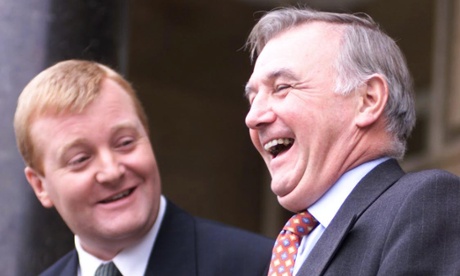
Lord Carlile, a Liberal Democrat peer, has told Sky News that Kennedy was a politician who won friends across party lines – something evidenced by the tributes coming his way today.
Carlile said:
His promise was huge. Unfortunately he had an affliction shared by a number of other people.
It is most important we reflect upon talents and ability of a very, very nice person. He was one of those people who everybody like, who everybody respected and, when he was on really cracking form, everybody listened to.
Carlile said Mr Kennedy would have been “devastated” to have lost his parliamentary seat. “It would not have improved his state of mind,” he said.
Ukip leader Nigel Farage has tweeted a short tribute to Kennedy:
I am very sorry to hear the news about Charles Kennedy, he was always a polite and decent man.
— Nigel Farage (@Nigel_Farage) June 2, 2015
Former Liberal Democrat MP Lembit Opik has told Sky News he had hoped Kennedy would be inducted into the House of Lords:
I was thinking ‘Charles Kennedy has to get into the House of Lords, he has to have that institutional support’.
It would have been support for him but it’s too late now. There was no support for him in his last days.
I really was concerned this was going to happen.
After losing his seat to the SNP last month – after 32 years as an MP – Kennedy wrote of the “difficult challenges” facing his party, which lost all but one of its seats in Scotland, but said it had been the “greatest privilege” of his life to have been an MP:
I am very fond of political history. If nothing else, we can all reflect on and perhaps tell our grandchildren that we were there on ‘The night of long sgian dubhs!’
It has been the greatest privilege of my adult and public life to have served, for 32 years, as the member of parliament for our local Highlands and Islands communities. I would particularly like to thank the generation of voters, and then some, who have put their trust in me to carry out that role and its responsibilities.
The Guardian’s Michael White, reviewing a biography of Kennedy in 2006, had warm memories of the former Lib Dem leader:
I have always liked Charles Kennedy, not least because he seems such an unlikely character to be leader of the party once led by Gladstone … Colleagues would grumble about Kennedy’s lack of strategic vision and organisational drive. To which I would mutter that voters seemed to like the ‘sort of bloke you could imagine meeting in a pub and having a drink, possibly two’.
On the issue of Kennedy’s well-documented alcohol issues, White wrote:
Did political reporters like me cover up the problem, as Lib Dems did? No. Though I heard the rumours and occasionally bought him lunch, I never saw Kennedy drunk; indeed I saw nothing more suspicious than him drinking Diet Coke at 10 in the morning.
Should I have investigated such prima facie evidence? Not unless you feel a Lib Dem leader should always be fit to drive a car, as Churchill frequently was not even while running the country.
No Lib Dem MP ever told me he was a soak. They said ‘we can’t go on like this’, but only to each other. And they did, for six fraught years. Would a sober Kennedy have made a bigger difference? I suspect not.
In May 2010, shortly after his party had entered coalition with the Conservatives following that spring’s general election, Kennedy wrote for the Guardian on why he had opposed his party’s decision to enter government with the Tories.
He said:
It is hardly surprising that, for some of us at least, our political compass currently feels confused. And that really encapsulates the reasons why I felt personally unable to vote for this outcome when it was presented to Liberal Democrat parliamentarians …
Like many others I was keen to explore the possibilities of a so-called ‘progressive coalition’, despite all the obvious difficulties and drawbacks. It remains a matter of profound disappointment that there was insufficient reciprocal will within the Labour party – and they should not be allowed to pose in opposition purity as a result …
I did not subscribe to the view that remaining in opposition ourselves, while extending responsible ‘confidence and supply’ requirements to a minority Tory administration, was tantamount to a ‘do nothing’ response.
I felt that such a course of action would have enabled us to maintain a momentum in opposition, while Labour turned inwards. But the understandable anxiety among colleagues about an early second election scuppered that option.
Tributes are pouring in as people wake up to hear the news that Kennedy has died at the untimely age of 55.
This is from Scotland’s first minister and SNP leader, Nicola Sturgeon:
Sad beyond words to hear the news about Charlie Kennedy. A lovely man and one of the most talented politicians of his time. Gone too soon.
— Nicola Sturgeon (@NicolaSturgeon) June 2, 2015
From Lib Dem MP (and would-be leader) Tim Farron:
I am utterly heartbroken about the news of Charles' passing. He was a colleague, friend and mentor. We've lost a giant today.
— Tim Farron (@timfarron) June 2, 2015
And this is from Labour’s Tom Watson:
Charles Kennedy was a kind man, a good dad and a substantial political leader. We will all miss him. Hope his family are given privacy.
— tom_watson (@tom_watson) June 2, 2015
Updated
Nick Clegg tribute: 'gentle, unflappable, immensely courageous'
Here is the full statement from Nick Clegg on the death of Charles Kennedy:
Charles’s untimely death robs Britain of one of the most gifted politicians of his generation.
Charles devoted his life to public service, yet he had an unusual gift for speaking about politics with humour and humility which touched people well beyond the world of politics.
He was a staunch internationalist and passionate believer in Britain’s role in Europe, yet he was a proud Highlander, Scot and British parliamentarian.
He was one of the most gentle and unflappable politicians I have ever known, yet he was immensely courageous too, not least when he spoke for the country against the invasion of Iraq.
He led the Liberal Democrats to our party’s greatest electoral successes, yet he always remained modest about his huge achievements.
Whenever I asked him for advice, he was unfailingly kind and wise.
Most of all, I will never forget the pride and love with which he would talk about his own family, most especially his devotion to his son Donald.
My heart goes out to his sister and brother and to Sarah and Donald at this tragic time.
When he was first elected to parliament, in 1983 in the Ross, Cromarty and Skye seat, Kennedy – then a member of the SDP – was the youngest MP to sit in the Commons, at just 24.
He held the seat (with boundary changes) for over 30 years, only losing out to a resurgent SNP in the Ross, Skye and Lochaber constituency on 7 May this year, less than a month ago.
As leader of the Lib Dems – taking over from Paddy Ashdown in 1999 – he took the party to its best election result since the 1920s at the 2005 general election, boosted by Kennedy’s outspoken opposition to the 2003 invasion of Iraq.
Charles Kennedy won 62 seats for the Lib Dems in 2005. He was the most electorally successful Lib Dem leader in living memory. RIP.
— Mehdi Hasan (@mehdirhasan) June 2, 2015
In January 2006 – following months of rumours about his drinking – Kennedy revealed he had been receiving treatment for an alcohol problem and said he was calling a leadership contest.
While he declared that he wanted to carry on he was forced to stand down in the face of the threat of mass resignations by senior colleagues.
He remained one of the party’s best-known faces.
Nick Clegg, another former Liberal Democrat leader, has paid tribute to his colleague:
Charles’s untimely death robs Britain of one of the most gifted politicians of his generation.
And Paddy Ashdown, another ex-party leader, has tweeted this:
Charles Kennedy. In a political age not overburdened with gaiety and good sense, he brought us wit, charm, judgement, principle and decency
— Paddy Ashdown (@paddyashdown) June 2, 2015
Police have said there are no suspicious circumstances surrounding Kennedy’s death.
A spokesman for Police Scotland said:
Police officers attended an address at Fort William on Monday, June 1 to reports of the sudden death of a 55-year-old man. Police were notified by ambulance service personnel.
There are no suspicious circumstances and our report will be submitted to the procurator fiscal.
Opening summary
The former Liberal Democrat leader Charles Kennedy has died at his home aged 55, his family has said.
The Scottish ex-MP’s death was not believed to be suspicious and the cause of death has yet to be confirmed.
Kennedy lost his seat in the Ross, Skye and Lochaber constituency to the SNP’s Ian Blackford in last month’s general election.
A statement released on behalf of his family said:
It is with great sadness, and an enormous sense of shock, that we announce the death of Charles Kennedy.
Charles died at home in Fort William yesterday. He was 55. We are obviously devastated at the loss.
Charles was a fine man, a talented politician, and a loving father to his young son. We ask therefore that the privacy of his family is respected in the coming days.
There will be a post-mortem and we will issue a further statement when funeral arrangements are made.
We will have the latest details and tributes on this live blog.
Updated