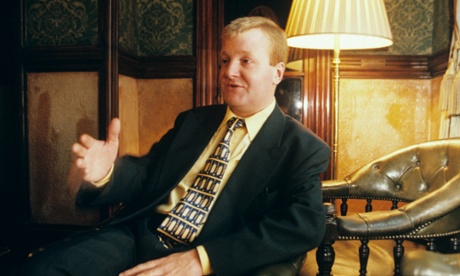
Charles Kennedy has been described as bringing “wit, charm, principle and decency” to British politics by former Liberal Democrat leader Lord Ashdown.
His strength of character shone through in his words as well as his actions: many commentators are quoting this wry remark delivered in the House of Commons in October 1998.
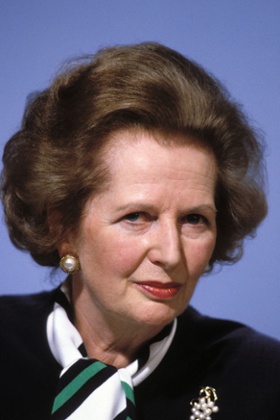
Paddy Ashdown is the only party leader who’s a trained killer. Although, to be fair, Mrs Thatcher was self-taught.
Six months after he stood down as Lib Dem leader, Kennedy was asked on Question Time if he would ever attempt to return to the position – and refused to rule out the move with this enigmatic response:
The one thing we can all be sure about in politics is you are as well to expect the unexpected.
In 2005, Kennedy was interviewed by the Guardian about his favourite artists and love for music.
I couldn’t imagine a day without music. It relaxes and stimulates me in equal measure and I hate the sound of silence – the concept, I mean, not the track by Simon and Garfunkel.
In a New Statesman interview two years into his leadership of the Lib Dems, and before his difficulties with drinking had transpired, Kennedy said:
I should do something about the cigarettes; I quite accept that it’s bad for your health, but you know a moderate tipple is positively beneficial and, at certain times, absolutely essential.
In the same piece, he addressed his decision to appear on the BBC’s satirical quiz show Have I Got News For You with a response that reflects many of the assessments given by his peers today:
To be seen to be human, provided you’re doing your job at the same time, is definitely not a negative, not at all.
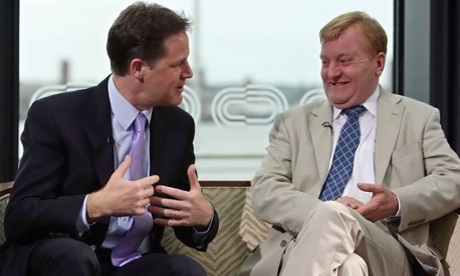
Asked in a Q&A in 2009, if Nick Clegg had disappointed him as leader of the Liberal Democrats, Kennedy responded with typical grace:
I think that former leaders are best seen occasionally and not too often heard – particularly on the subject of their successors.
In a 2005 Guardian interview, the former Lib Dem leader discussed his approach to politics:
Actually, I think it’s quite sensible not to take yourself too seriously. The vast majority of people think there’s a hell of a lot more to life than just politics. And you’ve got to bear that in mind – because you’re actually trying to represent them.
Kennedy’s opposition to the Iraq war was his defining political decision. Debating the move in the House of Commons in 2003, Kennedy set out his position:
There stands no contradiction between giving voice to legitimate anxiety and at the same time, as and when exchange of fire commences, looking to the rest of the country, as well as all of us in the house, to give full moral support to our forces. I will not [support the government] because the consistent line we have taken is that we do not believe there is a case for war which has been established under these procedures in the absence of a second resolution.
And in a speech to his party’s annual conference in Brighton in 2003, he underlined his dismay and anger at the invasion:
This is supposed to be a parliamentary democracy. What we’ve seen is a small clique driving us into a war, disregarding widespread public doubts. That is not acceptable.
.jpg?w=600)