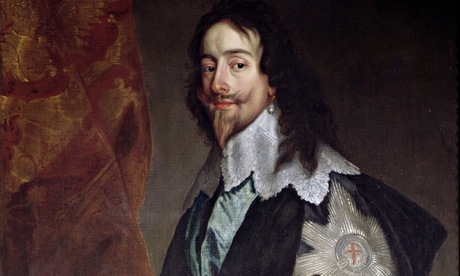
Mark Kishlansky comes out swinging: “Charles I is the most despised monarch in Britain’s historical memory. Considering that among his predecessors were murderers, rapists, psychotics and people who were the mentally challenged, this is no small distinction.” This short life of Charles – the only king of England to be tried, condemned and publicly executed – holds England’s 17th-century crisis up to the light and asks if we have misjudged its protagonist.
Kishlansky argues that the accepted view of Charles and his reign has been utterly distorted: the narratives spun by the parliamentarian propaganda of the 1640s have only grown stronger in the intervening centuries, so that we vacillate between viewing Charles as an idiot at best and a tyrant at worst. He has been called intransigent and duplicitous; GM Trevelyan thought him “selfish and stupid”, while the Ladybird biography of Oliver Cromwell leaps off the fence to inform six-year-olds that “King Charles was a very stupid man”. Charles’s failings tend to be accepted, to a greater or lesser degree, even by his more sympathetic biographers. “What began as propaganda,” says Kishlansky, “has been transmuted into seeming fact.”
Charles was never meant to be king. As a child, he was overshadowed by his older brother, the heir to the throne. Prince Henry was bred to wear James I’s crown: while still a teenager, he kept a learned court, assembling advisers and taking a close interest in international affairs and continental thought. Admired in England and beyond for his commitment to the Protestant faith and its defence, the prince’s sudden sickness and death from a fever in 1613 came as a shock. Out of Henry’s shadow stepped Charles: the younger brother was now the heir.
Whichever side you take, it’s hard to deny that Charles was plagued from early on by almost comical levels of bad luck. As a young man, his daring incognito voyage to Spain to woo the Infanta turned into a fiasco. Two decades later, not only would his armies suffer crippling losses at the battle of Naseby, but Charles’s own personal correspondence would be captured: the public revelation of his efforts to secure Catholic support against the forces of parliament would be a devastating blow to the king’s reputation. A botched attempt to attack and plunder Spanish shipping in the first year of his reign set the tone for later military ventures: ‘the winds, as always for Charles, were contrary’.
Charles inherited the difficult parliaments encountered by his father. His closeness to James’s favourite and lover, the Duke of Buckingham, was just one reason why his dealings with them were fraught from the outset and became rapidly worse. Successive parliaments blocked Charles’s attempts to raise money for campaigns abroad, ultimately leading him to pursue methods of fundraising – a forced loan and a dubious levy to raise money for ships – that were recalled when his subjects chose their sides in the civil wars. In the spring of 1629, Charles dissolved a particularly fractious parliament and ruled without one for the next 11 years.
Bubbling under these fiscal debates were a series of more abstract but equally divisive questions: about the royal prerogative, of which Charles was a jealous guardian; about the rights of parliaments; and – most explosive of all – about the religion that should befollowed by the peoples of the three kingdoms. England’s partial, stuttering reformation had left few people truly satisfied, and the cracks in the religious settlement that had begun to appear under Elizabeth continued to widen under James, coming to an explosive climax in the internecine strife of the late 1630s and 1640s.
Machiavelli said that there were some virtues – such as generosity and mercy – which, if practised carelessly, would result in a prince being hated rather than loved by his subjects. Kishlansky argues that the king’s supposed vices, when they cannot be dismissed altogether, can often be recast as positive qualities. He opens with a quote from a sermon about Charles preached nearly 30 years after his death: “Even his virtues were misinterpreted and scandalously reviled. His gentleness was miscalled defect of wisdom; his firmness, obstinacy; his regular devotion, popery; his decent worship, superstition; his opposing of schism, hatred of the power of godliness.”
Maybe tyranny is in the eye of the beholder. Charles’s reputation for being particularly intransigent is dismissed by Kishlansky, who argues that his attempts to conciliate and to compromise when presented with extreme demands have been underplayed or ignored. Charles was willing to accommodate his critics, to the point of appointing some to act as his advisers: from having opposed him early in the reign, the earl of Strafford went on to become Charles’s primary adviser, ultimately paying for his service with the loss of his head.
While Kishlansky is successful in moderating some of the more extreme accusations levelled at Charles over the past few centuries, there is more than a hint of special pleading here. He displays great patience with the legal hoop-jumping that allowed Charles to exact emergency revenue from his subjects without parliamentary consent, while later dismissing parliament’s attempts to pass laws without the king’s consent as necessitating the “tortured finessing of precedent”. The bad faith of Charles’s opponents and captors is asserted throughout, while the king’s own slipperiness in negotiations at home and abroad is soft-pedalled. At times, Kishlansky’s insistence on imputing the best possible motives to Charles’s actions risks turning a reconsideration into a whitewash.
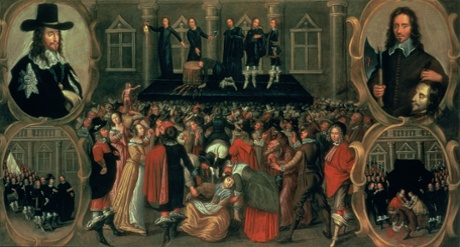
In a magical phrase, Kishlansky sums up Charles’s fatal weakness: “He banked too heavily on the sheer force of majesty.” Charles was proud. This in itself is no great fault: being a monarch naturally requires a certain self-regard. But the king’s iron belief in the sanctity of his person and prerogative clashed with his subjects’ ideas of justice and government, and one or the other had to give way. Ultimately, it was not only the king who was put on trial, it was majesty itself. Charles’s aloof refusal to acknowledge the legitimacy of the court that sentenced him to death plays badly when read centuries later, but Kishlansky argues that there was little else he could have done without condemning himself outright.
At a bare 120 pages, Kishlansky’s “abbreviated life” is more a polemical essay than a traditional biography. It’s a refreshing read: a pacy and well‑crafted narrative that wears the chip on its shoulder with pride. But with brevity can come a deceptive simplicity – with little room for close reading or the elaboration of detail, Kishlansky’s dismissals of others’ positions often take the form of brief statements.
Small amounts of evidence are made to bear an enormous argumentative burden. But this is an occupational hazard for anyone writing an accessible and intensely argumentative historical essay – a form which, in a world dominated by weighty volumes and specialist studies, is long overdue a renaissance.
Biographies of great men assume that their subjects had the power to influence their own lives and those of the people around them. Kishlansky asks how far this was true for Charles: “Beneath the reviled and excoriated king of historical reputation is a flesh-and-blood man trapped by circumstances he could not control and events he could not shape.” This story leaves open questions about how we understand the relationship between character and circumstance, between a king’s life and his times.
• To order Charles I: An Abbreviated Life for £8.79 (RRP £10.99) go to bookshop.theguardian.com or call 0330 333 6846.