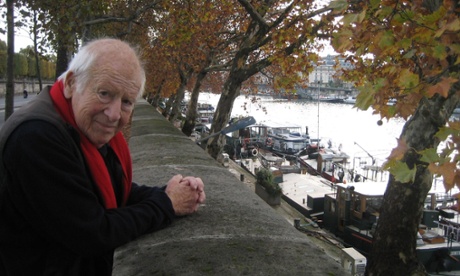
My friend Charles Hannam, who has died aged 89, was a charismatic teacher and an influential author. One of his earliest publications was Young Teachers and Reluctant Learners (1971), written with Pat Smyth and Norman Stephenson, which gave an account of a year-long project at Bristol University School of Education in which teachers in training were supported in working informally with children from tough backgrounds.
The book’s conclusions challenged the very nature of teacher training and the university took steps to suppress it. However, within weeks of publication, it was being discussed nationally and had become a must-read for every radical educationist.
Charles was born Karl Hirschland, son of Gertrude (nee Freudenberg) and Max Hirschland, into a Jewish banking family in Essen, Germany. All his comfortable assumptions about the world and his place in it were gradually undermined by the rise of the Nazis. In some ways he was lucky, as he described in his autobiography, A Boy in Your Situation (1977). He came to Britain on one of the last Kindertransport trains before the outbreak of war. His mother had died when he was in his early teens; and his father stayed behind to look after the community, but later died of starvation in Theresienstadt concentration camp.
Charles was sent first to a hostel for Jewish refugee children in Ramsgate, Kent. When that closed he was consigned to a school for delinquent boys in Oxfordshire, from which he was rescued by his elder sister, Margot, who had escaped to Britain earlier and worked as a maid. She managed to persuade the headteacher of the local grammar school in Midhurst, West Sussex, to accept Charles.
He gained a place at Corpus Christi College, Cambridge, but deferred it to join the fight against Hitler. Instead, he was sent first to Burma and then to police the transition to independence in India. In Almost an Englishman (1979), he documented his realisation that the hatred and ignorance of the British officers and men towards Indian people and their culture was little different from what he had experienced as a Jew in Germany.
After Cambridge, Charles fell into teaching almost accidentally. Although he was a passionate supporter of state education, his first job was in a prep school. Charles’s account of this in Outsider Inside (2008) is funny, humane and understanding. All his writing is distinguished by an extraordinary ability to recall with great specificity the sights, smells and sounds that he experienced.
In 1960 he married Pam Gibson, but the marriage ended in divorce. The first of their three sons was born with Down’s syndrome, and Charles drew on their experiences to write Parents and Mentally Handicapped Children (1975), one of the first really honest discussions of what it is like to be the parent of a child with Down’s syndrome. He was flooded with correspondence from parents relieved that their experience had been recognised.
Although Charles lost his German accent, he remained a highly cultured European intellectual with an extensive knowledge and love of art, history and philosophy, tempered by a wonderful sense of humour that permeated both his writing and conversation. Some of his friends thought it a bit eccentric when he moved with his third wife, Sue, whom he had married in 1983, to an isolated smallholding in Devon, where they grew vegetables and kept chickens, but it suited them very well.
He is survived by Sue and their daughter, Naomi, and by David, Simon and Toby, the sons of his marriage to Pam.