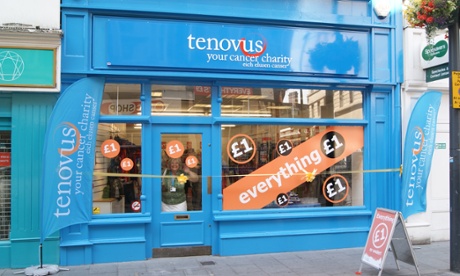
Chatter about charity shops “becoming a bit pricey” isn’t uncommon on the average UK high street these days. But not in Newport, south Wales, which has been home to Tenovus Cancer Care’s first charity pound shop for the last ten months.
In a semi-deserted Newport high street, the Tenovus shop has a regular throng of customers, some calling in up to four times a day. Why would someone go to a shop four times a day? Because that’s how often stock is replenished. The shop’s volunteers, paid full time manager and part-time assistant manager take in roughly 300 bags of (mainly clothes) weekly, turning over around 3,000 items of stock in that time. At Tenvous’ other 65 shops, a team might turn around in the region of 1,000 items a week.
“Things sell very quickly; people like it because they can get a whole outfit for £3,” says Susan Newcombe, the charity’s head of retail.
The shop, which has boosted the charity’s income by at least £3,000 a month, is stocked with unsold items from Tenovus’ other stores, two thirds of which are in Wales and the rest in England. “They’re are all good quality, no holes or damage, they just haven’t sold for whatever reason,” explains Newcombe.
The concept for the shop was born last spring when the textile recycling sector “dramatically dropped its price overnight,” says Newcombe. Tenovus, like many other charities, previously passed on unsold stock from its charity shops to textile recyclers, which provided a valuable part of its income. Before last spring, this price was around 68p a kilo.
“The price fell by 40% in March 2014 and then by another 10% shortly after,” she recalls. “We quickly needed a plan B to meet our financial targets.”
Textile recycling has always been an important facet of charity shop income. The 2014 Charity Shops Survey by the magazines Charity Finance and Fundraising indicated that the voluntary sector made well over £100m from rag sales in 2013-14, before prices dropped. Such sales have traditionally made up around a 10th of charities’ income, according to the report. But unstable foreign markets and the strengthening of the pound has meant falling income from textile recyclers.
As Wales’ biggest charity retailer, Tenovus wanted to do something smart and innovative. “At first we thought about the concept of a pop-up shop to sell on unused stock. We sent our surveyors to look at locations near to our warehouse base in Cardiff.”
They came back suggesting an empty shop in Newport, which had much cheaper rent than Tenovus’ other shops. “The landlord was keen to let it out for a minimum of five years, rather than the usual ten year commitment, because he didn’t want to leave the space empty,” Newcombe says. “We’re seeing it as a sort of hybrid between pop-up shop and a permanent store. It’s not as big a risk as taking on a 10 year contract for us.”
With the discount rent, the shop is exceeding its financial targets by 25% and giving a much better return than the rag trade, she says. Newcombe credits shop manager Ryan Cheadle’s commercial sector experience as crucial.
“He has excellent knowledge of stacking ‘em high and cheap. We’re turning over between £1,500 and £1,900 a week, which is great. Some of our shops turn over a lot more but the pound shop works because of our low costs. We spent a minimal amount on the fit out and window displays are not something we put a lot of resource in to at this store,” she says.
Tenovus is now exploring new locations with a view to opening a pound shop in each of its five regions. “Finding the right locations is the challenge, but we can see that once we do, volunteers and customers love the buzz of the high turnover of stock and a thriving customer base. It’s a magic formula for us,” says Newcombe.
Guardian Voluntary Sector Network spotted one other charity pound shop run by Willowbrook Hospice in Prescot, Merseyside. How are other charities dealing with the drop in price from textile recyclers? Feel free to add your comments below.
For more news, opinions and ideas about the voluntary sector, join our community – it’s free!