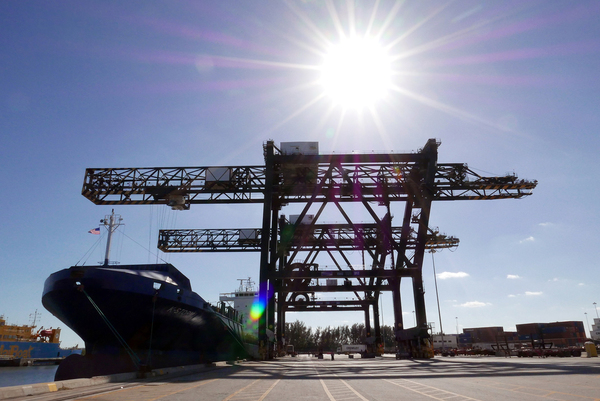
MIAMI _ The first Cuban exports since the embargo went into effect over a half century ago arrived at Florida's Port Everglades Tuesday as port officials prepared to receive a business delegation from Cuba later in the week.
The delegation also plans to visit the Port of Palm Beach, which is located in Riviera Beach, and Port Tampa Bay in a swing through the United States that has already included a stop at the Port of Houston. Also on the itinerary are visits to the Port of New Orleans and the Port of Virginia in Norfolk and meetings with the U.S. Chamber of Commerce in Washington D.C., members of Congress and the American Association of Port Authorities.
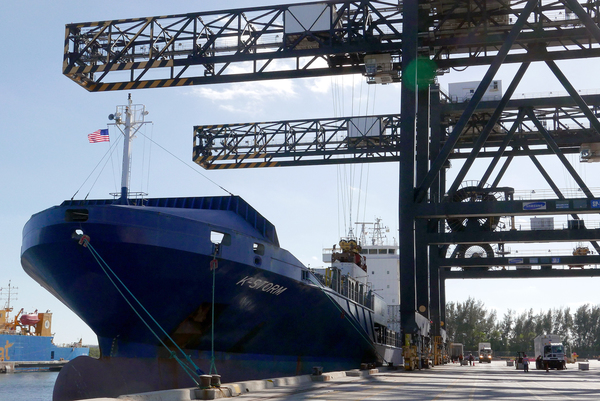
Two containers of artisanal charcoal made from Cuban Marabu, an invasive woody species from Africa that is considered a nuisance on the island, arrived at the Fort Lauderdale port aboard a Crowley Maritime ship called the K-Storm Tuesday morning. The charcoal exports, which are produced by private worker-owned cooperatives, are legal under a rule change by the Obama administration that allows the importation of some products produced by independent Cuban entrepreneurs.
In Cuba, Marabu has taken over wide swaths of idle agricultural land and strangled other plants. But it makes a hardwood charcoal that is winning acceptance as a fuel for pizza and bread ovens in Europe and the Middle East. It will be sold under the Fogo Charcoal brand by various U.S. retailers.
The charcoal deal was put together by Coabana Trading, a subsidiary of Reneo Consulting, a firm chaired by Scott Gilbert, the Washington D.C. lawyer who represented Alan Gross, the USAID subcontractor who was jailed by Cuba for five years.
"This is truly a momentous occasion," Gilbert said when the deal for 40 tons of charcoal was announced earlier this month. "Now U.S. consumers will be able to purchase this product, as have Europeans and others for many years. More importantly, this marks the beginning of a new era of trade between the United States and Cuba."
The agreement was struck with CubaExport, a Cuban government entity that develops trade opportunities, but Scott said that the Marabu plant is cut and the charcoal produced by private Cuban cooperatives.
The embargo still remains in effect, but executive orders issued by former President Barack Obama over the past two years have eased some Cuba-related travel and trade restrictions.
Although the transaction was negotiated under the Obama opening, the historic Cuban exports are arriving during the Trump administration. Trump has said he might roll back some of Barack Obama's executive orders on Cuba unless Cuba offers a better deal to the United States and Secretary of State-nominee Rex Tillerson has said that all Obama's executive orders on Cuba will be reviewed.
Whether Cuban charcoal becomes a staple of U.S. trade with the island remains to be seen.
"It's experimental, but the importer hopes to have regular shipments," said Jay Brickman, vice president of government services and Cuba service at Crowley. Brickman called the shipment "the first truly commercial shipment from a Cuban cooperative to a private U.S. business since the U.S.-Cuba trade embargo was imposed more than 50 years ago."
The shipping line makes thrice-monthly trips from Port Everglades to Cuba's container port in Mariel and also calls in Honduras and Guatemala before returning to the Fort Lauderdale port. Crowley mostly carries frozen chicken parts and foodstuffs to Cuba but it also handles small amounts of other legal exports to the island and was involved in shipping some of the equipment that the Rolling Stones used in their historic concert in Cuba in March 2016.
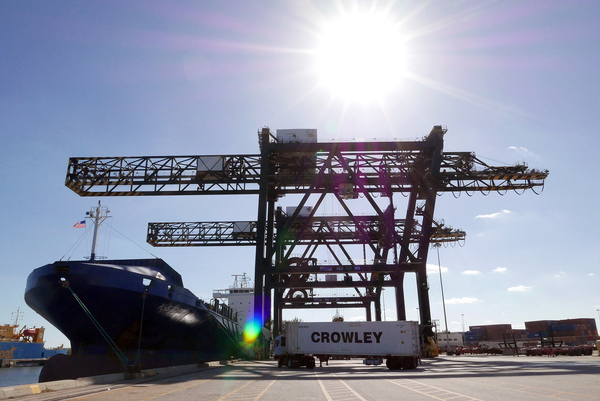
Crowley has been calling on Cuba for the past 15 years.
On Thursday, a Cuban delegation will be at Port Everglades to sign a memorandum of understanding between the port and the National Port Administration of Cuba that could pave the way for joint marketing studies, joint training and other cooperation, said Jim Pyburn, Port Everglades director of business development.
"We would like to see U.S. exports to Cuba increase; imports are good, too," said Pyburn.
The seven-member Cuban delegation will begin its day at Port Everglades with a meeting with Port Director Steven Cernak, then have a tour of the port and a lunch with executives from Crowley.
The Cuban delegation includes Ana Teresa Igarza, general director of the Mariel zone; Jose Leonardo Sosa Barrios, deputy director of the Mariel Container Terminal.; Eradis Gonzalez de la Pena, president of Almacenes Universales; Rene Rolando Fernandez, director of inland waterway and sea transport for the Ministry of Transportation; Tania Vazquez, an official with the Ministry of Foreign Trade and Investment; Joel Lago from the Cuban Embassy in Washington's economic and trade office, and Ernesto Vinas, an adviser to the deputy minister of transportation.
Pyburn said Port Everglades had been working on an MOU with Cuba since early 2016 but originally it was only going to cover Mariel, which is about 28 miles west of Havana. Now with the involvement of the National Port Administration of Cuba, it will cover all Cuban ports.
He said the MOU was completed for signing in May. But there was little action until Brickman visited Washington in December. During his trip, he received a call from the Cuban Embassy "saying the Cubans would really like to sign a memorandum of understanding with Port Everglades," said Brickman and he helped facilitate the visit and the signing.