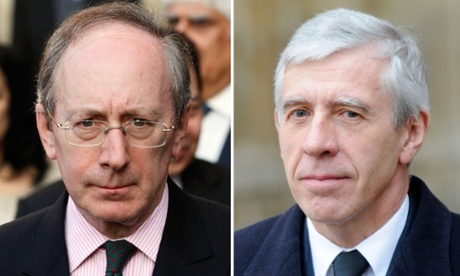
Media regulator Ofcom has taken the exceptional step of investigating a “cash for access” sting on two former foreign secretaries by Channel 4’s Dispatches despite receiving no complaints about the programme.
The regulator announced on Monday it had opened an investigation following criticism of the programme’s reporting of the allegations and after Sir Malcolm Rifkind and Jack Straw were cleared by the parliamentary standards watchdog.
Channel 4 itself referred the 23 February broadcast, which was a joint investigation with the Daily Telegraph, to Ofcom which the regulator said it had taken into account when making its decision.
It is unusual but not entirely unprecedented for the regulator to take such a step in the absence of any complaints about a programme’s content.
The investigation is set to put Channel 4 on a collision course with Straw, Rifkind and parliamentary authorities who found “no breach of the rules on paid lobbying”.
An Ofcom spokesperson said: “Ofcom is investigating whether Channel 4’s Dispatches programme broke rules requiring fairness in programmes. Once we have concluded our investigation into the broadcast we will publish our decision.”
In a statement earlier this month, Daniel Pearl, Channel 4’s deputy head of news and current affairs, said: “This programme raised important questions which concern voters about how senior politicians are able to use their public office for personal financial gain. This is a matter of public interest and was a legitimate journalistic investigation.
“We’re confident in our journalism and have decided to take the unprecedented step of inviting our statutory regulator Ofcom to investigate the report.”
Ofcom’s “self-initiated investigation” will investigate whether the programme complied with rules in the broadcasting code requiring broadcasters to “avoid unfair treatment of individuals in programmes”.
Ofcom said there were “exceptional circumstances” to prompt an investigation in the absence of a complaint to “fulfil its general duty to secure the application of standards that provide adequate protection to members of the public from unfair treatment in programmes”.
The parliamentary commissioner for standards cleared Sir Malcolm Rifkind and Jack Straw, and said the damage done to the former MPs could have been avoided if Dispatches and the Telegraph had accurately reported the exchanges they had filmed.
Kathryn Hudson, the parliamentary commissioner for standards, found that neither Straw nor Rifkind was in breach of the code of conduct or the rules of the house “other than in Mr Straw’s case by a minor misuse of parliamentary resources”.
She said: “The use of carefully selected excerpts from the recordings does not necessarily give the viewer a detailed understanding of the circumstances and the full evidence behind the interviews. This may result in the viewer being led to conclusions which do not stand up to detailed scrutiny.”
The programme and Telegraph articles led Straw to suspend himself from the parliamentary Labour party and Rifkind to step down as the chairman of parliament’s intelligence and security committee and as an MP.
They alleged that Straw boasted to undercover journalists that he had operated “under the radar” to use his influence and change EU rules on behalf of a firm that paid him £60,000 a year. A recording obtained with a hidden camera shows Straw saying: “So normally, if I’m doing a speech or something, it’s £5,000 a day, that’s what I charge.”
Rifkind reportedly claimed to be able to gain “useful access” to every British ambassador in the world. Journalists recorded him describing himself as self-employed, even though he earned a salary of £67,000 as MP for Kensington: “I am self-employed – so nobody pays me a salary. I have to earn my income.”