If the news these days is anything to go by, the PM2.5 crisis appears to have subsided. And yet, the air-quality monitoring app AirVisual says otherwise. While Bangkok's air-quality index has certainly improved, other provinces such as Nakhon Ratchasima and Chiang Mai are still suffering.
Concerned about the long-term health impacts of air pollution, the Department of Medical Services officially opened a pollution clinic earlier this year as a pilot project. Its objective is to monitor the number of patients who develop complications due to polluted air and to provide them with appropriate medical treatment. The clinic is located at Nopparat Rajathanee Hospital on Ram Intra Road, Bangkok.
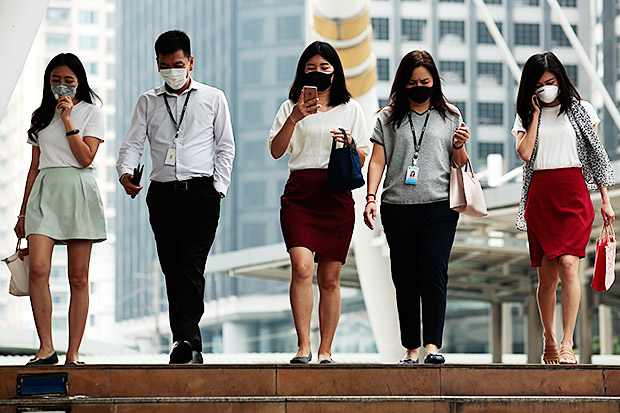
"Most patients came with respiratory illnesses such as sore throats, coughing, phlegm and mucus. Some patients had red and burning eyes. A few had headaches and dizziness," said Dr Adul Bandhukul, head of the Occupational and Environmental Medicine Centre, who is in charge of the clinic.
According to Dr Adul, the number of patients affected by air pollution was extremely high in February, with the clinic treating almost 250 patients that month. As PM2.5 levels in the capital have gone down, so has the number of patients.
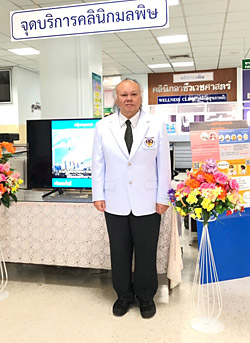
Dr Adul Bandhukul, head of the Occupational and Environmental Medicine Center. (Photos: Pollution Clinic at Nopparat Rajathanee Hospital)
"We barely had any patients in March. The Air Quality Index (AQI) in areas around the hospital didn't exceed the standard. Patients who did come in were from neighbourhoods such as Bung Kum, Min Buri, Khan Na Yao, Lat Krabang and Bang Kapi," said Dr Adul, who is also President of the Association of Occupational and Environmental Diseases of Thailand.
In addition to this specialised pollution clinic, Nopparat Rajathanee Hospital also has an otolaryngology clinic where conditions related to the eyes, ears, nose and throat can be treated. Each morning, the otolaryngology clinic receives an updated AQI chart, so medical practitioners can identify which patients are coming from highly-polluted areas. After checking their personal backgrounds and medical histories, some patients will be transferred to the pollution clinic.
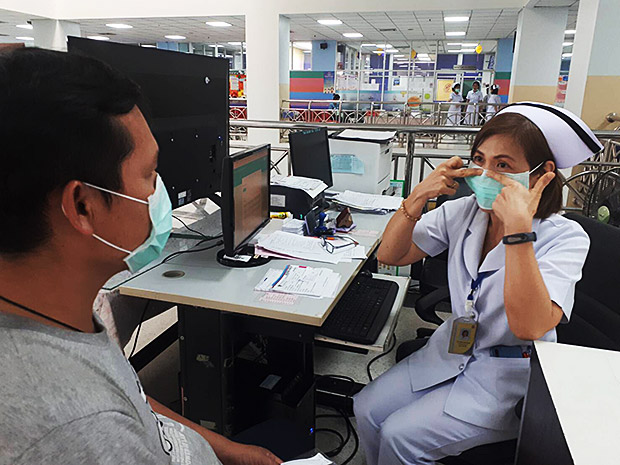
"One of the plus sides of the pollution clinic is that specialists can take the time to thoroughly check patient backgrounds before examinations. If a patient is at risk of lung disease, they will have a chest X-ray. Advice is also provided on how to protect themselves from dust particles such as PM2.5, so that they can take better care of themselves after leaving the hospital," said Dr Adul.
Diseases caused by air pollution, especially PM2.5, can be acute or chronic. In the case of the former, symptoms usually last only one to seven days after exposure. Chronic conditions, meanwhile, can last for months, even years.
"The symptoms from PM2.5 dust usually aren't severe, but they are irritating. However, conditions can turn serious if left untreated, especially among patients with underlying diseases such as asthma, heart disease or high blood pressure. If a patient with heart disease comes into contact with hazardous fine-dust particles, it can worsen the symptoms. They could potentially suffer chest tightness or dangerously high blood pressure."
The Ministry of Public Health plans to open more air pollution clinics in affected areas, using the one at Nopparat Rajathanee Hospital as a model, but they still need the cooperation of regional health centres. If they can go ahead, medical staff from the Bangkok pollution clinic will act as guides.
Medical treatment is not a proactive solution to the haze crisis. Although the government has already brought in measures to help tackle the issue, such as curbing vehicles that emit black smoke and phasing out diesel buses for NGVs, Dr Adul believes that much more still needs to be done.
"In South Korea, people automatically receive an SMS with information about PM2.5 levels and how they should prepare. Thailand's Department of Public Health has this kind of data, but people have to find out the information by themselves, by looking it up on online or on the app," he said.