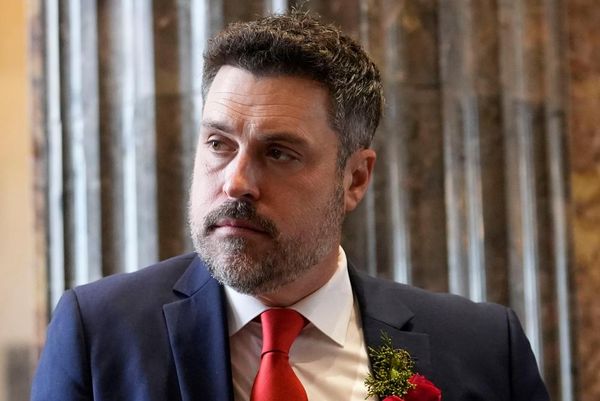
The chancellor has pledged £30bn of extra spending in a number of sweeping measures to protect the economy against the coronavirus in a budget he described as the biggest fiscal boost to the UK in decades.
Rishi Sunak, who replaced Sajid Javid only weeks ago, said he would intervene to protect public services and the economy over the coming months while providing the biggest boost to public investment for several generations to drive longer-term growth.
Delivering his first budget speech to the Commons, Sunak said the virus outbreak would be temporary but costly for businesses and the economy.
He said: “Let me say this: we will get through this together … We will rise to this challenge,” adding that the UK would respond with measures that were brave and bold.
“The British people may be worried but they are not daunted.”
The government will boost NHS spending to cover “whatever it costs” to treat patients and increase the level of testing.
Sunak and his Treasury team have had only four weeks to prepare the budget and set the stage for government spending across a five-year term while also spelling out plans to protect the economy from the coronavirus outbreak.
The Office for Budget Responsibility, the Treasury’s independent economic forecaster, described the budget as the most dramatic loosening of the public purse since the March 1992 pre-election budget.
Sunak boasted that it was the biggest fiscal boost in 30 years and next year there would be the largest increase in departmental spending for 15 years.
His speech was peppered with references to the budget being one that “gets it done”, mentioning the phrase 11 times.
To protect the economy from Covid-19, Sunak said £2bn would be allocated to cover up to 2m firms employing fewer than 250 employees that lose out because staff are off sick.
A series of cheap loans would also be on offer while smaller firms in some of the hardest-hit industries, including retailers and museums, would not have to pay business rates – a tax cut worth £1bn.
A further £1bn would cover compensation for people on benefits who become sick.
Addressing criticism that the NHS is unprepared for the extra costs and resources needed to combat the next potential virus, Sunak promised to boost a planned £34bn increase in NHS spending to more than £40bn.
Sunak said the government would invest in “world-class infrastructure” at a cost of £175bn over the next five years.
The chancellor claimed the OBR had calculated that this extra spending on roads, rail, hospitals and digital infrastructure would increase Britain’s long-term productivity by 2.5% and add 0.5% a year to GDP growth.
The OBR added that government spending would account for half of GDP growth this year and next. In 2017, 80% of GDP growth was accounted for by consumer spending.
It said this was the seventh time in the seven budgets, autumn and spring statements since the EU referendum that the government had loosened the public purse strings.
What is Covid-19 - the illness that started in Wuhan?
It is caused by a member of the coronavirus family that has never been encountered before. Like other coronaviruses, it has come from animals.
What are the symptoms this coronavirus causes?
The virus can cause pneumonia. Those who have fallen ill are reported to suffer coughs, fever and breathing difficulties. In severe cases there can be organ failure. As this is viral pneumonia, antibiotics are of no use. The antiviral drugs we have against flu will not work. Recovery depends on the strength of the immune system. Many of those who have died were already in poor health.
Should I go to the doctor if I have a cough?
In the UK, the medical advice is that if you have recently travelled from areas affected by coronavirus, you should:
- stay indoors and avoid contact with other people as you would with the flu
- call NHS 111 to inform them of your recent travel to the area
More NHS advice on what to do if you think you have been exposed to the virus can be found here, and the full travel advice to UK nationals is available here.
Is the virus being transmitted from one person to another?
China’s national health commission confirmed human-to-human transmission in January, and there have been such transmissions elsewhere.
How many people have been affected?
As of 9 March, more than 110,000 people have been infected in more than 80 countries, according to the Johns Hopkins University Center for Systems Science and Engineering.
There have over 3,800 deaths globally. Just over 3,000 of those deaths have occurred in mainland China. 62,000 people have recovered from the coronavirus.
Why is this worse than normal influenza, and how worried are the experts?
We don’t yet know how dangerous the new coronavirus is, and we won’t know until more data comes in. Seasonal flu typically has a mortality rate below 1% and is thought to cause about 400,000 deaths each year globally. Sars had a death rate of more than 10%.
Another key unknown is how contagious the coronavirus is. A crucial difference is that unlike flu, there is no vaccine for the new coronavirus, which means it is more difficult for vulnerable members of the population – elderly people or those with existing respiratory or immune problems – to protect themselves. Hand-washing and avoiding other people if you feel unwell are important. One sensible step is to get the flu vaccine, which will reduce the burden on health services if the outbreak turns into a wider epidemic.
Have there been other coronaviruses?
Severe acute respiratory syndrome (Sars) and Middle Eastern respiratory syndrome (Mers) are both caused by coronaviruses that came from animals. In 2002, Sars spread virtually unchecked to 37 countries, causing global panic, infecting more than 8,000 people and killing more than 750. Mers appears to be less easily passed from human to human, but has greater lethality, killing 35% of about 2,500 people who have been infected.
However, day-to-day spending would remain in check across much of Whitehall as departmental budgets continued to be locked down.
Labour said that apart from budget increases to health and schools, all other areas of government and local government would need to provide services with budgets cut by up to 40% under 10 years of austerity.
Predicted growth – excluding any hit from the coronavirus – has been cut this year to 1.1%, from a previous forecast of 1.4%. Growth forecasts for 2022 and 2023 were also cut but the forecast for 2021 was increased to 1.8% from 1.6%.
Jeremy Corbyn branded the budget an “admission of failure” and proof that austerity has not worked.
He said any claim that the government would turn around the life chances of working-class people was a “cruel joke” considering the government had cut services for years.
“Having ruthlessly forced down the living standard and life chances, the talk of levelling up is a cruel joke,” Corbyn said in his response to the chancellor.
“This is a budget which is an admission of failure. An admission that austerity had been a failed experiment. It didn’t solve our economic problems but made them worse.
“The government’s boast of the biggest investment since the 1950s is frankly a sleight of hand.
“It is, in fact, only the biggest since they began their slash-and-burn assault on living standards.”
Budget figures show the economy is “flatlining” and “fundamentally weak”, with zero growth, he said, which will make the response to coronavirus difficult.
He said: “We have to be straight with people; it’s going to be much tougher because of the last 10 years of deeply damaging and counterproductive cuts to all of our essential public services.
“We are going into this crisis with public services on their knees.”
Labour MPs said the budget had failed to address social care, and green policies were undermined by plans for new road schemes.
The housing secretary, Robert Jenrick, was one of the first Tories to lavish praise on the spending plans, which he said would help the country “level up”.