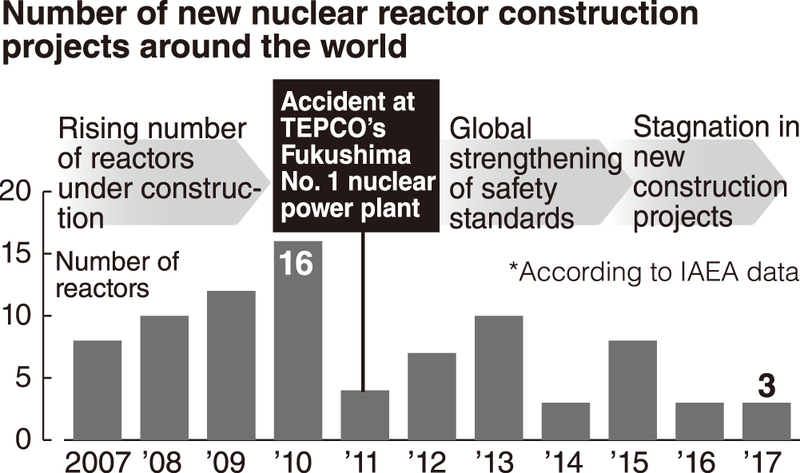
The construction of nuclear reactors is on the decline worldwide. Learning lessons from the Fukushima nuclear accident and tapping rising demand for electricity overseas, especially in Asia, will be key to boosting the nation's nuclear reactor exports.
Nuclear power plants do not emit greenhouse gases when they generate electricity. As combating global warming became an urgent issue since the turn of the century, there was growing momentum globally to build more such plants.
However, the Fukushima nuclear accident prompted an increasingly strict review of safety measures at nuclear plants, and a string of nations opted to ditch nuclear energy.
Germany decided to shut down all of its nuclear reactors by 2022. South Korean President Moon Jae In trumpeted a plan to push the construction of new domestic reactors back to square one.
According to the Natural Resources and Energy Agency and other sources, about 450 nuclear reactors were operating worldwide as of April, with about 120 reactors under construction or in the planning stage. Dependence on nuclear energy is particularly growing in Asia, where rapid economic growth has created a surge in demand for energy.
China stands out in this regard. Even after the Fukushima accident, China has started up more than 20 new reactors. At present, China has about 40 reactors, behind only the United States, France and Japan.
State-run companies such as China General Nuclear Power Group have spearheaded the construction and development of these reactors, and in 2020 China expects to increase the proportion of electricity generated by nuclear power by 80 percent from the current level. China is also boosting nuclear reactor exports to nations such as Pakistan and Argentina.
India also plans to increase its domestic nuclear reactor output from about 7 million kilowatts now to at least 20 million kilowatts in the first half of the 2030s.
South Korea has not changed its plan to boost overseas exports of nuclear reactors by conglomerate-affiliated firms such as Doosan Heavy Industries and Construction.
Competition among companies from Japan, China, South Korea and elsewhere looks set to intensify in the market for nuclear reactor exports.
Read more from The Japan News at https://japannews.yomiuri.co.jp/