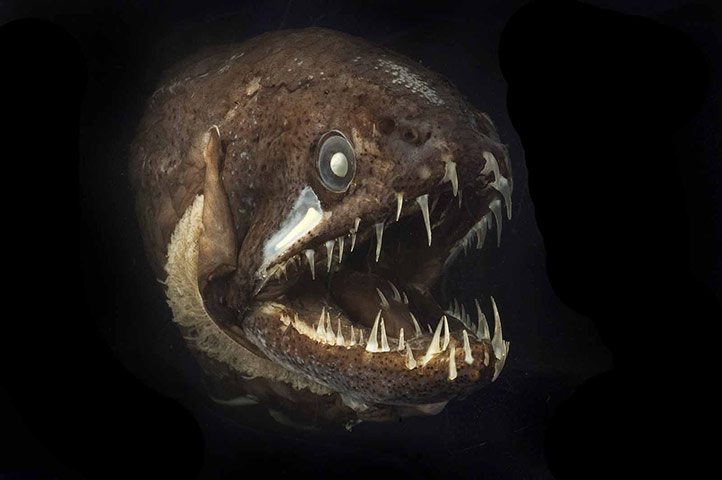
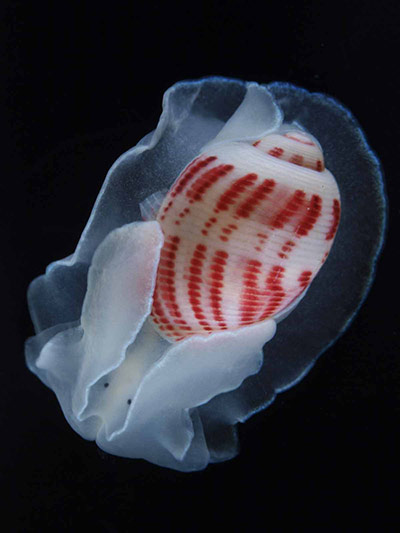
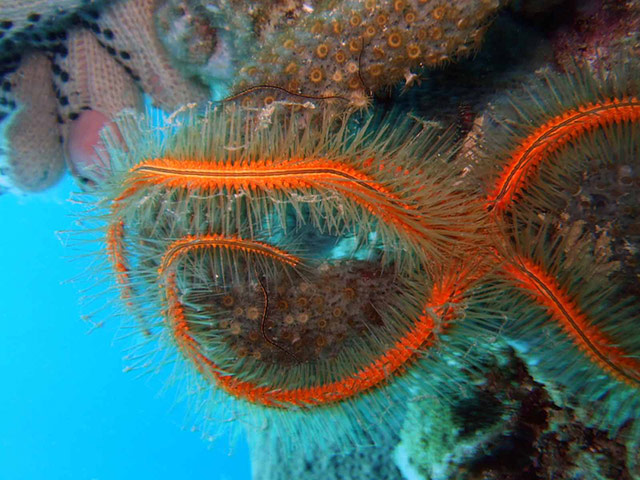
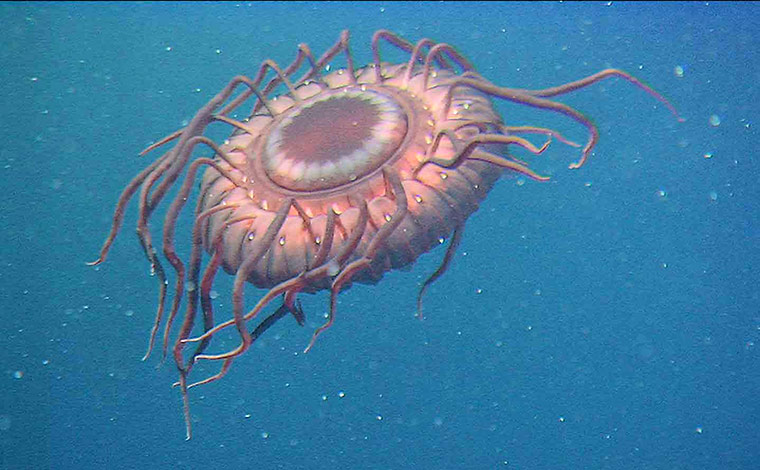
A dragonfish from Australia, which lives in permanent darkness and cold, where food is hard to find. For many animals at depth it may be weeks to months between meals – if they find something to eat, they have to hang on to it. This is why so many deep-sea fish have large teeth. This fish has teeth on its tongue. It would be a terrifying animal if it was not the size of a bananaPhotograph: Dr. Julian Finn/Museum of VictoriaHydatinidae (red-lined paper bubble) off Cape Nomamisaki, Japan. This new species of hydatinid gastropod was discovered from a sperm whale carcass in the deep sea. Its tiny eyes are protected by cephalic shieldsPhotograph: Yoshihiro Fujiwara/JamstecOphiothrix suensonii. These nocturnal echinoderms are called sponge brittle stars. They are very common in the Caribbean. They are so-called because they are found exclusively either inside or outside living spongesPhotograph: Cesar Herrera
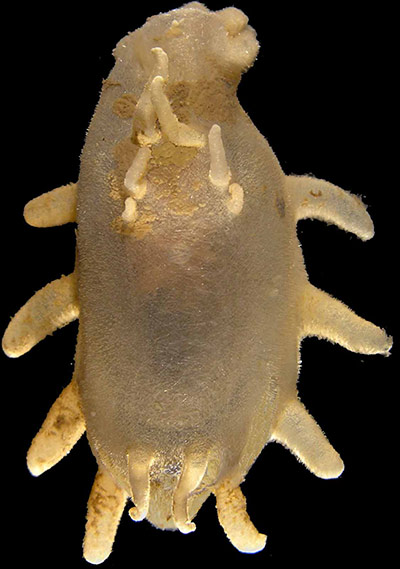
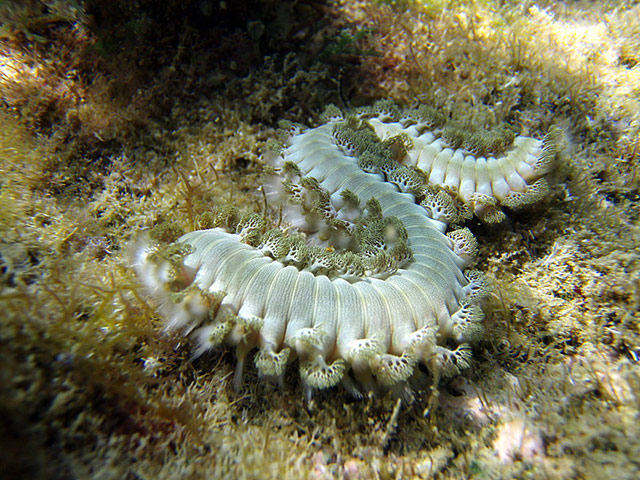
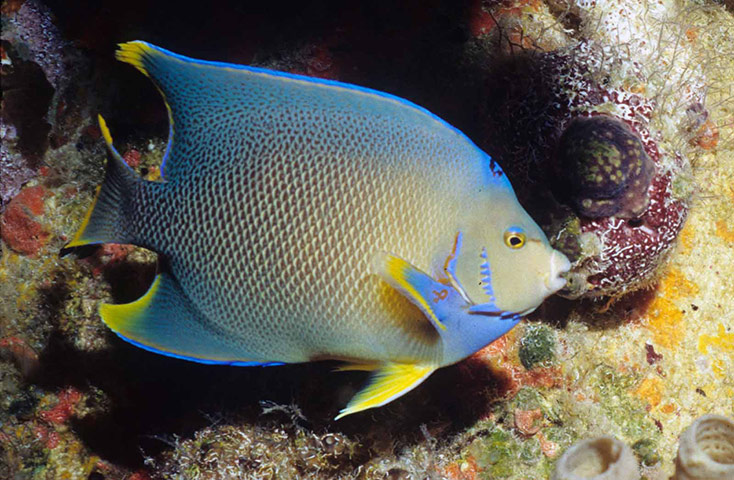
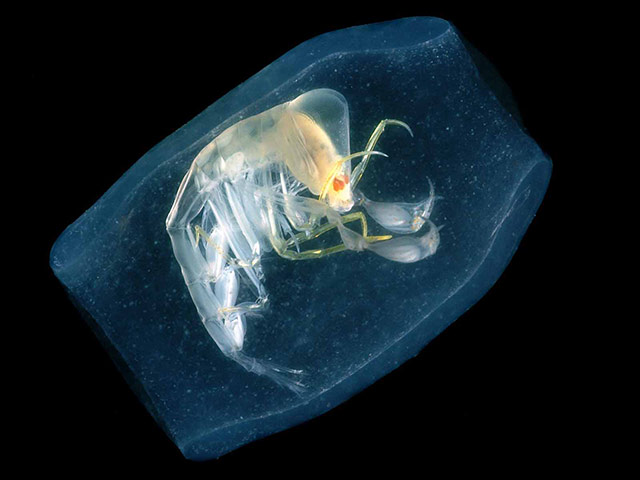
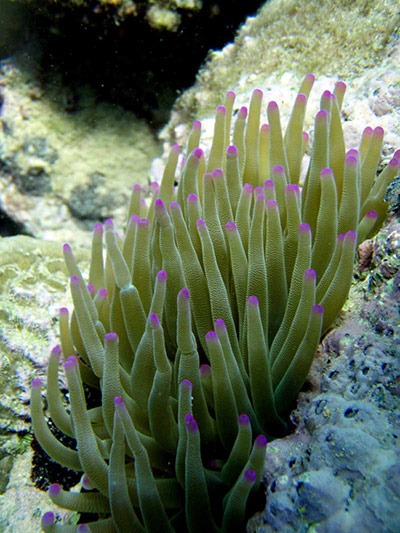
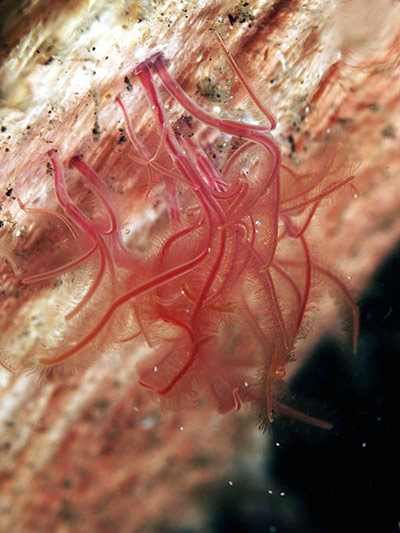
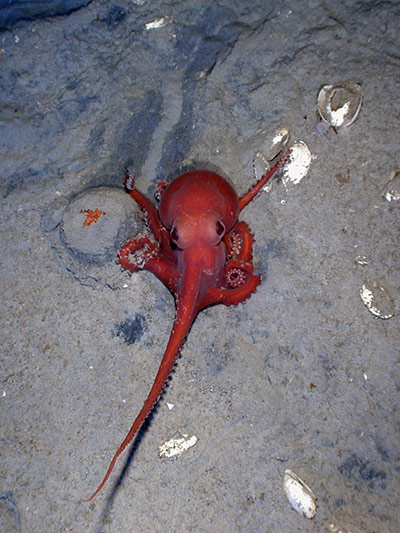
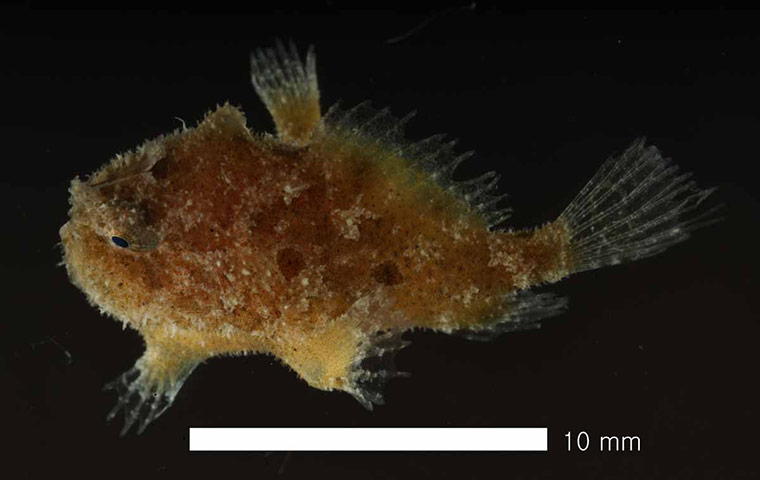
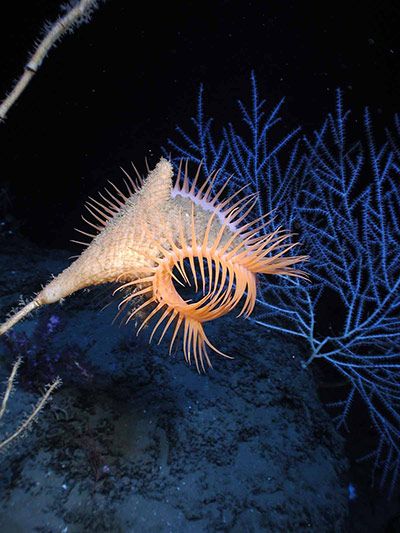
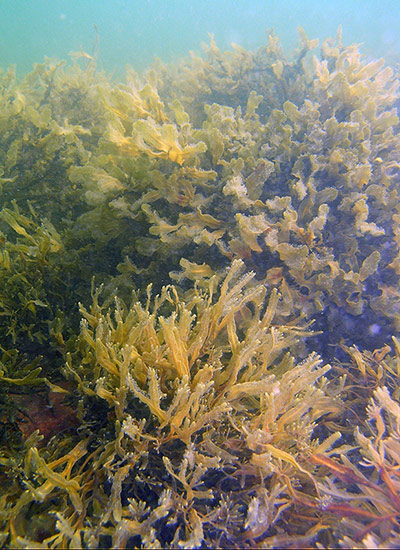
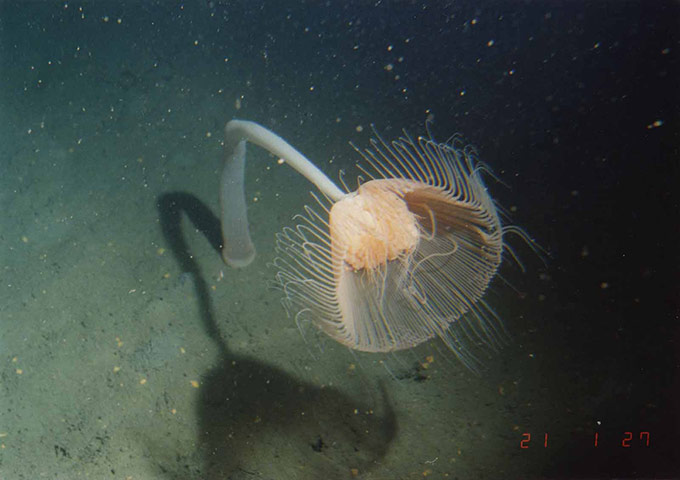
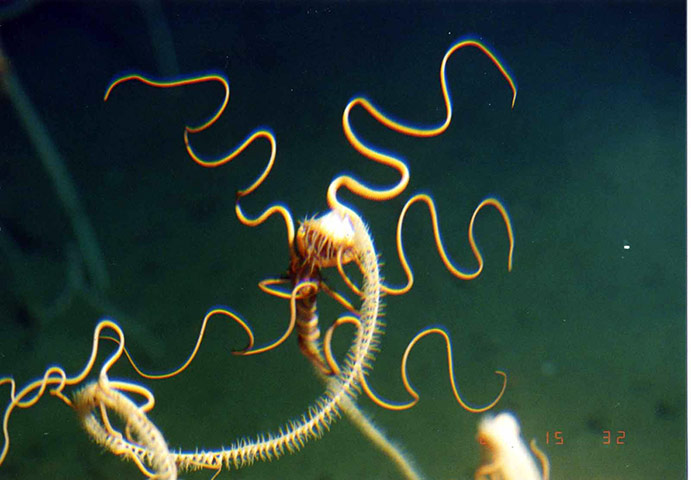
Elpidia belyaevi, a new species of sea cucumber from the Arctic deep seaPhotograph: Antonina Rogacheva/Shirshov Institute of Oceanology, MoscowHermodice carunculata. The bearded fireworm is a type of bristleworm, with groups of white bristles along each side. The bristles are hollow, venom-filled chaeta which easily penetrate the flesh and break off if this worm is handled. They produce an intense burning irritation in the area of contact, hence the common name of the species. It is found in parts of the CaribbeanPhotograph: Eduardo KleinQueen angelfish, Holacanthus ciliaris, near an oil rig in Texas waters, Gulf of Mexico Photograph: G Haralson/Texas A&M PressPelagic amphipod, Phronima sedentaria. It travels in a 'house' that is a cylindrical-shaped organism whose body has an opening on both ends. Gulf of MexicoPhotograph: H Bahena/Texas A&M PressA giant Caribbean anemone, Condylactis giganteaPhotograph: Eduardo Klein/Eduardo KleinDeep-sea jellyfish, Atolla wyvillei. When attacked by a predator, it creates light (bioluminescence) to 'scream' for help. JapanPhotograph: ROV Hyper Dolphin/JamstecA zombie worm (Osedax roseus), Japan. This worm inhabits whale bones and devours them for energy. All Osedax males are dwarfs and live on the trunks of femalesPhotograph: Yoshihiro Fujiwara/JamstecThis deep-water octopus lives at -2700m, Alaminos Canyon, Gulf of Mexico Photograph: I MacDonald/Texas A&M PressThe sargassum fish (Histrio histrio) is a member of the frogfish family from South Korea. A group of small, globular fish with stalked, grasping, limb-like pectoral fins with small gill openings behind the base, a trapdoor-like mouth high on the head, and a 'fishing lure' (formed by the first dorsal spine) on the snout. Although the sargassum fish is capable of swimming quite rapidly, it often crawls through the sargassum weed, using its pectoral fins like arms Photo Credit: Dr. Sung KimPhotograph: Dr Sung KimVenus fly-trap sea anemone (Actinoscyphia Stephenson), found in the Gulf of Mexico, closes its tentacles to capture prey or to protect itselfPhotograph: I MacDonald/Texas A&M PressFucus radicans, a Baltic endemic seaweed that is believed to have formed as recently as about 400 years agoPhotograph: Lena Bergstrom/Swedish Board of FisheriesBranchiocerianthus imperator, a solitary hydroid. found in Japan at depths of 670m Photograph: HOV Shinkai 2000/JamstecAsteronyx loveni. A brittle star often associated with sea pens (a colonial marine animal), found near Japan, at 1,265m depthsPhotograph: HOV Shinkai 2000/Jamstec
Sign up to read this article
Read news from 100’s of titles, curated specifically for you.