Update: This article has been updated with the EX60's battery supplier names and more details on repairability.
The Volvo EX60 heralds a new era for the Swedish automaker. With class leading range of up to 400 miles, blistering charging speeds of up to 370 kilowatts and a raft of high-tech features, it’s set to become Volvo’s most advanced EV yet.
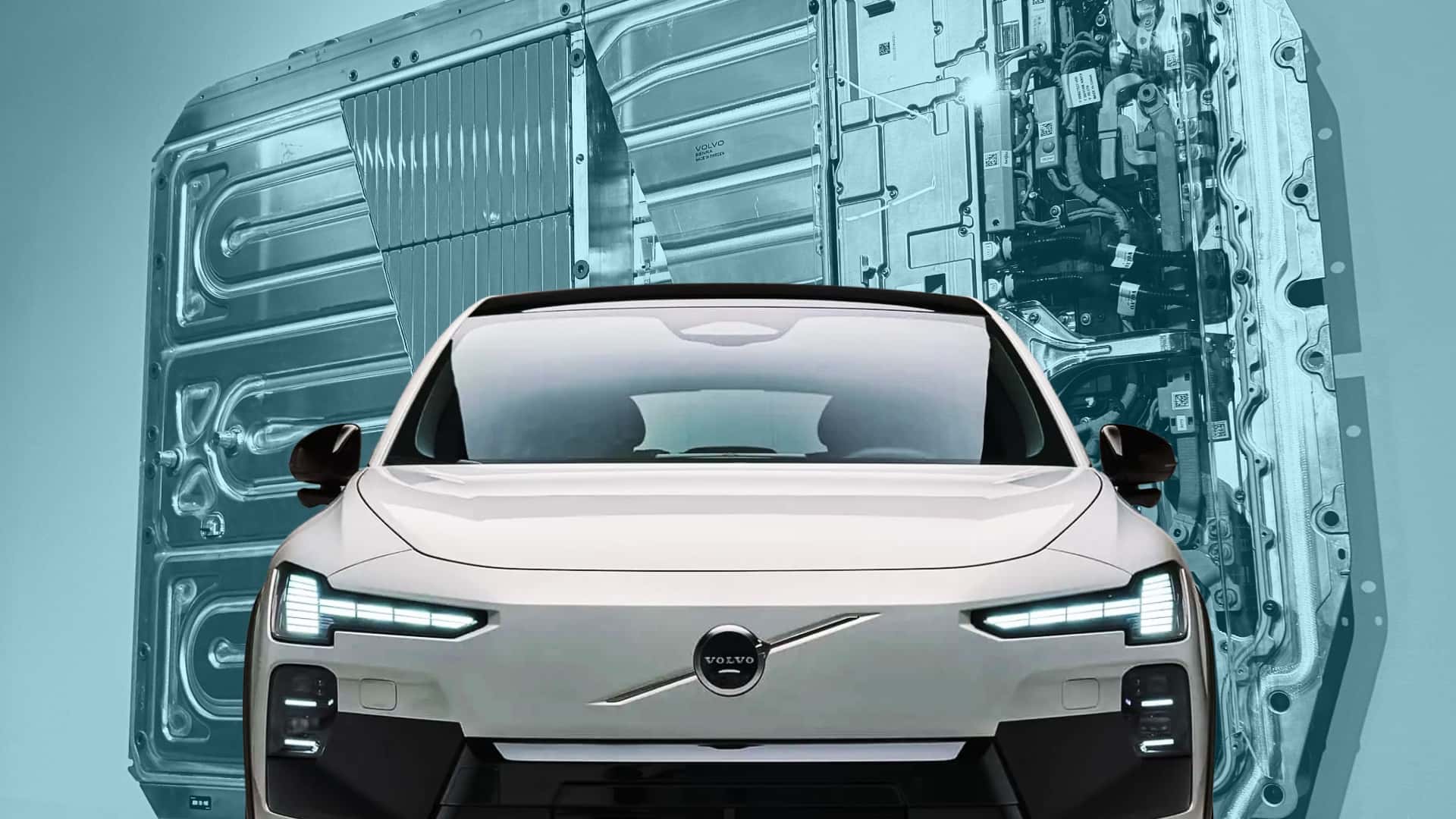
When it arrives in the U.S. this spring, the EX60 will also put Volvo in rare company. The EX60 will join a few other EVs like the Porsche Cayenne Electric and the Tesla Model Y to use a truly cutting-edge structural battery design. The automaker said the EX60 will get what it calls a "cell-to-body" battery.

“It's an architectural breakthrough for us in terms of how we build the car,” Anders Bell, the Chief Engineering and Technology Officer at Volvo Cars, told InsideEVs in an interview at the EX60 debut event. “It's a massive [improvement], we save a lot of weight, we save a lot of cost, which is important because that means we can lower the price for the customers and sell more BEVs,” he added.
Gallery: Volvo EX60 and EX60 Cross Country (2026)




To understand why that matters, let’s just step back and look at how EV batteries are typically constructed. Today, most automakers rely on a module-based architecture, where individual cells are grouped into rectangular modules, which are then assembled into a battery pack that is bolted to the car’s chassis.

It’s a proven, flexible approach used by most of the industry, but it comes with trade-offs in complexity and space efficiency. Modules require more parts, which increases the weight of the pack. The newer cell-to-pack batteries eliminate modules by stacking cells directly into the pack, resulting in better energy density and lower weight.
Volvo is pushing the concept further with the EX60 by adopting cell-to-body construction. In this design, the battery pack itself becomes a load-bearing part of the vehicle’s structure. That means sections of the floor directly integrate the cells, and they effectively become part of the car’s skeleton.
The approach stems from the automaker’s quest to reduce parts and weight. “We decided to standardize everything, all the modularity around large prismatic cells with the terminals facing down,” Bell said. “By making the battery part of the structure, we have a clever application of adhesives between the cells and to the walls, and then we do a full packing closure,” he added.
This shift becomes especially clear when you look at the numbers. The EX90 gets a 111-kilowatt-hour battery pack, of which 107 kWh is usable. That’s enough to deliver about 310 miles of EPA range. The EX60’s top P12 AWD trim, however, gets a 117 kWh battery, of which 112 kWh is usable, and Volvo says that will deliver up to 400 miles of range.
In other words, Volvo has managed to fit more battery capacity—and unlock more range—inside a vehicle that’s nearly 10 inches shorter and also has a slightly smaller wheelbase.
Update: The EX60 uses high-nickel battery chemistry, with two of the smaller batteries, 80 kWh and 91 kWh (usable), coming from Chinese battery maker Sunwoda. CATL supplies the larger 112 kWh battery, according to Kyle Conner of the Out Of Spec Reviews YouTube channel.
That’s the payoff of the cell-to-body design combined with the newer, more space-efficient SPA3 platform, which simply packages energy far more efficiently than the SPA2 architecture underpinning the EX90.
According to Volvo, the cell-to-body battery improves energy density by 20%, reduces overall weight, uses fewer raw materials, and takes up less space inside the vehicle. The company also claims 31% faster charging and a 37% reduction in CO2 footprint, which is sort of a testament to how structural batteries can deliver benefits well beyond just range figures.
Servicing the battery, Bell said, shouldn't be a problem. According to Volvo, more than 90% of battery-related service requests are tied to electronics rather than the cells themselves. On older EVs, servicing often requires dropping the entire pack from the vehicle, which is time-consuming and tedious. On the EX60, by contrast, technicians can access the battery electronics by simply opening the enclosure from under the rear seats.
That said, it’s still early days, and the true serviceability of these batteries remains to be seen. But with Tesla, Porsche, Volvo and a growing list of Chinese automakers moving towards structural batteries, it’s clearly the future of how EVs will be manufactured.
Additional reporting by Mack Hogan.
Contact the author: suvrat.kothari@insideevs.com