Celebrity MasterChef has gone off the boil
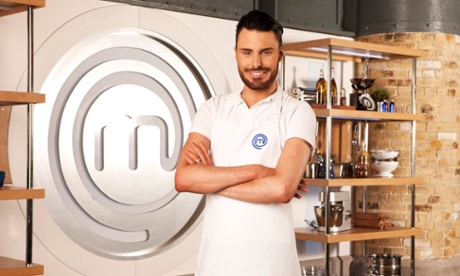
“We’ve got seven cooks and we’re looking for our final four.” I had not been following Celebrity MasterChef (BBC1, Friday) for a few episodes, and was astonished to find that Mica Paris was still standing. What? She was hopeless in the beginning bit! How did this happen? And Rylan? Rylan can cook? There are many rumblings about MasterChef being past its best, and the mess of contestants and challenges on Friday’s episode seemed to back this up. They were just allowed to cook whatever they wanted. No direction. No challenge. The Kansas City barbecue of the very sweet Pussycat Doll was unobjectionable, but unobjectionable is not good food or good telly. Where’s the jeopardy and/or the skill? Celebrity MasterChef is always tricky, because what do the contestants have to lose other than a bit of face (or, admittedly, a bit of finger, in the case of Wanted singer Tom Parker)? At least Mica bombed out by the end. “I’m just not good with desserts,” she sighed. Rylan to win. As long as he doesn’t trip over his teeth.
Middle England was not a nice place to live in the 1950s
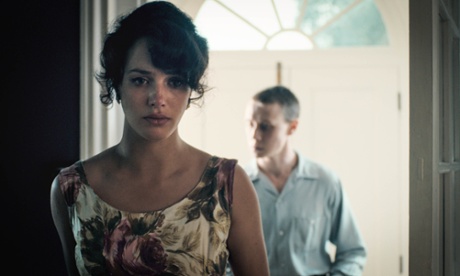
The first part of The Outcast (BBC1, Sunday) was excellent, and part two continued in the same vein. In fact, it possibly even upped its game. What an extraordinary drama of Hollywood proportions, with a knockout performance from George MacKay as Lewis Aldridge, “outcast” from his community and his family for having witnessed his mother’s drowning as a 10-year-old boy. Put very simply, the story was a great advert for talking about your feelings. Every character was a victim not only of repressed circumstances, but also of the sort of British upper lip so stiff it virtually had rigor mortis. The most memorable moment was when Lewis’s father Gilbert (Greg Wise) came undone, having said goodbye to his son for the last time and finally let in the grief for his wife that he had buried for more than a decade. A classic, challenging and inimitable piece of television: boldly acted, beautifully shot and skilfully written. It wasn’t easy to watch, but when is something meaningful easy?
Londoners were no less stressed four centuries ago
“Archaeologists are uncovering the 17th-century people of London ...” London’s Lost Graveyard: Crossrail Discovery (Channel 4, Sunday) had the intense handicap of being like Time Team without Tony Robinson. Somehow, it managed to overcome this and morph into a fascinating, simply shot documentary about an unexpected find: a burial ground uncovered by the Crossrail team at Liverpool Street station. The remains of 17th-century Londoners reveal a city eerily similar to today’s: a melting pot of nationalities from all over the globe, all overworked, stressed and resorting to substance abuse to cope with city life (in this case, tobacco). I loved the bone woman who said of her favourite skeleton: “Ooh, he’s got rather lovely, big toes.” She diagnosed him with RSI from operating a foot pedal all day. Better than getting it from overuse of Twitter, I suppose.
The Industrial Revolution is interesting – as long as you’re wearing hiking boots
If you wanted a bit of Tony Robinson this weekend, however, you could have had some. Walking Through History: The Birth of Industry (Channel 4, Saturday) also suffered from not being Time Team, though. (Sorry, I’m a bit obsessed with Time Team.) “I’ve driven hundreds of thousands of miles to uncover the history of these islands. But now it’s time to do something different ... I’m going to walk.” British history on foot? Tomfoolery or cunning plan? This series is Who Do You Think You Are? (with Great Britain as the subject) crossed with Clare Balding’s BBC Radio 4 series about rambling. Provided you’re the sort of person who has considered becoming a member of the National Trust, it’s bloody fascinating. This was an engaging and charming way to look at the Industrial Revolution in Derbyshire through the eyes of a genuinely enthusiastic broadcaster. Well done, Baldrick, for making something that should have been totally boring most excellent.