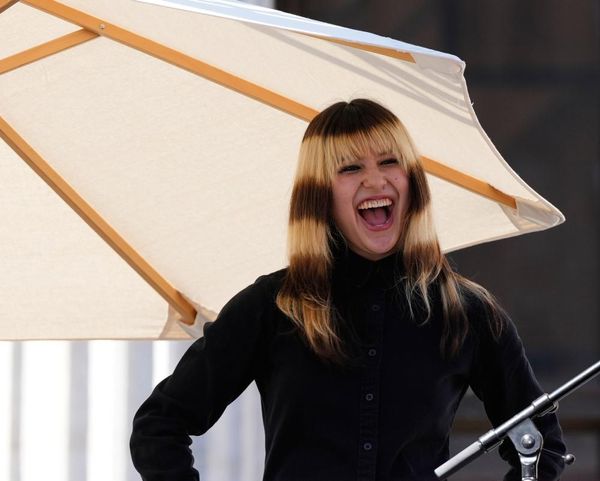
The dancer and choreographer Akram Khan is not known for sitting still, but he will have to this weekend because he has invited anyone, from anywhere, to paint him in his own home.
Khan is the first sitter for a live and experimental version of one of Sky Arts’ most popular shows, Portrait Artist of the Year.
Epidemics of infectious diseases behave in different ways but the 1918 influenza pandemic that killed more than 50 million people is regarded as a key example of a pandemic that occurred in multiple waves, with the latter more severe than the first. It has been replicated – albeit more mildly – in subsequent flu pandemics.
How and why multiple-wave outbreaks occur, and how subsequent waves of infection can be prevented, has become a staple of epidemiological modelling studies and pandemic preparation, which have looked at everything from social behaviour and health policy to vaccination and the buildup of community immunity, also known as herd immunity.
Is there evidence of coronavirus coming back elsewhere?
This is being watched very carefully. Without a vaccine, and with no widespread immunity to the new disease, one alarm is being sounded by the experience of Singapore, which has seen a sudden resurgence in infections despite being lauded for its early handling of the outbreak.
Although Singapore instituted a strong contact tracing system for its general population, the disease re-emerged in cramped dormitory accommodation used by thousands of foreign workers with inadequate hygiene facilities and shared canteens.
Singapore’s experience, although very specific, has demonstrated the ability of the disease to come back strongly in places where people are in close proximity and its ability to exploit any weakness in public health regimes set up to counter it.
What are experts worried about?
Conventional wisdom among scientists suggests second waves of resistant infections occur after the capacity for treatment and isolation becomes exhausted. In this case the concern is that the social and political consensus supporting lockdowns is being overtaken by public frustration and the urgent need to reopen economies.
The threat declines when susceptibility of the population to the disease falls below a certain threshold or when widespread vaccination becomes available.
In general terms the ratio of susceptible and immune individuals in a population at the end of one wave determines the potential magnitude of a subsequent wave. The worry right now is that with a vaccine still months away, and the real rate of infection only being guessed at, populations worldwide remain highly vulnerable to both resurgence and subsequent waves.
Because of the coronavirus lockdown, producers are inviting celebrity sitters to pose, with audiences being invited to paint them from home. The public can submit their finished work and the best will be showcased by judges.
“The thought of being still is horrendous for me,” Khan admitted, prior to his four-hour stint for week one of the show. “As a child, my teachers would be so frustrated they would say: ‘If he could just sit still and focus, because the intelligence is there.’”
Then there is the prospect of seeing the results. “I’m very happy to see other versions of myself because you always see yourself in the way you want people to see you. It’s going to be fascinating. I’m excited and terrified at the same time.”
The new Facebook version of the show will be presented by regular host Joan Bakewell while Christabel Blackburn, the winner of the most recent series, will paint Khan live from her home. She will offer tips and interact in real time with questions from the public.
It is due to run for four weeks every Sunday with future celebrity sitters yet to be named.
Philip Edgar-Jones, the director of Sky Arts, said the painting programme was popular for the same reason as The Great British Bake Off.
“People like to watch people who are good at stuff, doing it really well and pick up tips along the way,” he said. “When we first commissioned it there were people in the office saying: ‘Why is there a programme about watching paint dry? That can’t possibly be interesting.’”
Sky Arts had experienced a 55% increase in viewing since the lockdown started, Edgar-Jones said, and would begin making a number of programmes available free on the Sky TV YouTube channel from Friday.
There will be a weekly package of content made available for a limited time, including concerts by the Bee Gees and Queen; and episodes of documentaries including Treasures of the British Library.
Edgar-Jones said it was part of a mission to make the arts more accessible.
• The subheading of this article was amended on 24 April 2020 because the audience’s submitted artwork will not be judged for the Portrait Artist of the Year award as an earlier version said. This has been corrected.