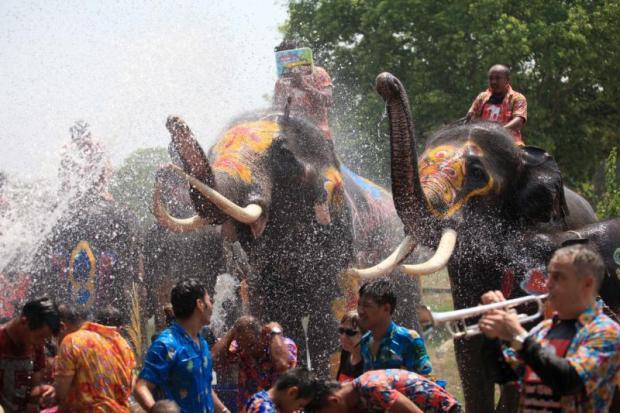
Spending during the upcoming Songkran festival is expected to be more active than last year, as people's festive sentiment was buoyed by the long-awaited general election.
The increased prices of products and services were also credited for the higher projected spending.
According to the latest survey by the University of the Thai Chamber of Commerce (UTCC), Songkran spending by Thais is forecast to rise by 2.8% this year to 135.8 billion baht.
The survey of 1,202 respondents found that most spending is for buying luxury and ornament products, durable goods, partying, making merit and alcoholic drinks.
"Unlike in the past few years, the structure of people's spending has shifted this year to more celebrations instead of merit-making," said Thanavath Phonvichai, vice-president for research at the UTCC.
Mr Thanavath said many Thais plan to travel during the long holiday period, with 12.8% of respondents heading overseas and their planned spending averaging 58,500 baht, the highest in six years.
The most popular destinations are Japan, Singapore, South Korea, Hong Kong, China, Taiwan, Macau and Europe.
The majority still prefer travelling in Thailand, with average spending projected at 5,232 baht. Popular destinations include Bangkok, Phuket, Krabi, Nakhon Ratchasima, Khon Kaen, Chon Buri, Kanchanaburi and Phitsanulok.
Mr Thanavath said many are still wary of visiting Chiang Mai, a traditional favourite for Songkran, citing the persistent toxic haze.
He said most Thais remain cautious about spending, as they are concerned about long-term political stability.
"The political situation turns out to be the key risk factor affecting the economy this year," he said. "Most people are worried about a possible delay in the new government's formation and street protests."
Mr Thanavath said domestic and foreign investors alike are closely watching the political situation in Thailand and may suspend their investments.
Chinese and other Asian tourists may cancel their trips to Thailand if there are political protests, he said.
Tourism is the key driver for the Thai economy this year, Mr Thanavath said.
"If tourist arrivals fall, it will definitely hurt economic growth," he said.