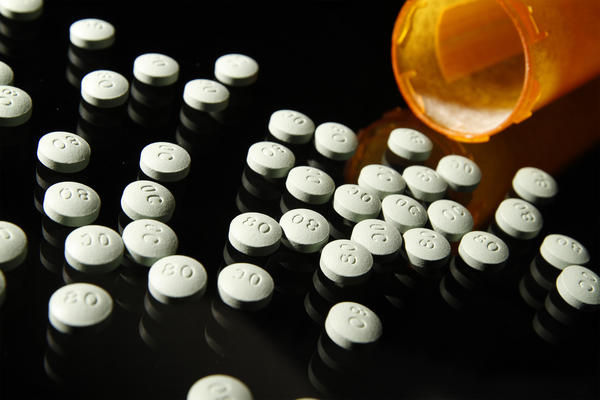
PITTSBURGH _ Several Western Pennsylvania counties bucked a national downward trend in opioid prescribing, as their residents got increasing amounts of the legal narcotics blamed for spurring a surge in addictions and overdoses, according to data released Thursday by the Centers for Disease Control and Prevention.
Nationally, doctors began in 2010 to pull back from the rising opioid prescribing that characterized the prior decade, the CDC reported. But the opposite was true in Greene, Crawford, Warren, Venango and Elk counties, according to the CDC. And remaining among the nation's heavy-prescribing counties were Fayette, Cambria, Blair, Crawford, Mercer, Venango, Lawrence, McKean, Elk and Cameron.
"Opioid prescribing varies as much from place to place as the weather," said CDC Acting Director Anne Schuchat. In 2015, the CDC found, counties in the top-prescribing categories saw rates six times that seen in the lowest-prescribing counties.
"The amount of opioids prescribed in the U.S. is still too high, with too many opioid prescriptions for too many days at too high a dosage," said Schuchat.
The CDC analyzed a decade of opioid prescribing, ending in 2015, and also compared it to 1999 figures. They found a leveling off in 2010, and a steady dip since 2012. But the rates of opioid prescribing in 2015 were still triple 1999 levels.
Nationally, the rate topped 81 opioid prescriptions per 100 Americans in 2010, then sagged to 71 by 2015. Still, that was enough to medicate every American "around the clock for three weeks," said Schuchat.
Some states _ the CDC noted Ohio, Kentucky and Florida _ took vigorous action and drove prescribing down in the majority of their counties.
Pennsylvania took many of the same measures late last year.
"There's quite a bit more room for improvement," said Schuchat. State prescription drug monitoring programs can be made more usable, and should allow doctors to see their patients' drug histories across multiple states, she said.
Counties with persistently high levels of opioid prescribing tended to be mostly white and non-Hispanic, with small cities or big towns, and characterized by higher unemployment. They had higher-than-average prevalence of diabetes and arthritis, disability and suicide, and lower-than-average rates of educational attainment and private insurance coverage, the CDC found.
"After taking (opioids) for just a few days, a person becomes more likely to take them long-term," said Schuchat, adding that even a low-dose opioid, taken for three months, increases the risk of addiction 15-fold.
The CDC put the number of prescription opioid addicts at 2 million, and the "economic burden" of the problem at $78.5 billion a year.
"We're now experiencing the highest drug overdose death rates ever recorded in the U.S.," said Schuchat. "This is just a tragic outbreak on so many levels."
Experts have long held that the rise in opioid prescribing helped to lay the groundwork for an illicit narcotics surge, which now brings heroin, fentanyl and exotic, deadly foreign-made compounds like Carfentanil and U-47700 to neighborhoods nationwide. Those drugs are now blamed for the vast bulk of overdose deaths.
"In 2015, drug overdoses accounted for 52,404 deaths in the United States, 63.1 percent of which involved an opioid," the CDC found. "Among opioid-related deaths, approximately 15,000 (approximately half) involved a prescription opioid."
The CDC blamed the overdose increase largely on "use of illicit fentanyl and heroin. There is no evidence that policies designed to reduce inappropriate opioid prescribing are leading to these increases."
Such policies, the CDC added, "might reduce the number of persons initiating illicit opioid use in the longer term."
The CDC has recommended that doctors honor opioid prescribing guidelines promulgated last year, and use state prescription drug monitoring programs that allow them to see whether patients are getting narcotics from multiple sources.
Last month the Drug Enforcement Administration reported that in Pennsylvania, 4,642 people died from drug overdoses last year, up from 3,377 the year before.
Last week Blue Cross Blue Shield, which includes Highmark, issued a report that, similarly, looked at prescribing from 2010 through 2016.
It found that 21 percent of its commercially insured members filled an opioid prescription in 2015, and that during the period studied diagnoses of abuse of such narcotics quintupled. Medication-assisted treatment didn't keep pace, rising by just 65 percent, and especially lagging in the South and Appalachia.
Among Blue Cross Blue Shield members under 45, men had higher rates of opioid abuse disorders than women. But among members over 45, women had higher rates.
Pennsylvania ranked in the middle of the pack by most measures. In the state, 17.4 percent of members filled at least one opioid prescription in 2015 _ far below highest-in-the-nation Arkansas at 27.9 percent, but significantly higher than New York's 13.1 percent, which was the lowest.
In Pennsylvania, 6.8 out of every 1,000 Blue Cross members were diagnosed with opioid use disorders in 2016, below the national average of 8.3. The highest rate was Tennessee's 16.5 per 1,000, and the lowest was Nebraska's 2.4 percent.
Pennsylvania ranked relatively high in opioid disorder treatment; 56 percent of Blue Cross members who had diagnosed problems got medication-assisted treatment, versus a national average of 37 percent.