Nearly 7,000 cases of cyclosporiasis - the parasite leaving victims with “explosive diarrhea” - have been reported across across the United States as officials still have not identified the root cause of the outbreaks.
As of Thursday, the Centers for Disease Control reported 1,645 lab-confirmed infections and said it is reviewing roughly 5,100 additional suspected cases. Federal officials caution that the CDC’s figures likely trail state-level counts, noting the agency is working closely with state partners to bring the data up to date.
The illness — caused by ingestion of the microscopic cyclospora parasite — has surfaced in more than 30 states, sickening thousands, becoming one of the most significant outbreaks in recent years. This time last year, there were less than 250 cases, according to The Hill.
Though rarely life-threatening, the infection can lead to a nasty array of symptoms, including what officials describe as “explosive bowel movements,” as well as fatigue, fever, nausea and vomiting.
Pinpointing the source has proved challenging, in part because symptoms can take more than two weeks to manifest. Still, investigators are zeroing in on possible culprits: Taco Bell has reportedly come under investigation, while officials in Michigan — where over 3,000 cases have been reported — have suggested contaminated leafy greens may be to blame.
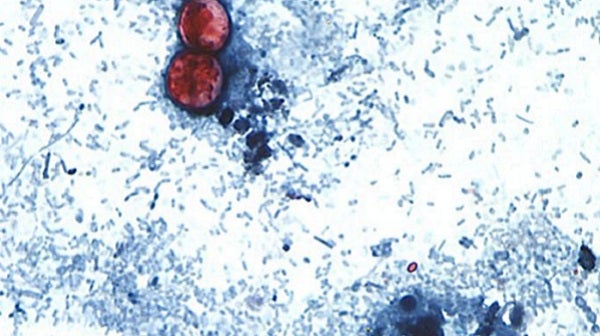
As of Thursday, the CDC’s website states that 1,645 cyclosporiasis cases have been reported to the agency across 34 states, including 141 that led to hospitalizations. Zero deaths have been reported.
At the same time, the agency acknowledges that it “is aware of more than 5,100 cases that require further analysis to confirm the illness as domestically acquired cyclosporiasis.” This represents a major uptick from Tuesday, when the nation’s premier health prevention agency said it had 1,500 suspected cases on its radar.
Part of the reason for the discrepancy between federal and state data is that states may report both confirmed and probable cases, while the CDC does not include unconfirmed cases in its tally.
Now overseen by acting director Jay Bhattacharya, the agency has come under scrutiny over its handling of the outbreak after cyclosporiasis was removed from FoodNet, a key CDC surveillance program, last summer.
Dan Jernigan, the former head of the CDC’s Center for Emerging and Zoonotic Infectious Diseases, told The Washington Post that the change likely did little to affect the current response.
“Routine outbreak investigators are the firefighters responding to a specific blaze,” Jernigan told the Post. “FoodNet is the citywide system that tracks how often fires occur and whether the overall risk is rising. Removing cyclosporiasis from FoodNet does not take the firefighters away from the current outbreak, but it does remove part of the system that tells us how large the problem is and whether it is getting worse over time.”
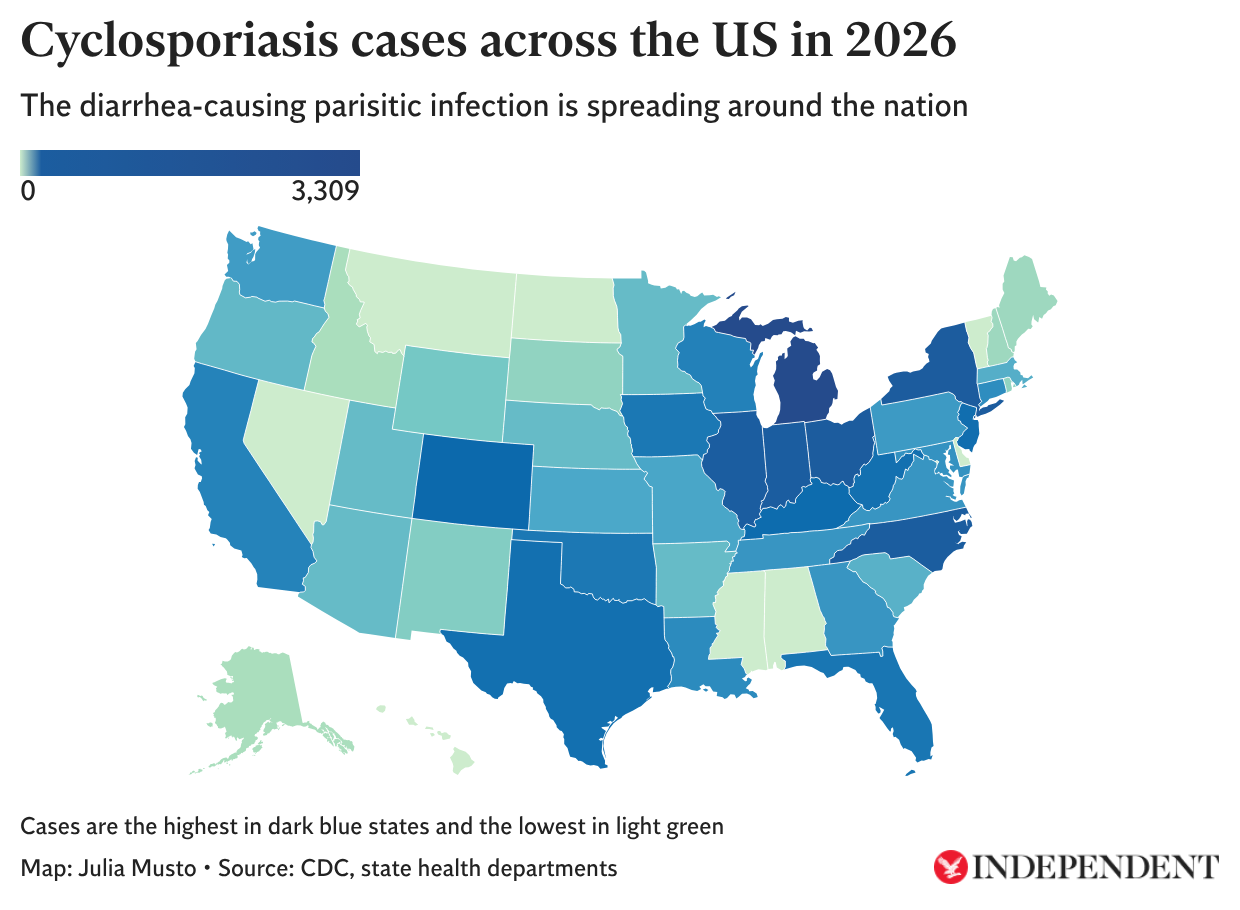
This week, state data suggested the outbreak was intensifying.
On Wednesday, Michigan health officials reported 3,762 cases, including 44 hospitalizations. North Carolina recorded 307 cases with 13 hospitalizations, while Illinois reported 240 infections, 21 of which led to hospitalization, according to local media reports.
New York City alone has logged over 400 cases so far this year, marking over a threefold increase from the same period last year, according to PIX11.
Symptoms typically develop between two days and over two weeks after consuming food or water contaminated by feces and containing the parasite, according to the CDC. The most common symptoms are “watery diarrhea” and “explosive bowel movements.” While the illness typically resolves on its own, it can linger for over a month.
While cyclosporiasis infections occur year-round, particularly during the warmer months, the latest outbreak appears unusually large. According to CNBC, only a handful of outbreaks over the past two decades have surpassed 1,000 reported cases, placing the current surge among the more significant in recent memory.
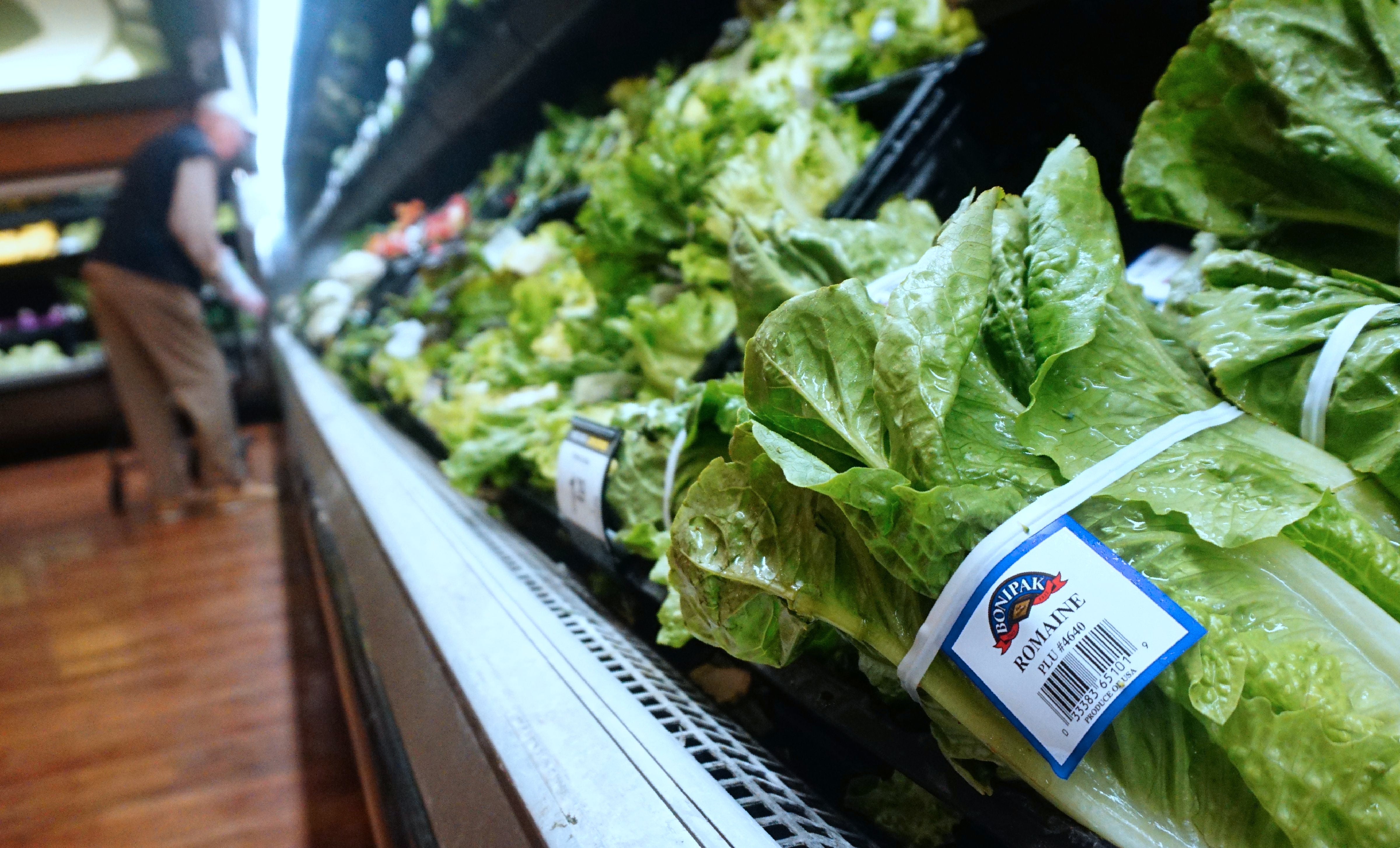
Past outbreaks have been linked to contaminated produce, including cilantro and basil. On Monday, the Michigan Department of Health and Human Services said lettuce may be responsible this time.
“Although we do not have a definite product identified as the source of the outbreak…early information has shown lettuce as a common product that regularly comes up during the investigation,” Chief Medical Executive Dr. Natasha Bagdasarian said in a statement.
To reduce risk, public health experts recommend a battery of precautions: thoroughly washing hands with soap before handling produce, scrubbing fruits and vegetables, peeling outer layers when possible and cooking them where feasible. At least one expert also urged salad lovers to avoid leafy greens altogether for the time being.
“If you’re somebody that seems to go to salad bars on a weekly basis, just give that a rest for a week or two while we figure out where this outbreak is coming from,” Dr. Richard Smith, an infectious disease specialist in San Diego told NBC News.
Bananas, kiwis, avocados and potatoes are considered safer bets for those worried about the illness.
Multiple experts have said they are unsure how long this current outbreak may last.
“What's different this year is the unusually high number of cases and the fact that investigators still haven't identified a specific source," Dr. Suraj Saggar, chief of infectious diseases at Holy Name Medical Center in New Jersey, told USA Today.
.png?w=600)