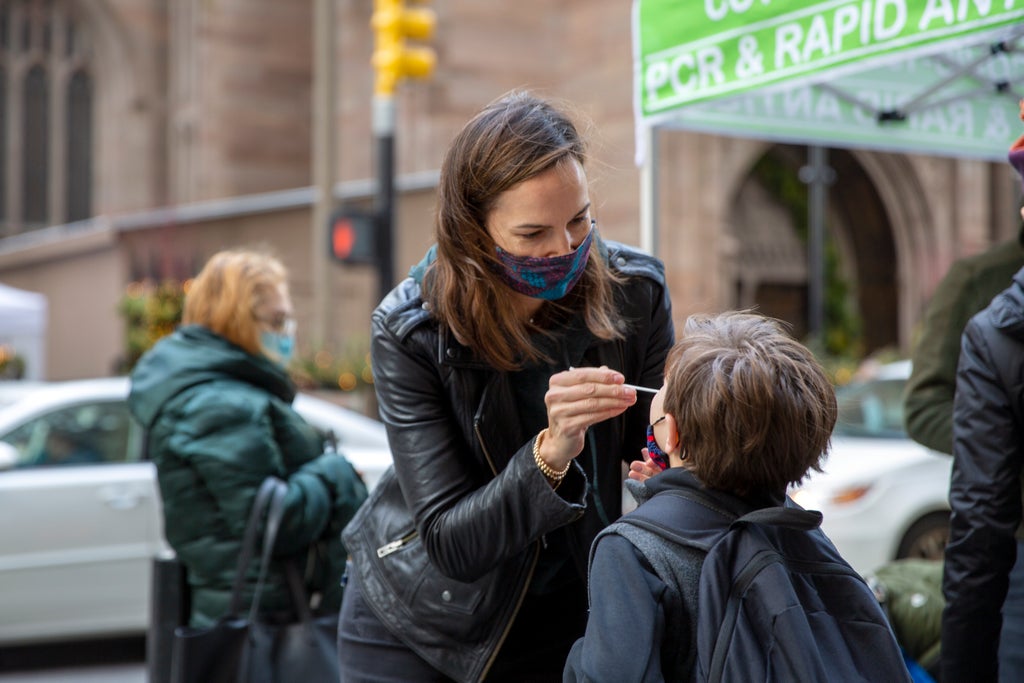
U.S. health officials are endorsing “test-to-stay” policies that allow close contacts of students infected with the coronavirus to remain in classrooms if they test negative.
The Centers for Disease Control and Prevention decided to more firmly embrace the approach, already used my many school districts, after research of such policies in the Chicago and Los Angeles areas found COVID-19 infections did not increase when using the approach.
“Test-to-stay is an encouraging public health practice to help keep our children in school,” CDC Director Dr. Rochelle Walensky said on Friday.
CDC's official guidance for schools has been that when someone in a school tests positive for COVID-19 infection, those who were deemed to be in close contact should stay out of school, in home quarantine, for 10 days.
With the announcement Friday, the CDC is saying both test-to-stay programs and quarantining approaches are both equally good options for schools.
Hundreds of schools have adopted test-to-stay policies, and several states have funded statewide test-to-stay policies to prevent students from spending long stretches away from school.
Previously, the CDC said there is promise in the approach, as long as other measures such as masking for both teachers and students were followed.
CDC has been working with some school districts to evaluate the programs, and the agency released two studies that indicated they worked well.
One was in suburban Lake County, Illinois just north of Chicago, which adopted a program in August. Close contacts were allowed to stay in school provided both the infected person and close contact were masked when an exposure might have happened, the close contact had no symptoms, and the close contact was tested one, three, five and seven days after exposure to the infected person.
Infections developed in only 16 of the more than 1,000 close contacts who were tracked, a transmission rate of about 1.5%. Health officials deemed it a successful approach that allowed many students to stay in school.
Similar results were reported in a similar study that looked at what happened this fall in schools in Los Angeles County, California. Researchers counted 7,511 student close contacts in schools that tried the strategy, and the secondary infection rate was 0.7%.