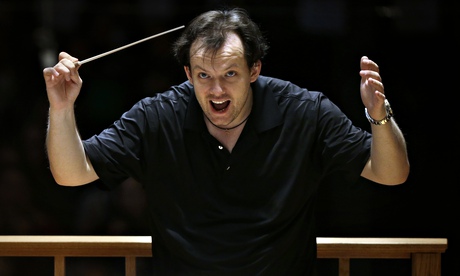
Andris Nelsons seems to be working his way through the Bruckner symphonies slowly but surely. He has already performed the Third Symphony with the City of Birmingham Symphony, and the Sixth with other orchestras, but an earlier plan to tackle the Seventh in the Symphony Hall had to be postponed because of the birth of his daughter. Nelsons reprogrammed it for this concert in his final season as the CBSO’s music director, however, and the result was as thoughtful and distinctive as everything he conducts.
The doors to the reverberation chamber behind the orchestra had been opened as wide as possible for the performance, and though that did not create the kind of cathedral acoustic that permeates so much of Bruckner’s symphonic thinking, it was enough to give a delicate colour to the work’s silences and to extend the effect of its cadences. Generally, though, Nelsons kept things airy and transparent; it was clear from the veiled lightness of the strings at the start of the work that this was not going to be heavyweight, minatory Bruckner, but something much more athletic, direct and texturally interesting. If anything the rhetoric was underplayed: the close of the first movement was not the brassy triumph some conductors make of it, but more measured and provisional, and even the shattering climax of the slow movement and the reconciliation of the finale kept something in reserve.
In some ways, too, the symphony had been upstaged by Schumann’s Piano Concerto, with Stephen Hough as soloist, before it. That had been a performance of such startling freshness and clarity that one of the most familiar of all 19th-century piano concertos seemed totally reimagined, with the sweep and vigour supplied by Nelsons and the orchestra as the perfect foil to Hough’s cool brilliance.