OSAKA -- When you hear the dry sound of wooden clappers and someone calling out, "OK, let's start," before the start of a paper picture show, you should already be caught up in the world of a story.
As late as the early postwar era, and before television and the internet became common, kamishibai picture-card shows, performed outside in places like parks, were a big pastime for children. Kamishibai is a form of Japanese street storytelling using pictures.
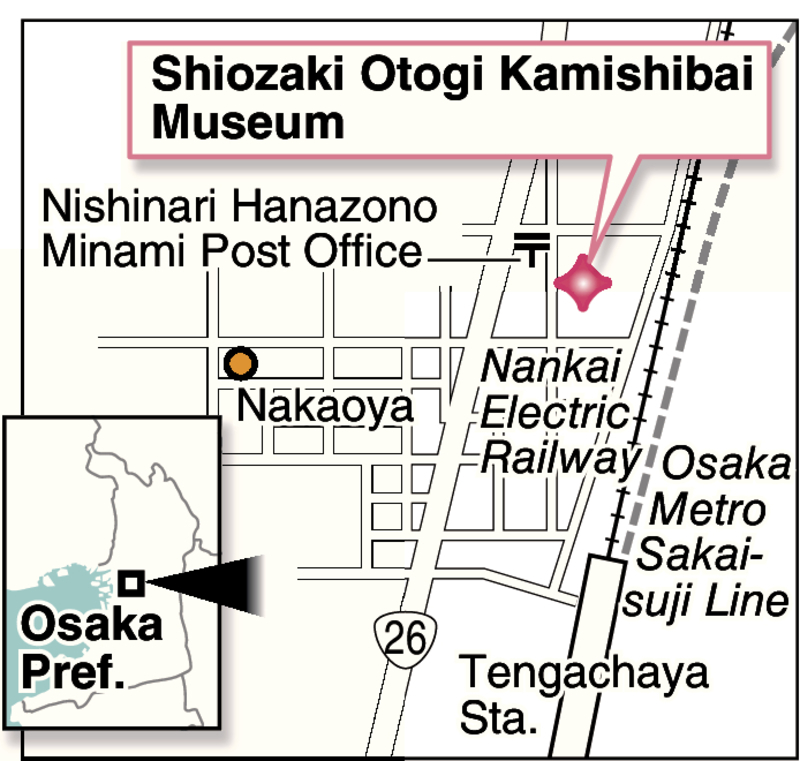
Nestled in a district in Nishinari Ward, Osaka City -- which maintains the atmosphere of a "shitamachi" traditional residential and commercial area, there is the Shiozaki Otogi Kamishibai Museum conveying the charm of a pictured show to the present.
On Dec. 14, 2019, I visited a retro-looking two-story private dwelling that houses the museum.
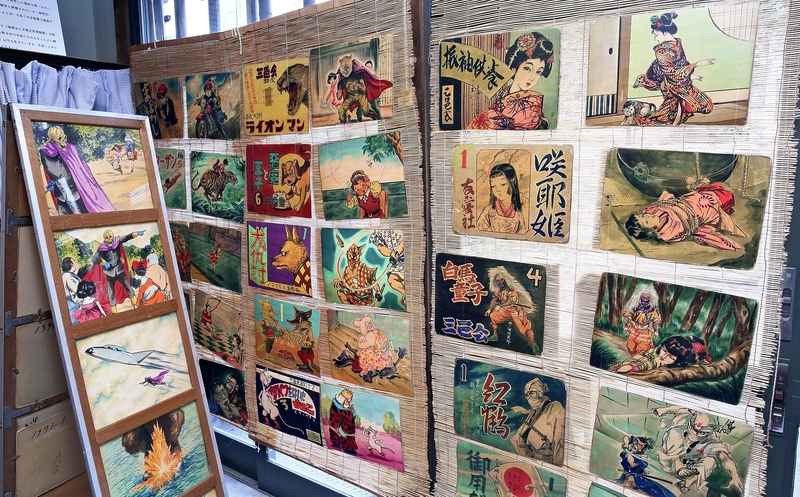
When I opened the sliding door of the house, the first thing I saw was an old bicycle on the dirt floor. There were replicas of old kamishibai paper picture cards on the wall, including those drawn with heartwarming lines that seemed to be a four-frame cartoon, elegant pictures in Japanese painting style, and ones painted with shocking colors with a taste of the macabre.
Seeing my eyes glued to the pictures on the wall, a female staffer proudly said, "All these things are [replicas of] one-of-a-kind works by painters who were active in the Kansai region."
About 20,000 volumes produced from the mid-1940s to mid-1980s are stored in the museum, she said.
Major postwar entertainment
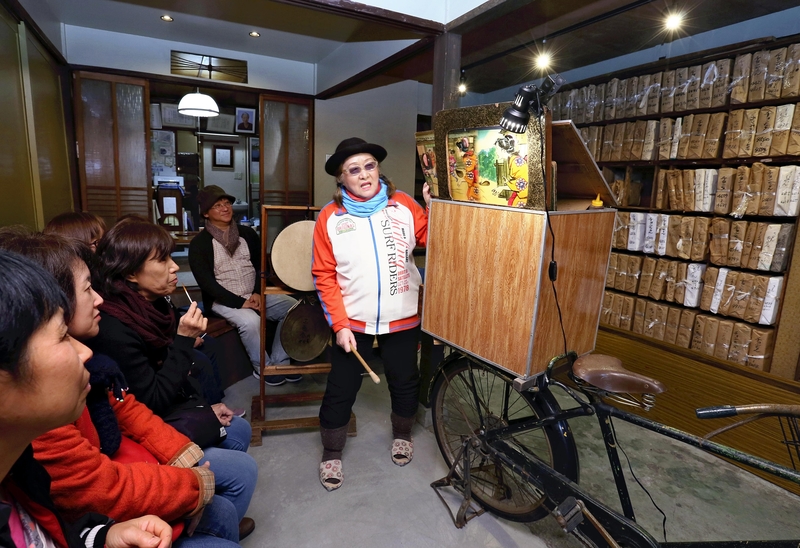
Loading a miniature stagelike box onto a bicycle, picture-card storytellers used to sell candies and other sweets to children as a fee for the show. The traveling kamishibai show was born in Tokyo in the early Showa era (1926-1989) and quickly attracted many children.
Kamishibai became popular again after the end of World War II, and many storytellers were demobilized veterans and those who lost their homes in air raids, the staff member explained.
Genichiro Shiozaki (1912-2000), who was a producer of picture-story cards, opened the museum at his house in 1995.
Shiozaki, who aimed to inspire children's dreams with kamishibai, had talented cartoonists and painters draw pictures one after another and then lent the cards to storytellers. These artists included Shichima Sakai, known as the master of Osamu Tezuka, and Motoichiro Takebe, a master of science fiction.
The picture-cards, which are beautifully finished with a special lacquer, made a unique impact.
Sense of unity
"It's about time for a show," said veteran kamishibai storyteller Chikako Koyama, 71. She started a tale from the period drama "Chiyomaru Tanuki."
It is a series of rare journeys in which a samurai's son, Umemaru, and his sister Kayo are bewitched by a raccoon dog. "Oh, my goodness! What happens next?" she said. The place was filled with a sense of unity as the sound of a gong echoed around her energetic voice.
About 30 years ago, Koyama was so impressed by Shiozaki's passion for kamishibai that she became his pupil. Since then, she has performed kamishibai at parks and other places in Osaka City. "Unlike classes at school, children are allowed to make frivolous comments during a show. Mutual communication during the show fosters children's trust in adults," she said.
Opens only 2 days in month
With the advent of television, the popularity of kamishibai waned, and now the number of storytellers in Osaka Prefecture has decreased to about 10. The private museum, operated by a volunteer group that follows Shiozaki's wishes, now opens only two days a month in principle.
The museum is visited by children with their parents and those who long for kamishibai stories. "I also sometimes perform a picture-story show at a nursing home. It's a miracle that old picture cards are left in such beautiful condition. We need to pass the culture on to future generations," said Fumiyo Mimoto, a care worker who visited the museum.
This year marks the 20th anniversary of Shiozaki's passing.
How to get there
Six minutes from Tengachaya Station on Nankai Electric Railway or Osaka Metro Sakaisuji Line. It is located about 40 meters east of the Nishinari Hanazono Minami Post Office. Panels explaining the history of kamishibai are also on display. The museum is open from 1 p.m.-4 p.m. on the second and fourth Saturdays of each month, and there is a demonstration of street kamishibai starting at 2:30 p.m. Reservations are required and can be made online at shiozaki.kamishibai@gmail.com. A consultation is necessary for arranging group visits. (As of Friday, the museum is temporarily closed until further notice due to the coronavirus outbreak.)
Katanuki-gashi sweets
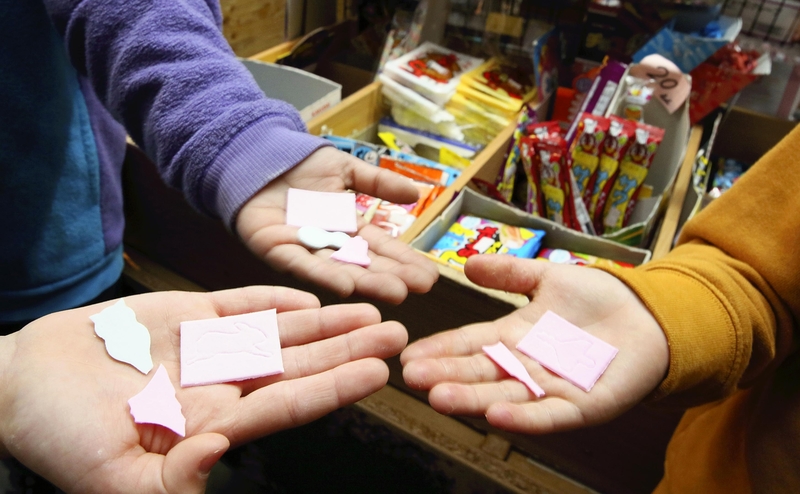
One of the standard sweets for street picture-story shows is katanuki-gashi. It is a thin plate confectionery made by mixing starch, sugar and gelatin, having a slightly sweet and gentle taste.
At the mom-and-pop candy store Nakaoya, about a five-minute walk from the museum, you can buy this sweet popular among children for 10 yen a piece. When you break a piece along shallow cuts, it turns to the shape of a rabbit, fan, flower and many other shapes.
Read more from The Japan News at https://japannews.yomiuri.co.jp/