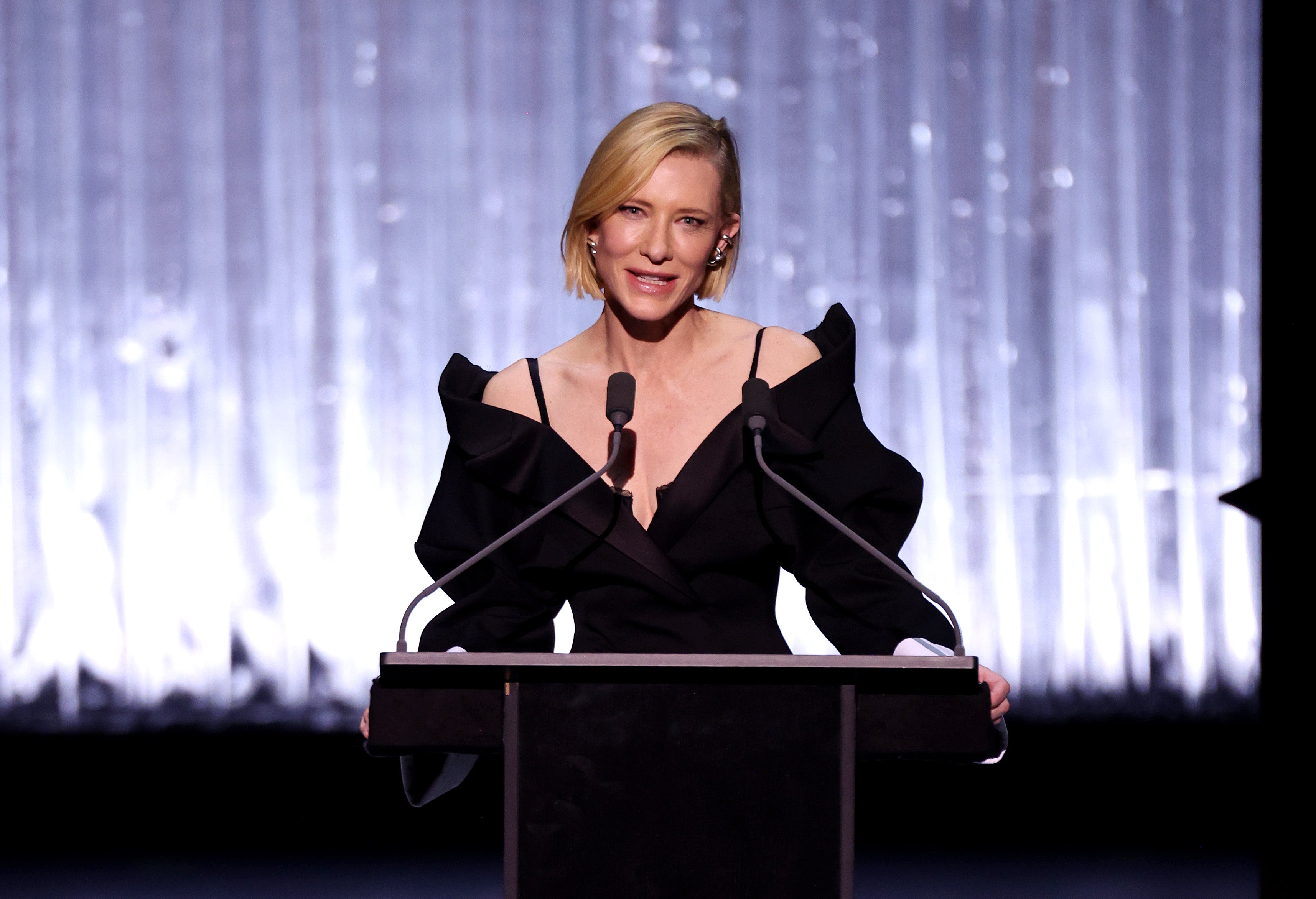
Cate Blanchett has launched a non-profit organisation aimed at helping artists and others prevent AI companies from using their work, voices and likenesses without permission.
The Oscar-winning actor announced the launch of RSL Media on Tuesday, describing the rapid growth of AI technologies as “essentially unchecked and unregulated”.
The organisation, co-founded with technology executive Nikki Hexum, plans to introduce what it calls a “human consent standard” that would allow people to formally declare whether AI systems are allowed to use their creative work and personal identities.
According to a press release, the system will cover films, books, music, photography, artwork, voices, names, facial likenesses, fictional characters, logos, and trademarks. Users will be able to classify AI permissions as “allowed”, “allowed with terms”, or “prohibited”, with the instructions translated into machine-readable signals intended to be recognised by AI systems.
“AI technologies are expanding rampantly, essentially unchecked and unregulated. In order for humans to remain in front of these technologies, consent must be the first consideration,” Blanchett said in a statement, according to Variety.
“RSL Media is a simple, effective and free solutions-based technology for facilitating and activating consent. It’s also the industry’s first practical solution where people everywhere, not just public figures, can assert control over how their work is used by AI.”
A free public registry will launch in June, allowing users to verify their identities, register works, and encode permissions into a format that AI systems can read before using protected material. Starting Tuesday, users can reserve a consent ID through the organisation’s website.
The Independent has reached out to representatives of Blanchett and RSL Media for comment.
The launch has drawn support from several prominent figures in the entertainment industry, including George Clooney, Meryl Streep, Tom Hanks, Javier Bardem, Viola Davis, and Kristen Stewart, as well as Emma Thompson and Helen Mirren.
“Of course artists and cultural creatives will inevitably be involved with AI. At the moment, however, AI is merely stealing from us all. This is an urgent and essential initiative. It’s also eminently doable, so let’s do it without delay,” Thompson said in a statement shared by the organisation.
Mirren said that the distinction between artistic inspiration and imitation was “an absolute divide”.
“The one is an extension of the imagination, and the other a block to imagination, at the same time being crass theft,” she added.
Director Steven Soderbergh also gave his support, describing it as “a solution to a very serious problem”.
RSL Media builds on an existing licensing framework known as Really Simple Licensing, or RSL, which was created to help publishers and websites tell AI companies whether their content could be used for training or scraping.
Blanchett’s initiative expands that idea beyond websites and articles to people themselves, allowing users to declare whether their voice, likeness, creative work, or identity can be used by AI systems.
According to technology publication The Register, more than 1,500 media organisations, publishers, and technology groups have supported the wider RSL framework since its launch last year.
However, it remains unclear how AI companies might be compelled to comply with the new consent registry if they choose to ignore it.
Blanchett’s launch of RSL Media follows months of increasingly public criticism from actors and writers over the way AI companies are using creative material and reproducing the voices and appearances of performers.
In 2024, Scarlett Johansson accused OpenAI of using a voice in ChatGPT that sounded “eerily similar” to her own after she had declined an offer from chief executive Sam Altman to voice the system. OpenAI denied deliberately copying her voice and later removed the assistant voice known as Sky.
Earlier this year, Blanchett and Johansson were among more than 700 artists and creators to back a campaign that accused AI companies of exploiting copyrighted work without permission.
The campaign also included Joseph Gordon-Levitt and Breaking Bad creator Vince Gilligan, who described generative AI as the “world’s most expensive and energy-intensive plagiarism machine”.
John Lennon documentary director defends using AI-generated scenes: ‘He loved tech’
Cate Blanchett leads star studded new season at the National Theatre
Oscars cracking down on AI in latest awards update
Revenge of the Nerds villain Donald Gibb dies at 71
Cannes Film Festival 2026: The biggest talking points from day one
Christopher Nolan reveals reason he cast rapper Travis Scott in The Odyssey