Get all your news in one place.
100’s of premium titles.
One app.
Start reading
The Guardian - UK
The Guardian - UK
World

Catching up on Katine - in pictures

Katine project: on flickr
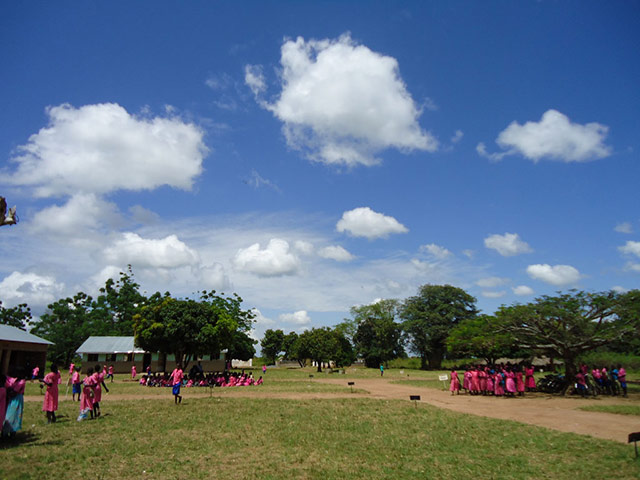
Pupils at Olwelai primary school. The Katine project focused on five components: livelihoods, health, education, community empowerment, and water and sanitation. Sustainability measures have been implemented all through the project phases. As part of the project, four classrooms at Olwelai were repaired, and an office and store and two latrine blocks built. The school has also been given desks and textbooks
Photograph: Caroline Holtum for the Guardian
Katine project: on flickr
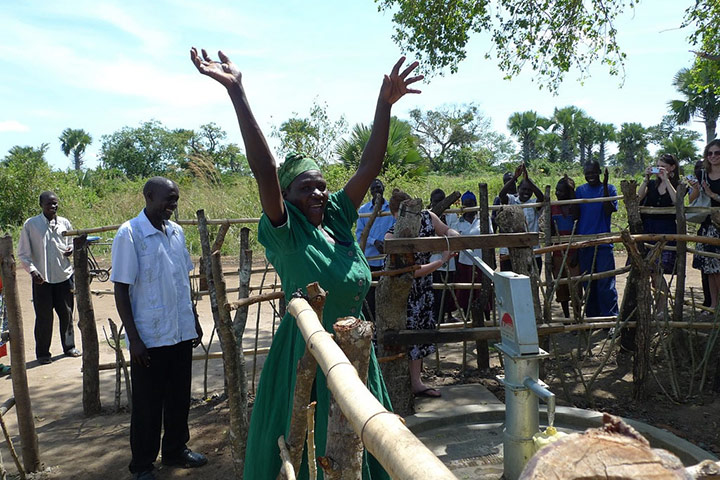
Residents of Aloet celebrate the opening of their new borehole. In September 2010, Amref estimated safe water coverage in Katine was 71%. With an extra 10 boreholes now dug, this figure is now around 95%.Village water source committees have been formed and trained on how to maintain their boreholes, manage repairs and collect user fees to pay for maintenance and spare parts. Every household that uses the borehole must contribute between UShs 500 ($0.20) to 1,000 a month. Local borehole mechanics have also been trained and a spare-part shop has been opened
Photograph: Stephen Wood for the Guardian
Katine project: on flickr
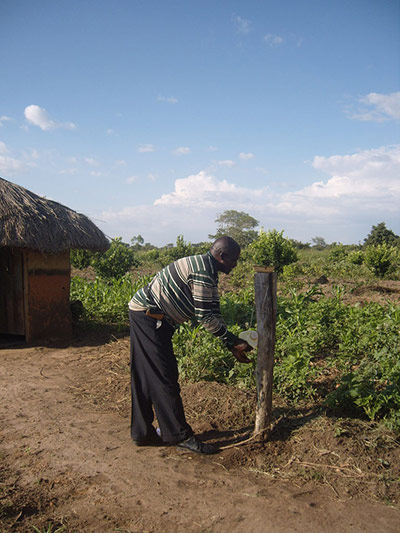
Farmer Michael Edoru demonstrates a hands-free tap that is activated by a foot pedal. As well as training in new farming techniques, and advice on crop diversification, Edoru has installed the tap to improve sanitation for his family. He is also a member of the farmers' produce store committee and chairman of his village savings and loans association
Photograph: Jaz Cummins for the Guardian
Katine project: on flickr
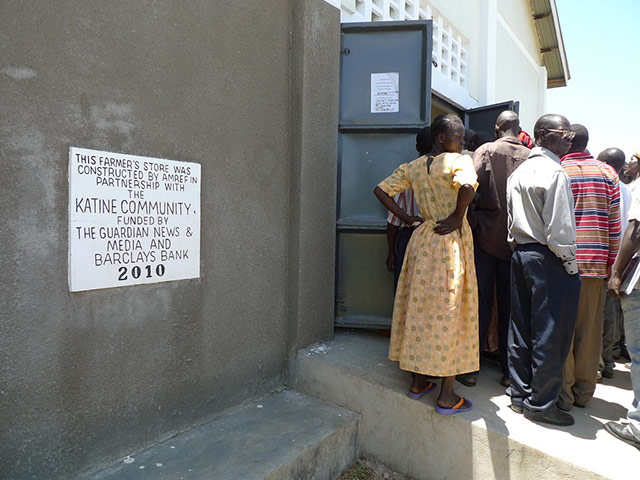
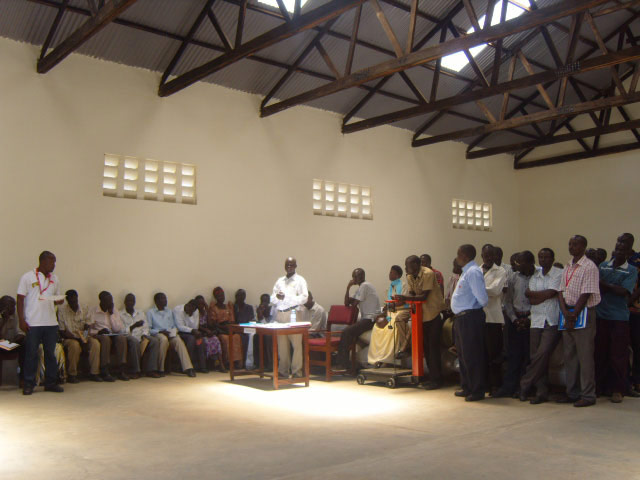
Farmers gather at a celebration of the official opening of the Katine Joint Farmers Association Co-operative (Kajofaco) 100-tonne produce store. The store allows collective marketing of produce, with a view to getting a better profit for its members. The committee running the store also plans to manage members' savings, offer small loans, and has opened a store selling seeds and medicines for animals. The store is built close to the main road that cuts through Katine, linking the nearest town, Soroti, to Lira in the north and eventually to Juba in South Sudan. The committee hopes the store will attract passing trade
Photograph: Stephen Wood for the Guardian
Katine project: on flickr
The farmers' co-op has 648 members, 61% of whom are women. It has a five-year business plan and around UShs 44m in the bank. While we were there in October, the store received its official opening. Sacks of groundnuts were being stored, waiting to be sold when the price is right. The store has been in operation, though, for about a year. Speaking to Richard Kavuma in August, Simon Edangat, chairman of Agora Rukaputa farmers' group, said: 'We have also resolved to mobilise more people to become members, and also to engage with other partners like the sub-county government and NGOs'
Photograph: Jaz Cummins for the Guardian
Katine Tiriri
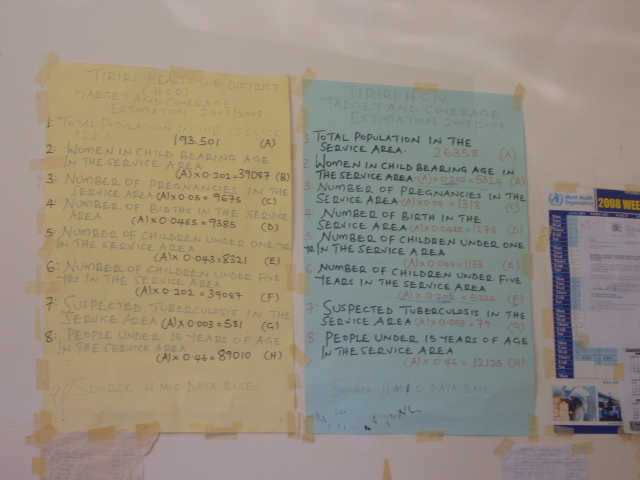
Targets and coverage statistics on display at Tiriri health centre. Tiriri, the largest health facility in Katine, like many other rural health centres in Uganda, does not have enough staff. The centre should have 47 members of staff, but it only has 27. It finally got a doctor, Charles Oluka, in April. As part of the Katine project, the operating theatre at Tiriri has been repaired and can now be used for some procedures. An anaethetist is still needed
Photograph: Jaz Cummins for the Guardian
Katine project: on flickr
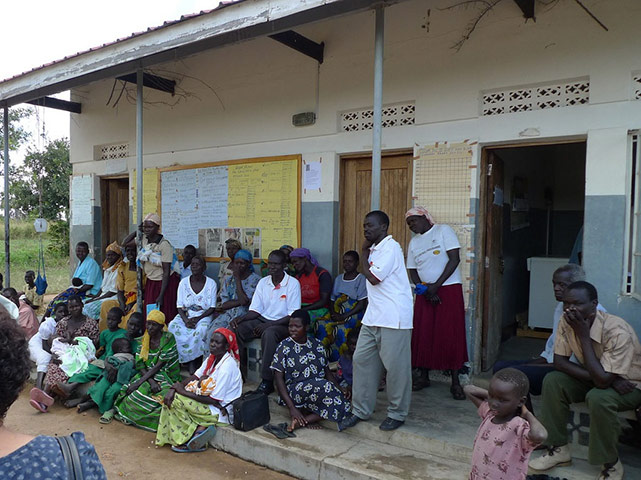
People wait to be seen at Ojom health centre. As part of the project, a laboratory was built at the centre, which is short-staffed, but does have a chief nurse and lab technician. The new lab means the centre can test for malaria and HIV. Village health teams (VHTs), trained by Amref, work from here. They provide basic advice on health and sanitation in their local communities. VHTs are considered a vital healthcare tool, particularly in rural areas, where health centres can be several hours walk away. The Ugandan government rolled out a nationwide VHT programme a few years ago, but lack of funding to accompany it meant it was not fully implemented. The VHTs are considered a success in Katine. However, in March 2010, members went on strike after Amref abolished the transport allowance paid to members for attending training sessions. Amref later agreed to reinstate the payment, albeit reduced
Photograph: Stephen Wood for the Guardian
Katine project: on flickr
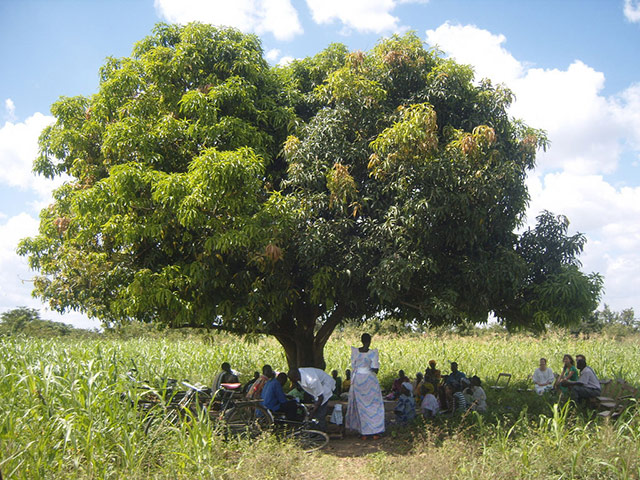
Members of Olocoi village savings and loans association gather under a tree for their weekly meeting
Photograph: Jaz Cummins for the Guardian
Katine project: on flickr
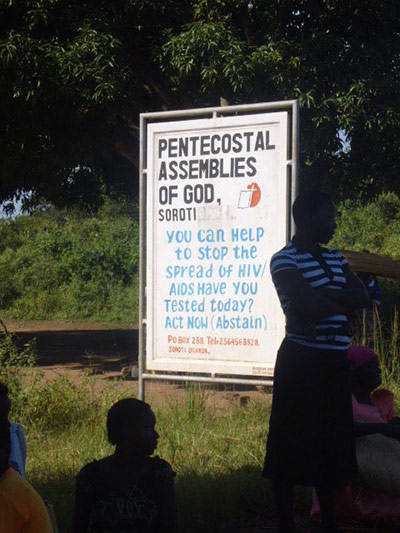
A sign posted at Katine weekly market offers a reminder of the threat of HIV and Aids in the sub-county. Signs such as these can be found in towns and villages and along the side of the roads in Uganda
Photograph: Jaz Cummins for the Guardian
Katine project: on flickr
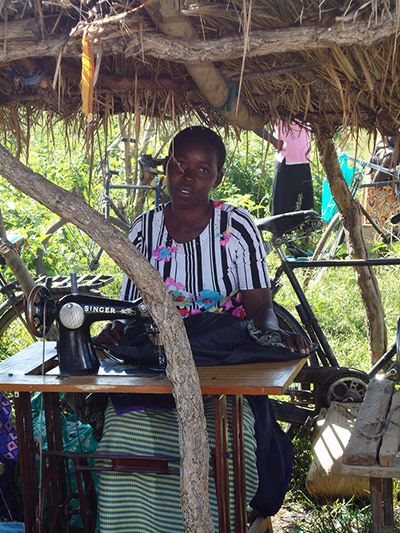
A woman making clothes at Katine's weekly market. Money saved through the VSLAs is is often used to support new small business ventures, such as this tailoring business, as well as being used to cover regular family costs such as food, seeds, school fees and medical supplies
Photograph: Caroline Holtum for the Guardian
Katine project: on flickr
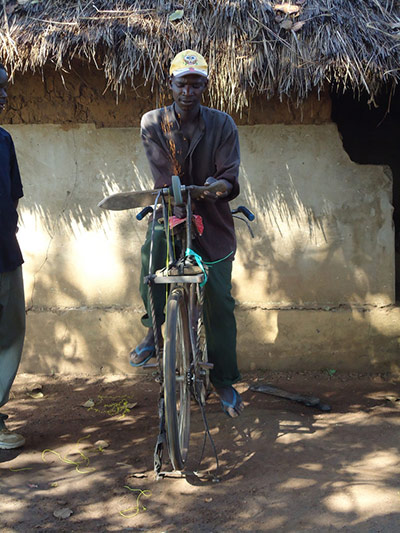
A man sharpens knives and tools using a bike-powered machine, one of many small businesses and services available at Katine's weekly market
Photograph: Caroline Holtum for the Guardian
Katine project: on flickr
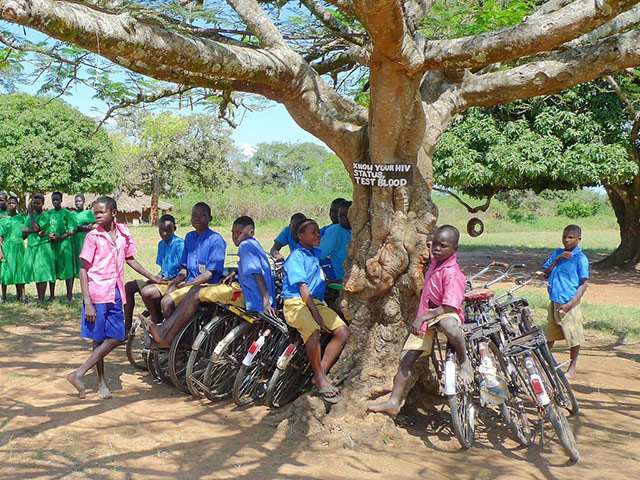
Pupils from neighbouring schools await a group activity at Olewai school. During the first three years of the Katine project, Amref built 16 new classrooms and repaired a further 22. It has delivered more than 1,100 desks and distributed 5,147 textbooks to the 15 primary schools. Five of those are community schools, which have been set up by parents and have little or no government support
Photograph: Stephen Wood for the Guardian
Katine project: on flickr
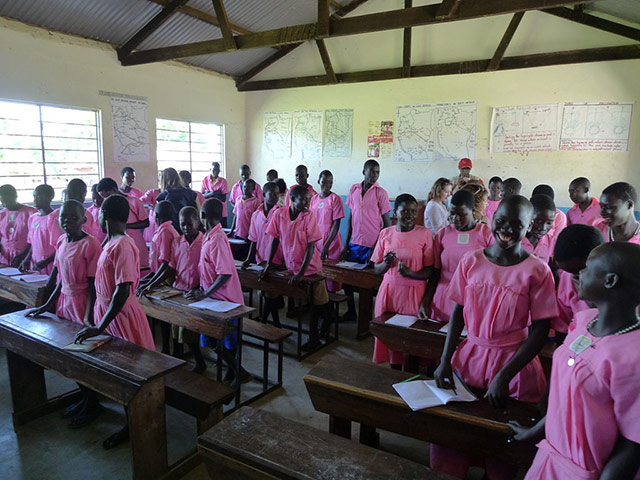
Pupils at Olwelai school prepare for lessons. In 2011 Amref renovated and furnished a four-classroom block, putting in new floors, windows and doors, and painting the walls. Headteacher of the government school, John Robert Emesu, said: ‘It was really a tattered block, the floors were dusty, and even jiggers [worms that burrow into the children's feet] were there. The learning environment is now conducive. All children now sit on desks, which is very good because now they can write properly.’ Two other blocks of classrooms still need repair. But it is unlikely the district council will allocate money to renovate them soon, especially as pupils at other schools are still attending class in temporary grass huts
Photograph: Stephen Wood for the Guardian
Katine project: on flickr
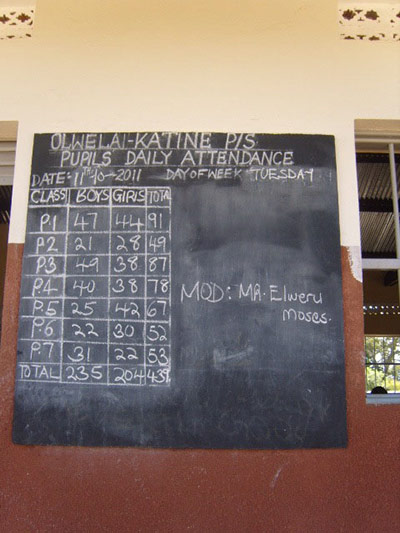
Attendance is marked on a board at Olewai school. Children can be kept away from school for many reasons, particularly girls, who are often needed to work around the home, go to market or care for siblings. Additionally, parents have to find money to pay for uniforms, books and lunch. Classes are often large. Molly Ameru, Amref's education manager, said in October: ‘The government requirement is 45 pupils per classroom. In Katine the 2011 enrolment is 9,711 (4,821 boys, 4,890 girls), up from 7,531 (3,745 boys, 3786 girls) in 2007.’ She added that the school building work has improved the classroom:pupil ratio, from 1:100 in 2001 to around 1:54 in 2011
Photograph: Jaz Cummins for the Guardian
Katine project: on flickr
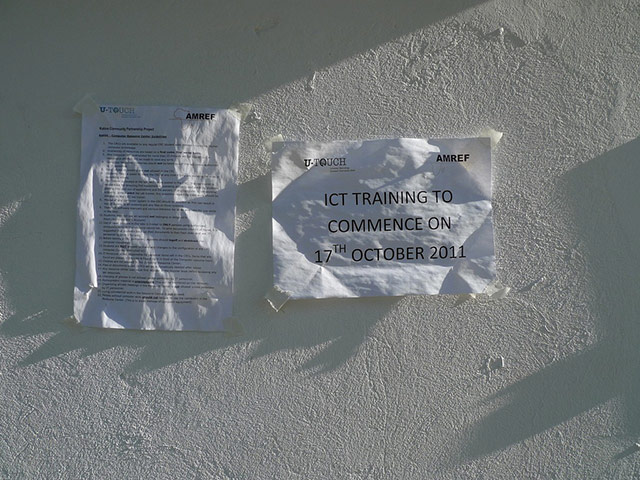
Katine's resource centre, an ongoing hub for the project, is being turned into an ICT training centre with the support of U-Touch, a US-based NGO that offers computer training to remote areas. The NGO has already worked with Amref in Gulu, Kitgum and Pader in northern Uganda. U-Touch offers a three-month programme, which includes training in Microsoft Word, Excel and PowerPoint. The programme will also teach general ICT literacy skills, such as how to access the internet and social media sites and use video conferencing. In addition, students will receive training in life skills and advice on applying for jobs and in letter-writing. After two months, trainees will be expected to undertake an internship for a month to put what they've learned into practice
Photograph: Stephen Wood for the Guardian

Sign up to read this article
Read news from 100’s of titles, curated specifically for you.
Already a member? Sign in here
Related Stories
Top stories on inkl right now
One subscription that gives you access to news from hundreds of sites
Already a member? Sign in here
Our Picks
Fourteen days free
Download the app
One app. One membership.
100+ trusted global sources.