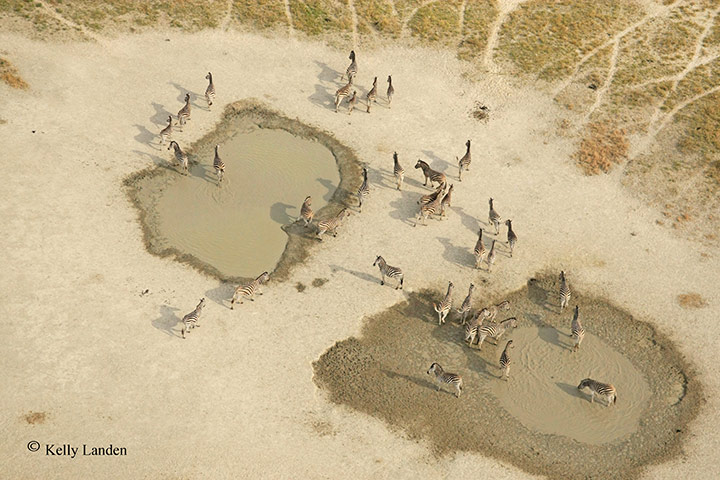
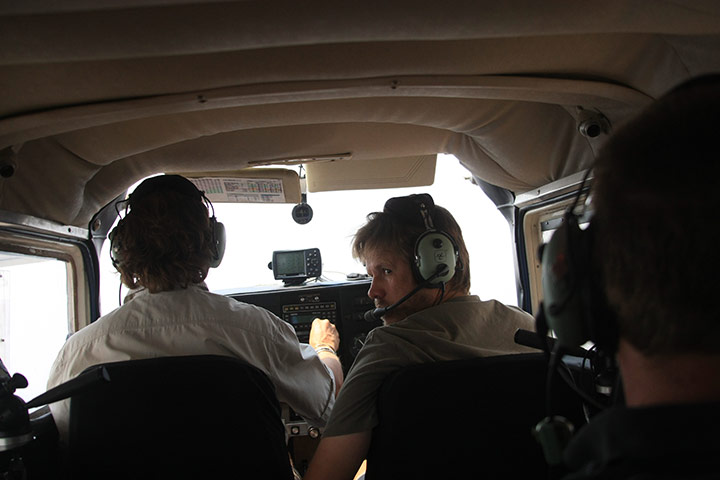
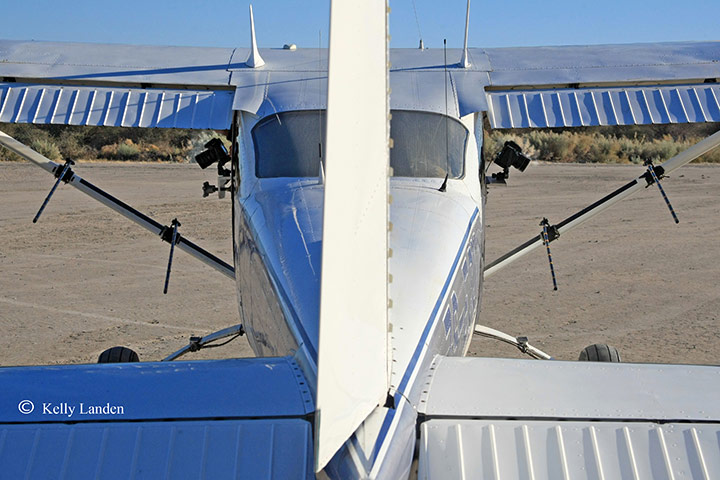
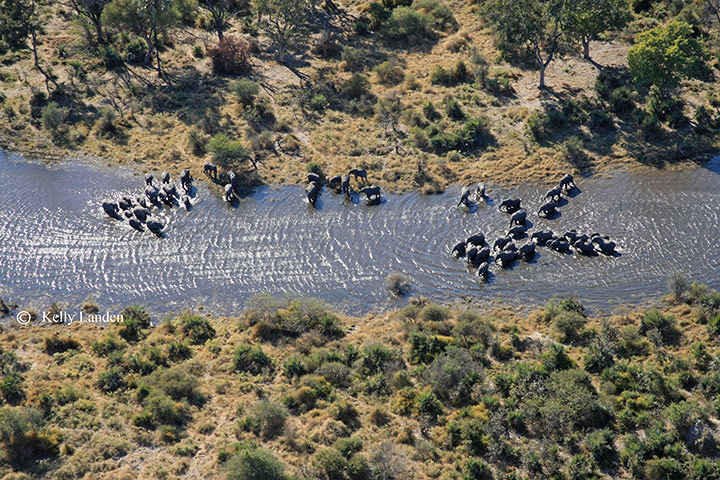
The Okavango delta is one of the wonders of the natural world. The 16,000km oasis in the Kalhari desert, Botswana, is made up of around 50,000 islands intersected by channels, lagoons, and swampsPhotograph: Kelly Landen/Elephants without BordersElephants without Borders conduct regular aerial surveys of wildlife the Okavango delta. Their most recent survey has recorded catastrophic species loss, the worst affected species have suffered population decline of over 90%Photograph: Kelly Landen/Elephants without BordersNote the two digital cameras mounted on each side. Photographing packs of animals from the air is a reliable way to survey populationsPhotograph: Kelly Landen/Elephants without Borders
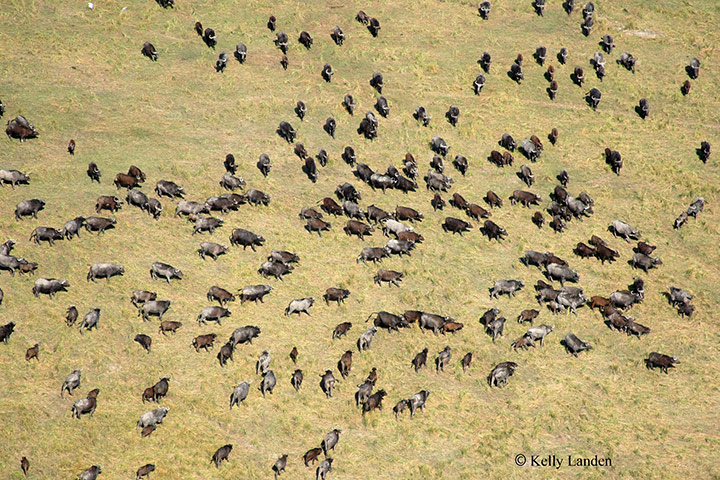
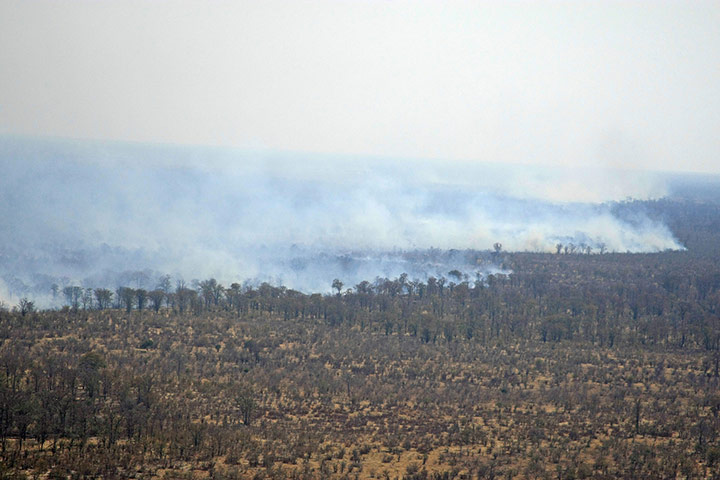
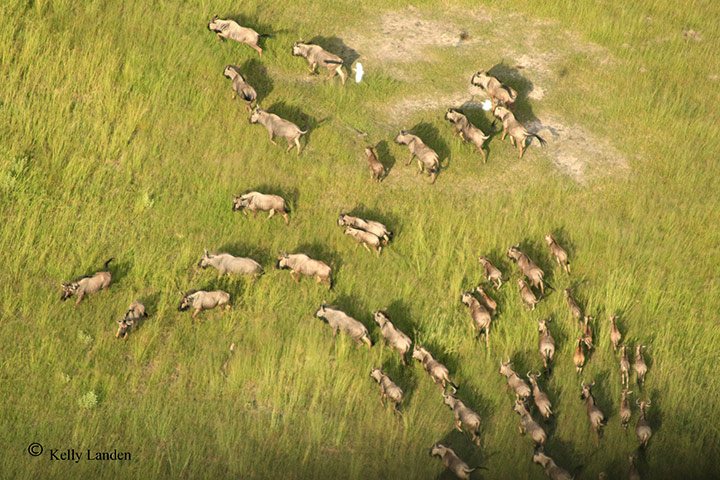
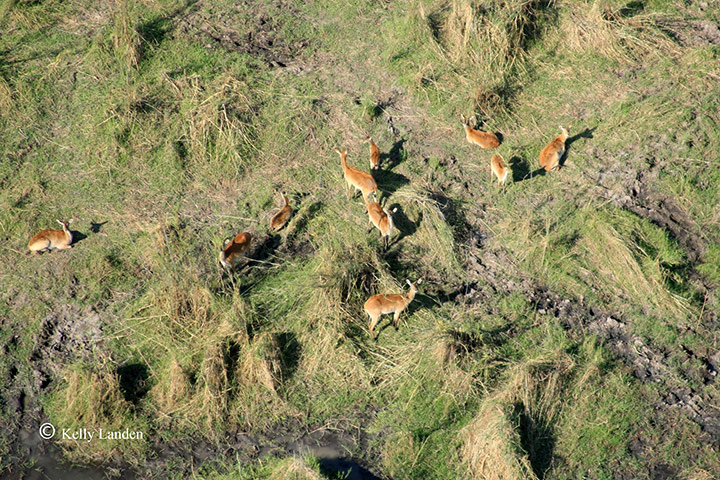
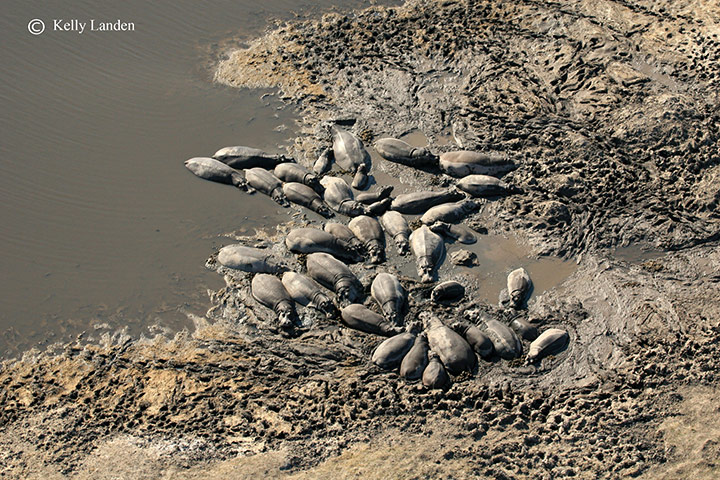
A herd of buffalo in the Okavango deltaPhotograph: Kelly Landen/Elephants without BordersDrought, habitat encroachment, bushfire, and poaching are the main causes of the catastrophic species loss which has been seen in the Okavango deltaPhotograph: Kelly Landen/Elephants without Borders90% of the Wildebeest population in the Okavango delta has been wiped out since the last aerial survey in 1996 Photograph: Kelly Landen/Elephants without BordersThe red lechwe is popular with poachers - its population has declined by half over the past 10 yearsPhotograph: Kelly Landen/Elephants without BordersThere is some good news - the hippo population has increased by 6% this yearPhotograph: Kelly Landen/Elephants without BordersMore good news - the elephant population in the Okavango delta remains stable at 130,000. But other animals haven't done so well. The kudu population is down by 81% since 1996, ostrichs by 95%, tsessebes by 84%, while the number of giraffees has fallen by two thirdsPhotograph: Kelly Landen/Elephants without Borders
Sign up to read this article
Read news from 100’s of titles, curated specifically for you.