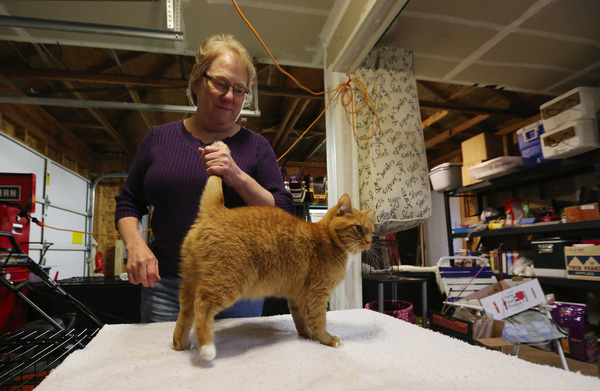
SEATTLE _ Barb Horton's passion for the past 15 years has been finding homes and jobs for abandoned cats. She's introducing me to one, a handsome, gray-and-white tom that was dumped several weeks earlier and is adjusting to a new home in a neighborhood with a rat problem.
We are standing on the street, talking about the cat named "Tor" by his new owners, when Horton glimpses a flash out the corner of her eye. I see nothing. The house two doors down has a "For Sale" sign out front, and as we follow her sighting, around the side of the empty house, she nudges her toe into a cat door that has been blocked by a stiff piece of plastic.
She quickly deciphers the clues. A cat left behind when the owners moved out. A cat fending for itself without food or water.
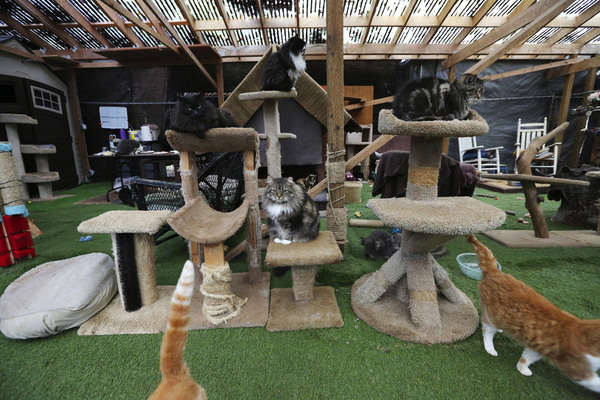
"It happens all the time," she says, her voice suggesting a low opinion of animals of the two-legged variety.
A family that would desert its cat might also not have had it fixed, meaning the cat could quickly add to the national cat-overpopulation problem _ an estimated 80 million cats, more than half of them feral or free-roaming.
With the help of Tor's new owner, Rebecca Shults, Horton devises a plan.
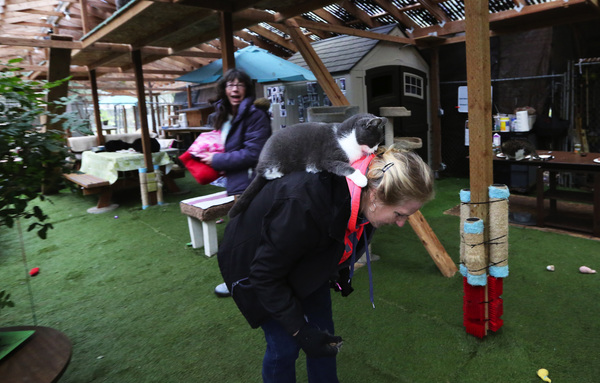
Shults will set out food in the former neighbors' yard and see whether she can coax the abandoned cat out of hiding. She'll also alert other neighbors and ask them to keep their cats indoors.
Horton will dispatch one of the volunteer trappers who works with her organization, Puget Sound Working Cats, to catch the cat, and have it spayed or neutered and vaccinated. Because it apparently had been living with a family, she'll try to place it in a new home.