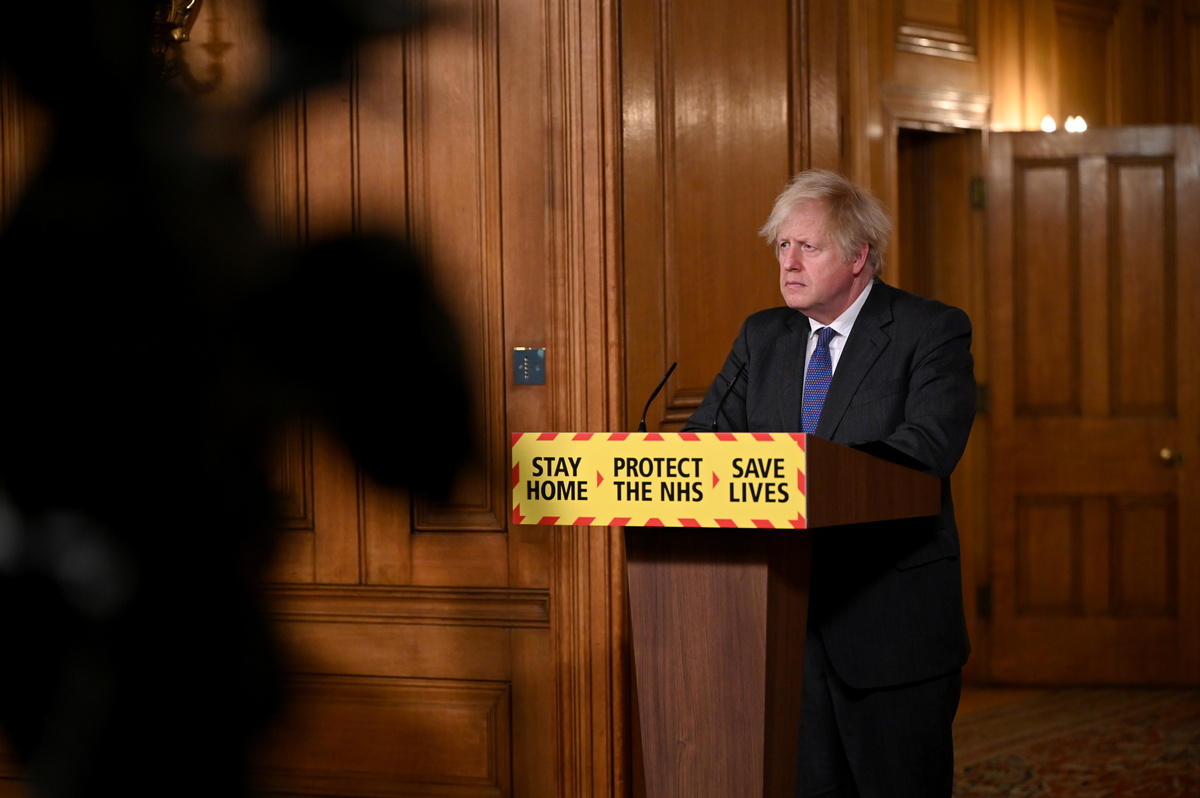
British Prime Minister Boris Johnson said on Friday the new English variant of COVID-19 may be associated with a higher level of mortality although he said evidence showed that both vaccines being used in the country are effective against it.
Johnson said that the impact of the new variant, which is already known to be more transmissable, was putting the health service under "intense pressure".
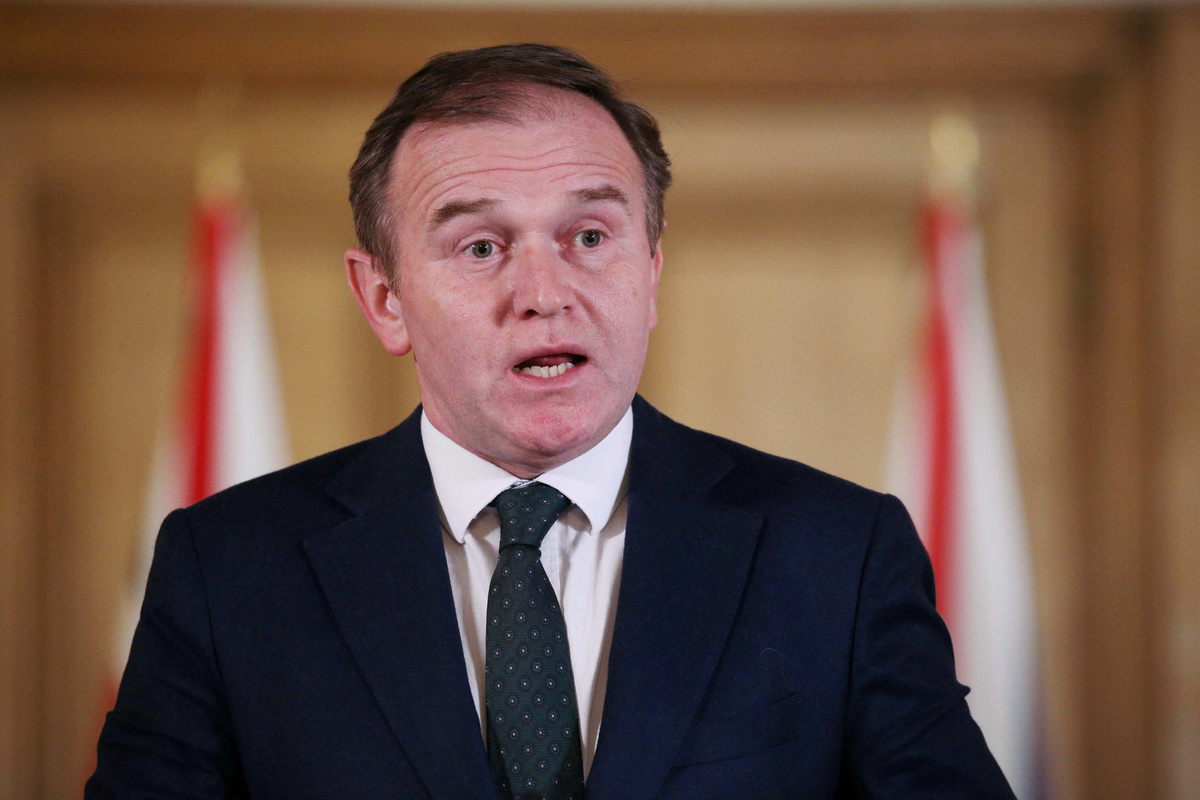
"We've been informed today that in addition to spreading more quickly, it also now appears that there is some evidence that the new variant - the variant that was first discovered in London and the southeast (of England) - may be associated with a higher degree of mortality," he told a news briefing.
Johnson said however that all the current evidence showed both vaccines remained effective against old and new variants.
Chief Scientific Adviser Patrick Vallance said the evidence about mortality levels was "not yet strong", and came from a "series of different bits of information", stressing there was great uncertainty around the data.
He said that once people reached hospital, there was no greater risk, but there were signs that people who had the UK variant were at more risk overall.
"There's no real evidence of an increase in mortality for those in hospital. However, when data are looked at in terms of those who've been tested positive... there is evidence that there's an increased risk for those who have the new variant, compared to the old virus," he said.
He said that for a man in his sixties, the average risk was that 10 in 1,000 people who got infected would be expected to die, but that this rose to roughly 13 or 14 people in 1,000 with the new variant.
"I want to stress that there's a lot of uncertainty around these numbers and we need more work to get a precise handle on it," he said.
"But it obviously is a concern that this has an increase in mortality as well as an increase in transmissibility."
CAUTION

The warning about the higher risk of death from the new variant, which was identified in England late last year, came as a fresh blow after the country had earlier been buoyed by news the number of new COVID-19 infections was estimated to be shrinking by as much as 4% a day.
Data published earlier on Friday showed that 5.38 million people had been given their first dose of a vaccine, with 409,855 receiving it in the past 24 hours, a record high so far.
England and Scotland announced new restrictions on Jan. 4 to stem a surge in the disease fuelled by the highly transmissible new variant of the coronavirus, which has led to record numbers of daily deaths and infections this month.
The latest estimates from the health ministry suggest that the number of new infections was shrinking by between 1% and 4% a day. Last week, it was thought cases were growing by much as 5%, and the turnaround gave hope that the spread of the virus was being curbed, although the ministry urged caution.
But the Office for National Statistics estimated that the prevalence overall remained high, with about one in 55 people having the virus.
Britain has recorded more than 3.5 million infections and nearly 96,000 deaths - the world's fifth-highest toll - while the economy has been hammered. Figures on Friday showed public debt at its highest level as a proportion of GDP since 1962, and retailers had their worst year on record.
(Additional reporting by William James, Michael Holden, Andy Bruce, James Davey and Sarah Young; Editing by Alison Williams, William Maclean)