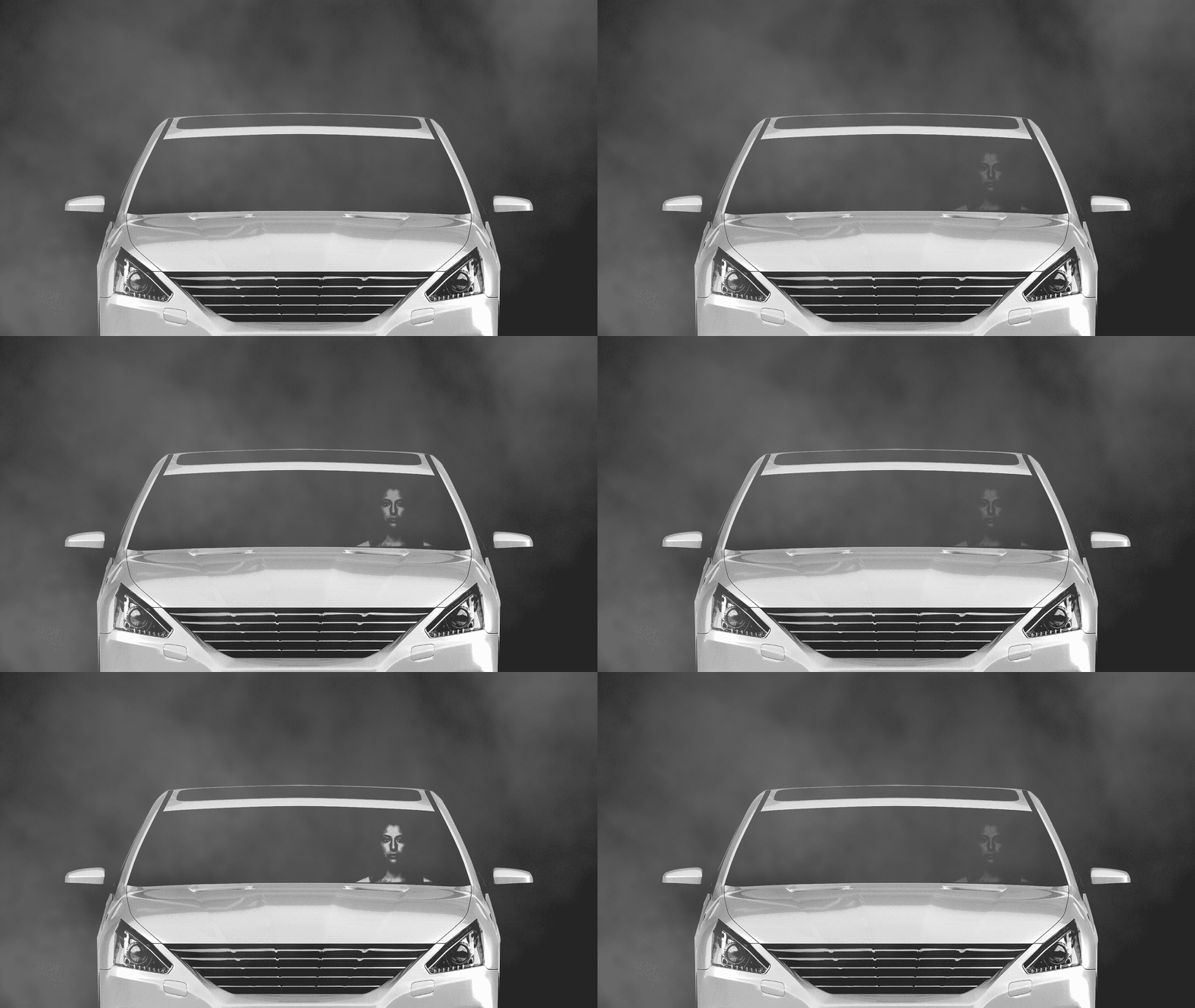
Cars do scary things sometimes when operating in driver-assist mode: braking in shadows, swerving at unseen obstacles and failing to respond the way we expect. The other night, an invisible set of hands kept vying for control of the 2019 Acura RDX I was driving. It gave me the creeps, like the car was possessed.
Why it matters: Consumers need to be able to trust the advanced driver assist systems on today’s vehicles or they will never embrace fully self-driving cars.
The big picture: Safety features like blind-spot detection or backup cameras are the early building blocks of automated driving. We're now seeing more advanced systems —lane-keeping assist, adaptive cruise control and automatic emergency braking — that aim to help drivers or even correct their actions if necessary.
But these technologies don't always behave the way humans would, and sometimes, as I've learned, that can be downright frightening.
- Cadillac's Super Cruise, a truly impressive hands-off highway driving system, got confused and lurched to the left and back again when it couldn't find the lane markings as I began to drive across a bridge.
- When I was driving Volkswagen's 2019 Jetta, it veered toward the center median when it detected what it thought was an obstacle. It was just a puddle of orange paint spilled by a road crew.
- IIHS says a Tesla Model 3 often slowed down unexpectedly when it encountered tree shadows on the road, oncoming vehicles in another lane or crossing traffic far ahead.
- IIHS tested adaptive cruise control and active lane-keeping assist systems in the Mercedes E-class, BMW 5-series, Volvo S90 and Tesla Models 3 and S. All demonstrated their own share of creepy behavior.
The risk: With names like Autopilot or Pilot Assist, many of these technologies erroneously leave consumers thinking their cars can drive themselves.
- If companies make these systems too capable, consumers might zone out and not be ready to react when they need to.
- But if cars brake or swerve erratically, drivers might switch off the technology altogether, missing out on their potential safety benefits.
The bottom line: The early results underscore the fact that today's systems aren't a good substitute for human drivers.
Go deeper: