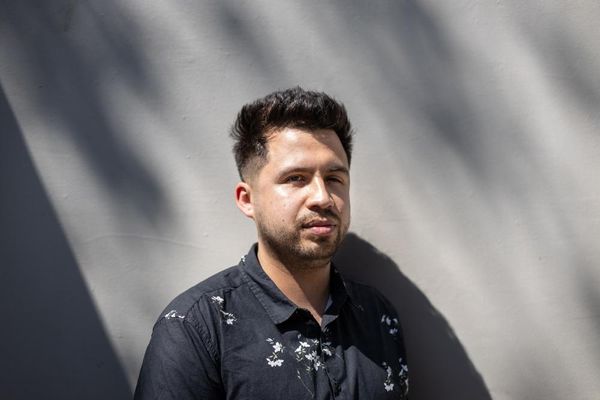
My friend and former student, Carlos Santos, has died aged 79 of liver disease. He experienced life to the full and became regarded as “a living repository” of the contemporary history of southern Africa.
Carlos’s life was shaped by traumatic experiences. Aged 17, he was sent to learn English in a high school in the Transvaal, where he suffered as an outsider in Afrikaner society. Then, in 1973, during Frelimo’s independence struggle against Portugal in Mozambique, he was arrested by the colonial security police and endured 22 days of solitary confinement in Machava prison, as well as physical maltreatment. It was alleged he had been involved in the destruction of a statue of the Portuguese dictator, António de Salazar. Released for lack of evidence, he swore the truth would go with him to the grave.
Born in Mozambique, Carlos was the son of Carlos Duarte Santos, a businessman, and Maria José (nee de Carvalho e Azevedo), a volunteer nurse decorated by the Portuguese Red Cross. He attended school in Lourenço Marques (now Maputo), and became a successful entrepreneur in South Africa, including establishing a scrap-metal business with his first wife, Renee (nee Divaris). They divorced in 1976.
A scuba diver committed to marine conservation, in 1978 Carlos purchased two decommissioned warships, including the former flagship of the South African Navy. He sank them both, defying several government ministries, to create artificial reefs in a bid to save a section of iconic coastline.
His complex political networking included the apartheid elite, progressive parties and Frelimo. In 1993, as violence in South Africa escalated, his British-born second wife, Diana (nee Parker), insisted on moving to Britain, and the family went on to establish Cafe Mozambique in Falmouth, Cornwall. The exotic venue eventually collapsed amid financial difficulties, and this, combined with the end of his second marriage, in 1996, led to Carlos suffering a mental breakdown.
His daughters encouraged him to return to education. They discovered Coleg Harlech, a Workers’ Educational Association institution in north Wales that prided itself on offering a “second chance”. Carlos flourished there, then, in 2004, aged 63, he graduated with a degree in international politics from Aberystwyth University.
Carlos mentored students and gave presentations at international conferences. Moving to south Wales in 2008, he championed Brexit with a dogmatism that tested friendships to the limit, while amassing a collection of antiques and “good junk”.
Never a bystander in life, Carlos will be remembered by family and friends as generous, and a lover of people, nature and learning.
He is survived by his daughters, Alexia, from his first marriage, and Dominique and Natasha, from his second, his grandchildren, Jack, Erin, Naliyah, Kenzo, Laik and Celia, and a sister, Vera.