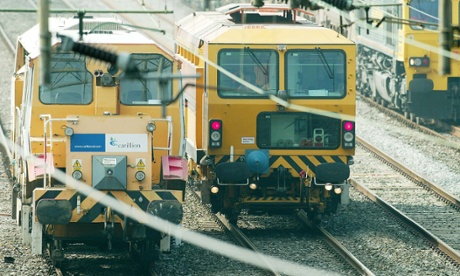
One company missing out on the market gains is Carillion.
The support services business is down 5.2p or nearly 2% at 302.3p as Investec moved from buy to hold on worries about the outlook. Analyst Andrew Gibb said:
Carillion remains an enigma. On the one hand, it looks a cheap stock with one of the biggest dividend yields in the sector; on the other, it carries one of the biggest short positions on the market. In our view, concerns centre on the increasing average debt position and absence of underlying profit growth over the past few years. There look to be few positive catalysts in the near term, with the digestion of the National Living Wage still to come. We therefore take this opportunity to move down to hold and reset our views on value.
The recent interims revealed an improved revenue picture, backed up by double-digit growth in profitability. However, all divisions saw a decline in margins, with profits boosted by the sale of PPP equity stakes and an unexpected gain (£14m) on the reorganisation of its facilities in the Middle East. Slow order intake of £1.0bn (£3.2bn in the first half of 2014) was impacted by the election.
The problem with the equity story is that strategic messages have changed so regularly and this has been compounded by falling profits, increased debt and decreasing dividend cover. Whilst the headline PE rating looks optically cheap, it has done consistently, with earnings per share supported by a low effective tax rate, driven by Middle East profits and accumulated tax losses.
Whilst it is encouraging to see a return to top line growth, with little confidence in Support Services margins advancing, Construction margins now regressing towards more normalised levels (although still at the upper end of the industry average) and Middle East margins proving volatile, a clear line of sight on profit growth will remain difficult.
A day earlier Liberum had issued a more positive assessment, saying a recent meeting with its sales team had been reassuring:
Our base case is that Carillion delivers on estimates, which admittedly are pedestrian. The most shorted stock in the market will then become the most squeezed. A 2016 PE of 8.8 times and yield of 5.9% is not pricing in much good news.


.png?w=600)