SUMOTO, Hyogo -- An increasing number of municipalities are signing contracts to have manufacturers supply evacuation centers with beds that can be assembled from cardboard boxes.
With natural disasters striking all around the nation, members of the public are not leaving things up to municipalities, and are getting involved in education campaigns and manufacturing such beds.
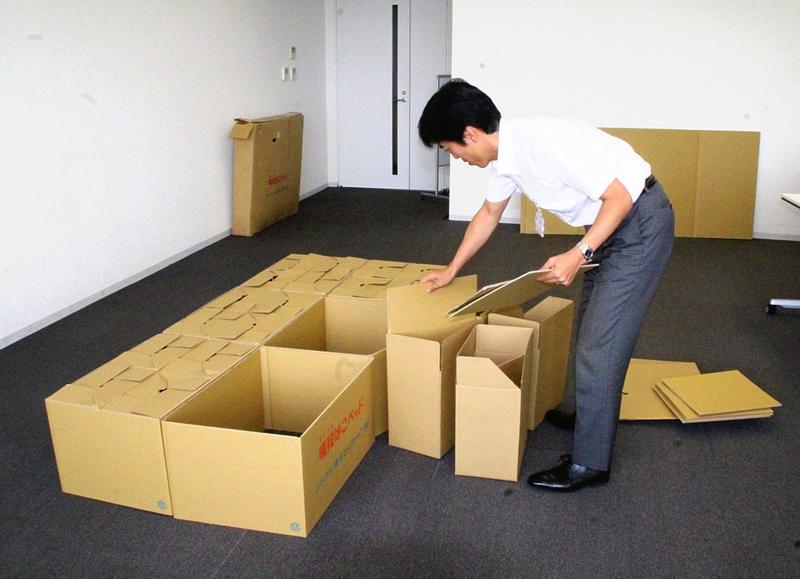
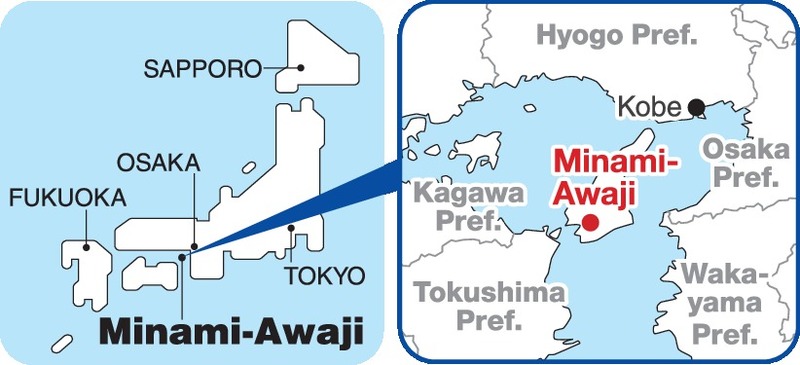
"Please watch," said a staff member standing in front of 24 small cardboard boxes in a meeting room at the city office of Minami-Awaji, Hyogo Prefecture.
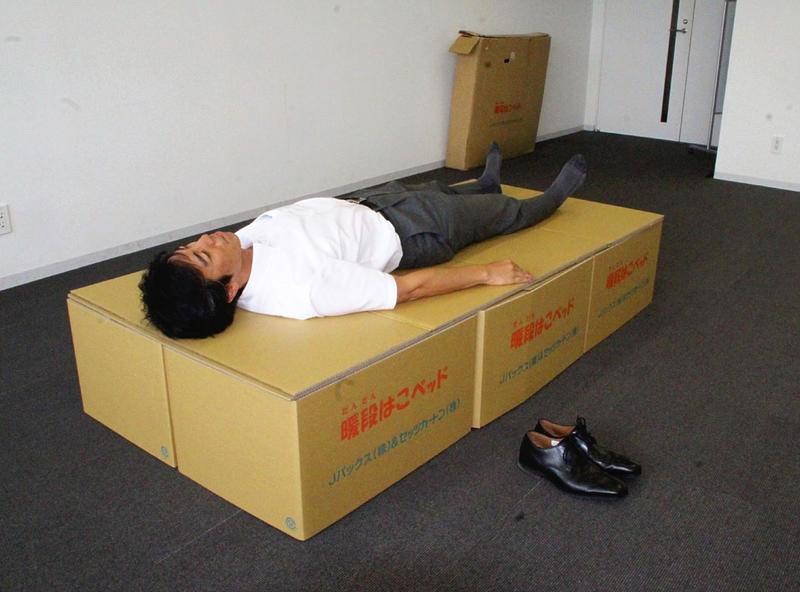
Inserting paper boards for reinforcement and placing a large piece of cardboard on top produced a bed that is 1.9 meters long, 90 centimeters wide and 38 centimeters high.
It takes one person about 15 minutes to put the bed together. Able to withstand a 9-ton load, the small boxes can also be used to store an evacuee's clothing and daily supplies.
These "Dandan Hako Beds" are made by JPacks Co., a paper product manufacturer in Yao, Osaka Prefecture. Dandan means "warm cardboard."
After hearing about evacuees sleeping on cold floors in evacuation centers such as gymnasiums after the 2011 Great East Japan Earthquake and suffering health problems, the company devised a bed that could be easily assembled and quickly delivered in large numbers.
"We've used them to improve the environment at evacuation centers," said the disaster response staff of Kurashiki, Okayama Prefecture, which experienced major damage from heavy rains that hit western Japan this summer.
"Some people think lying on the floor is more comfortable, but elderly people with weak backs and legs like them because they're easier on the body," said a staff of Mashiki, Kumamoto Prefecture, which was struck by an earthquake in 2016.
The company is working with other manufacturers and signing advance supply contracts with municipalities to ensure that beds can be delivered quickly and at low shipping costs in the event of a disaster.
Contracts have so far been signed with more than 300 municipalities nationwide.
In Hyogo Prefecture, Settsu Carton, which has a factory in Itami, and local manufacturers it does business with are among the suppliers for 21 municipalities, including Kobe, Ono, Nishinomiya, Takarazuka, Miki and Asago.
Last year, the prefecture signed a contract with the Western Corrugated Case Association, which has about 50 member companies.
Emergency supplies
Takasago, a small city in the prefecture with multiple rivers that has experienced flooding in the past, is prepared to receive beds from a local manufacturer in the event of a disaster.
"We have been thinking about improving the environment of evacuation centers for a while, but there's a limit to how much emergency food and other material goods we can store," a member of the city's risk management office said, explaining why it decided to create an emergency supply system.
Elsewhere in Hyogo, the Akashi city government has purchased 180 beds. "After the Great East Japan Earthquake, we thought about how to deal with people who need extra care at evacuation centers," a city official said.
The Tanba city government has 160 beds and has actually used some in evacuation centers. The city experienced damages from heavy rains in 2014.
The Yabu city government has also used them through agreements with other municipalities to provide support in the event of a disaster. After the Kumamoto Earthquake, 100 beds and partitions were sent to Mashiki.
In Sanda, a group of mothers raising children in the city and nearby formed Miracle Wish, which displays the beds and other disaster goods to the public at events.
The group's "Thunder Joshi Bosai Bu" department works with the city to protect children from disasters.
"People have said that the beds are actually pretty stable when you lie on them. I think it's important for people to first learn about them," said the group's leader Sakiko Masuda, 39.
The beds were shown at a disaster-preparedness party held at the city's community building center in mid-September, along with emergency food for people with allergies and other items.
Better preparation
Awareness of the utility of simple cardboard beds for improving the environment of evacuation centers is growing.
But some worry that signing supply contracts with manufacturers might not be enough. Minami-Awaji is one such place.
"A wide-area disaster like a huge Nankai Trough earthquake could make it impossible to deliver goods," a city disaster preparedness official said.
During heavy rain this summer, traffic on the Akashi Kaikyo Bridge and Onaruto Bridge was closed, and stores saw food on their shelves dwindle.
"There were a lot of farmers in the city who have cardboard for shipping produce. We're considering lectures or training on creating beds out of things that people have at home," the official said.
MEMO
Manufacturers are improving their products by reducing the amount of materials needed, and cutting down on the effort to assemble them and their weight. Methods that do not require tape are also being made. There are cardboard toilets, with toilets a major problem when people have to live in evacuation centers long term.
With just cardboard and a razor blade, there are ways to make desks, chairs, portable toilets, diaper changing stations and other things. Books that teach these methods as well as where to obtain stiff cardboard have been published.
One of these is "Kyoka Danboru de Tsukuru Techno-aid" (Technical Aids made with reinforced cardboard) published by Haru Shobo. In it, specialists who have made postural supports, toys and other products for disabled children give easy-to-understand instructions using images, as well as examples of disaster aid.
Read more from The Japan News at https://japannews.yomiuri.co.jp/