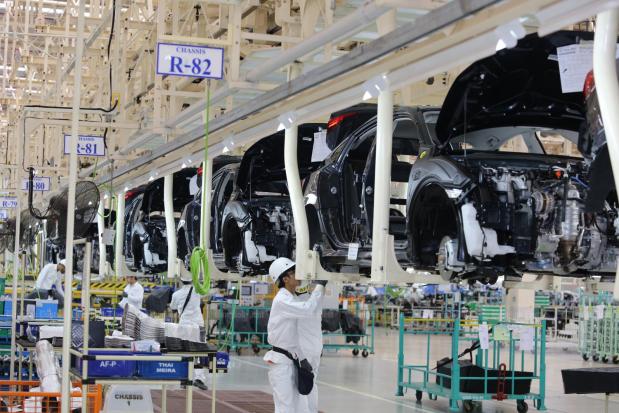
Domestic car manufacturers are racing to obtain semiconductors as result of a global chip shortage.
A crucial control centre of modern cars and electrical appliances, semiconductors are now in short supply in Thailand, intensifying competition among businesses to purchase them.
Factors for the recent global chip shortage range from increasing demand for electronic equipment as more people work from home during the pandemic; the growth in electric vehicles; as well as the US-China trade war, which has led to restrictions on chip imports from China.
According to the Federation of Thai Industries' (FTI) economic and academic data analytics unit, some car manufacturers in the US have already shut down or reduced their production.
The chip shortage comes as importers and exporters are likewise struggling to deal with delivery delays owing to shipping container shortages.
The problems are especially burdensome for companies producing electrical appliances, said FTI vice-chairwoman Kanit Muangkrachang, who chairs the FTI's Electrical, Electronics, Telecommunications and Allied Industry Club.
The semiconductor shortage means more delays in the delivery time for microchips, which has risen from four to six months, according to the club.
Ms Kanit expects the chip shortage will only cause a short-term impact because chip manufacturers will eventually increase their production capacity.
However, the additional problem of container shortages at major ports requires urgent solutions as it not only causes shipping delays but also increases freight rates.
"Thai exporters are seeing their costs triple," said Ms Kanit. "Large firms may manage to handle the burden, but small- and medium-sized companies cannot afford to pay the additional expense."