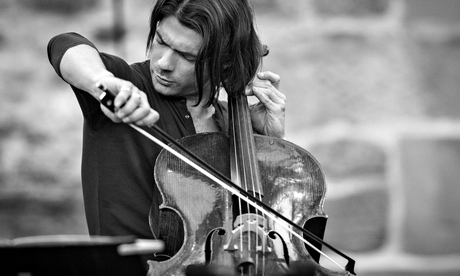
The size of the Barbican Hall was no friend to the cellist Gautier Capuçon and pianist Nicholas Angelich, in this recital centred on Brahms’s two cello sonatas. Even when it is full, the hall’s dry sound can be difficult for solo string players. When that player is such a refined artist as Capuçon, the cello sound can seem trapped on the platform, and it was hard not to spend the evening wishing the recital was taking place in a venue which allowed him more chances to bloom.
With that proviso, both Capuçon and Angelich are experienced collaborators and distinguished Brahms players, and the two sonatas were each given well-judged and elegant performances. Angelich’s light-touch playing of Brahms’s sometimes heavily textured piano parts was a model throughout, the richness and weight of the writing admirably kept under control. This enabled Capuçon to articulate the grave opening movement of the E minor first sonata with his 1701 instrument’s characteristically velvety tone without ever straining or becoming histrionic. The give and take between the two players in the contrapuntal final Allegro was compelling.
Balance had been a problem in the Beethoven Variations on the Papageno-Pamina duet from The Magic Flute with which the evening began, with the piano cramping the cello sound. But things quickly got palpably better, and Schumann’s three Fantasiestücke of 1849 – by turns lyrical, skittish and impassioned – were models of partnership. Best of all was the F major second sonata of Brahms, with Capuçon bringing lovely singing tone to the unbuttoned energy of the opening flourishes, while Angelich drove things forward from the keyboard. There was fine interplay in the ruminative second and energised third movements too, while the finale, light-hearted by Brahms’s standards, was full of subtle pleasures. The slow movement from Chopin’s rarely heard cello sonata provided a serene encore.