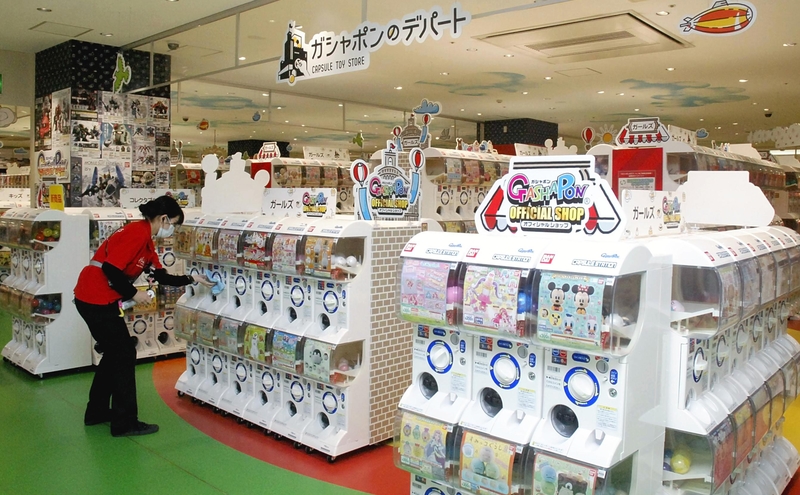
Insert some money, twist a lever and out pops a miniature toy in a plastic capsule. Such is the appeal of capsule toy vending machines and their contents, and specialty shops boasting a huge number of these apparatuses have become increasingly popular among a spectrum of age groups, not only children anymore, but middle-aged adults, young women and the elderly.
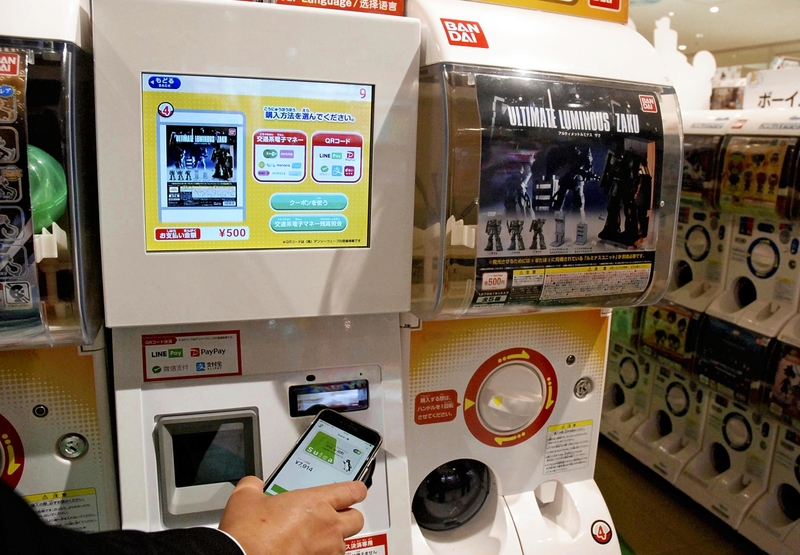
The largest shop in the nation of such machines opened in May at Yokohama World Porters in Naka Ward, Yokohama. Approximately 2,200 vending machines, some equipped with cashless payment systems, are lined up in rows in a space measuring about 360 square meters.
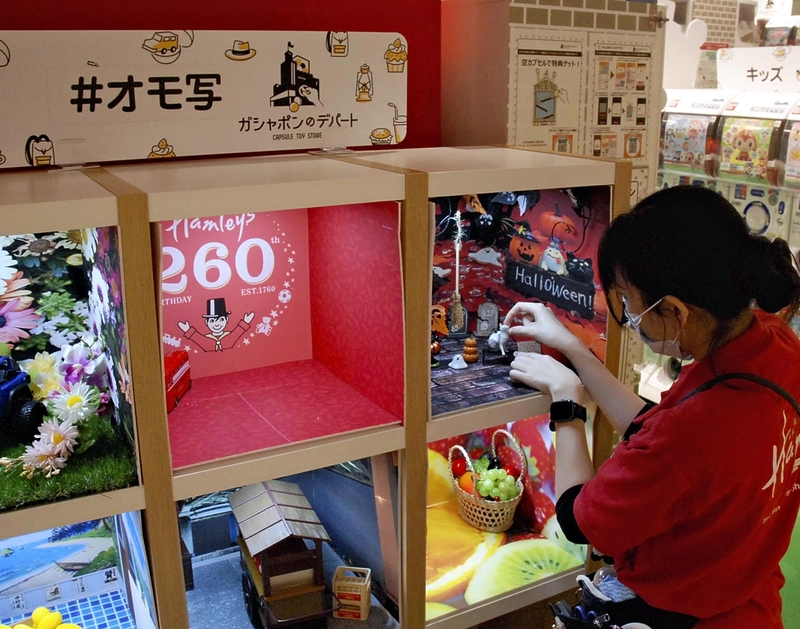
The store handles about 1,500 kinds of capsule toys and created special photo spots for taking pictures of them.
"I can't resist stopping by this store on my way home," said a 35-year-old woman from Yokohama who was at the shop after work. "I often come here with a friend on holidays, too," she said as she turned a lever to collect another gorilla figure.
-- Appealing to every generation
Bandai Namco Amusement Inc., which operates the store, has opened eight capsule toy stores this year as of Nov. 16 in large-scale shopping malls in Nagoya, Fukuoka and other cities. The company said it is planning to open more stores in the years to come.
"Customers are mainly in their 20s and include many three-generation family members," said an official with the firm. "Kids come with their parents and grandparents, too."
Research by the trade magazine Toy Journal shows that the capsule toy market has been gradually expanding from 25 billion yen in fiscal 2001 to an estimated 40 billion yen in fiscal 2019, surpassing the 35 billion yen logged in 2018 that was a record high since 2001.
The customer base has changed, too. Most customers used to be children, but adults accounted for 60% of purchasers in fiscal 2019. Women in their late teens to 30s have become conspicuous at the shops recently.
"Generations that grew up with capsule toys in their childhood still enjoy buying them as adults," said Daisuke Fujii, deputy editor of Toy Journal.
Behind this trend are high-quality, low-priced toys. Conventionally, items related to popular anime characters have been the mainstream for sales. But from 2000 onward, sales have increased for miniature objects and animals made via sophisticated production methods that make them look genuine. Toys that make sounds, such as "stop" buttons for buses and miniature tabletop buzzers at restaurants, are also becoming popular.
Social media has played a part in the trend, too, as consumers get a kick out of photographing and making videos with their capsule toys and sharing them on Instagram and video sharing sites.
Read more from The Japan News at https://japannews.yomiuri.co.jp/