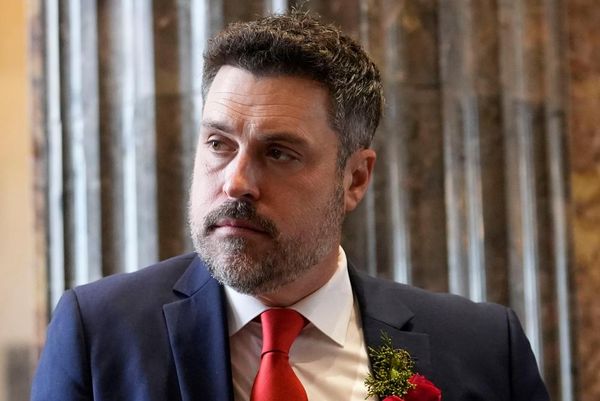
Nohi Dankner, who owns the controlling shares of Maariv, gave the senior staff of the newspaper an original task over the past year- "customer conservation duty".
Among them were the CEO, Tal Raz, the editor in chief, Nir Hefetz and the chairman, Danny Yaakobi. Dankner, who requested that he receive a daily list of customers who had joined the newspaper or left it, was not pleased with what he saw. He demanded that every one of the senior staff personally telephone ten subscribers every day and convince them not to leave. Senior members of Maariv's management paint an embarrassing picture of meetings, in which Dankner interrogated newspaper managers about their fulfillment of the daily task and reprimanded them when they admitted that they had not had the time (Maariv's comment: "The issue is not worthy of comment").
Such a directive would perhaps have yielded results in an environment of growth with a solid business plan. But that is not the case with Maariv, which has been going through a business crisis and has been sustaining major losses for many years. Since 2000, Maariv has lost 750 million NIS. In 2005, the newspaper lost 25 million NIS; in 2006 it lost 52 million NIS; in 2008, its losses skyrocketed to NIS 132 million; and in 2011, before the contract was signed, losses had reached NIS 96 million.
A senior newspaper staff member mourns the atmosphere in the editorial board: "It's a sad sight to see, because many families make their living from the newspaper. The newspaper's managers are warming their seats. It was only last week that Dankner banged on the table and announced that he wouldn't provide any more money until he sees a business plan".
Dankner's affair with journalism began on quite a different note. In March 2011, when it was announced that he would be acquiring Maariv through the "Discount Investment Corporation" (DIC) that he controls, many in the newspaper were happy.
And for good reason: if IDB, the strongest financial group at the time, were to back the floundering newspaper, it would be assured of a new path, stability and strong financial backing. Dankner promised that the newspaper would return to the forefront and added: "For me this is not only a business move, but also a social-democratic move, which will, I hope, contribute greatly to public discourse, democracy, competitiveness and culture in Israel".
Against the background of the smiles that were on everyone's face at the first board meeting immediately after the deal was made, one senior Maariv staff member stood out, when he said with a bitter smile: "Don't worry, Maariv will bury Dankner as well". Even if his words were meant in jest, today they sound like a prophecy fulfilled. One year and four months after that deal, two things can be said with certainty: Maariv did not take off, and the IDB group- a giant octopus, whose tentacles are fused into every area of the economy and many of the companies that it owns lean against Israelis' consumer habits — is going through the worst time it has ever known. A mixture of business mistakes and huge debts, together with panic in the Israeli foreign currency market, the financial crisis and the reigniting of a new wave of protests have caused its stock to drop and its bonds to crash.
The situation deteriorated even more this week. The newspaper reported to the stock market that it plans to undergo a process of reorganization, which will include a drastic cut in manpower, along with an expansion of its digital activities and an examination of possibilities for cooperation with other newspapers. However, it appears that Maariv is undergoing a much wider upheaval, with important implications for the future of the newspaper's 2000 employees: shutting down the printing house and selling the land on which it stood, and a dramatic reduction of the printed pages in the paper's weekday editions.
On Wednesday, the issue of layoffs at Maariv reached a boiling point: A few hours after a heated discussion initiated by the journalists' union in the labor court, the CEO, Raz, was forced to issue an announcement in order to calm the employees: "There is no danger that the company's employees' salary will not be paid". This announcement was at odds with what was said only a few hours earlier by the newspaper's attorney, Nahum Fienberg: "There is no money to pay next month's salaries. We are in the worst possible situation". He was resolute: "There is no chance of settlement; we have no choice but to fire people".
There was a good reason for Raz's message to the employees. Maariv's journalists have been living in complete uncertainty about their futures: "We're just waiting to see who the next sitting duck will be", said one of the journalists. "It's hard to work in such a climate of uncertainty". One of the recently dismissed journalists describes the gloomy atmosphere in the corridors. "I've worked under three editors- Yoav Zur, Avi Meshulam and Nir Hefetz", he says. "Every time a new editor came on board, there was suddenly hope that something would change, that things would suddenly be okay. Now, everyone understands that there is no real reason for optimism. I've already been fired, and I probably won't find a new job in the media. I'll have to find employment elsewhere".
The planned shift towards digital activity that was announced this week is not new to Maariv. "Under the previous owner, Zaki Rakib, there was a feeling for a few months that we were about to switch over to a tablet edition", a former senior staff member says. "But then Dankner bought the newspaper and everything changed. Since then, for many months, this organization has been running without a business agenda. You see managers spending the whole day filling out tables and writing reports about work programs that are never realized. They don't have any time left to do anything else.
Nothing has changed in the digital area during this period, and it's interesting that Dankner is now going back to Rakib's plan".
People in the industry have been wondering about the plan: income from the digital edition is negligible, compared with that of the printed edition. Less than 3% of the company's income comes from the internet, while around half of the income comes from advertising- mostly in the printed edition.
There is no doubt that the Israeli economy in general and the media world in particular benefited from Maariv staying afloat. Safeguarding the employment of 2000 people and ensuring the existence of another media outlet are important goals.
Furthermore: one can understand private businesspeople who are willing to lose money in order to keep a newspaper alive, even when their interest is power and influence. But it is unclear why a company that is funded by the public is investing money that it will clearly never see again and granting loans at an interest rate of 4%-5%, when it has other available investments with much higher rates of return.
Serving two directorates
DIC's Board of Directors, who was in charge of the investment in Maariv, is mostly made up of the senior holders of controlling interest and those who have known the most influential person in the group for years, Nohi Dankner. Besides Dankner and his mother, Zehava, the Board of Directors is made up of Attorney Avi Fisher, who has been with Dankner from his earliest days in the world of business; his controlling partners at IDB, businessmen Yitzhak Manor and Zvi Livnat; and businessmen Dori Manor and Mark Shimmel. At the beginning of July, as part of the business breakup of the Livnat and Dankner families, Fisher and Livnat left the Board.
Many of DIC's directors are also on Maariv's Board of Directors: Dankner himself, DIC's president, Ami Erel; DIC's vice president, Ari Bronshtein; and CEO of IDB Development, Haim Gavrieli. They represent Maariv's interests, requesting loans from DIC in order to survive, and at the same time they also represent DIC's interests, while supplying the newspaper with oxygen.
Alongside them on the Board of DIC are businessmen and academics, such as Gideon Lahav, former chairman of Discount Bank; Shaul Ben-Zeev, former CEO of Dead Sea Works (who recently left his position); Economics professor Niv Ahituv; and Prof. Dan Oppenheim, former CEO of the Beilinson Medical Center. The latter two are considered external directors of the company, whose purpose is to independently examine investment decisions regardless of the interests of those with the controlling interest in the company.
We approached these directors one by one, and tried to understand from them how the decision to invest in Maariv was taken: what business plan and what considerations were presented before the Board of Directors, whether any of the directors opposed the investment and how the decisions were made. They all refused to talk. Even the former chairman of the Israeli stock market, Yair Orgler, who was a DIC director and quit, refused to talk. When we approached directors at IDB, who supervise DIC, they refused to talk to us and sent us to the company's management, who refused to supply explanations as to its conduct on the matter. "There are always transactions to authorize and there will always be transactions at IDB. We challenge the company, but perhaps these are questions that should be directed at the company's managers", said one of them.
A director who was on the DIC directorate before the investment in Maariv says: "I won't go into the details of the transactions, but Ami Erel and Nohi Dankner were the ones who usually presented the transactions. My impression was that they were acting in an informed way and that they have the best data".
The bondholders set an ultimatum
DIC has also been forced to find funds in order to rescue Maariv's bondholders. The bondholders, represented by attorney Ofir Naor, presented the newspaper with an ultimatum and demanded immediate repayment of the bonds. As a result, the bonds were purchased from them at an investment of NIS 40 million. "Maariv's story is one of the good things I've done for the bondholders in the capital market", says Naor. "There is a strong business group behind this company, which was unaware of its responsibilities towards the bondholders. The bondholders got the opportunity to get off the bandwagon called 'Maariv'- an opportunity that most of them took".
DIC's response: "DIC and Maariv are public companies, and all the information relevant to your request is public and available to all".
By Hagay Amit and Nati Toker. Translation: Shmuel Tryster. Orginially published in TheMarker
This content is provided and controlled by PUBLICi