
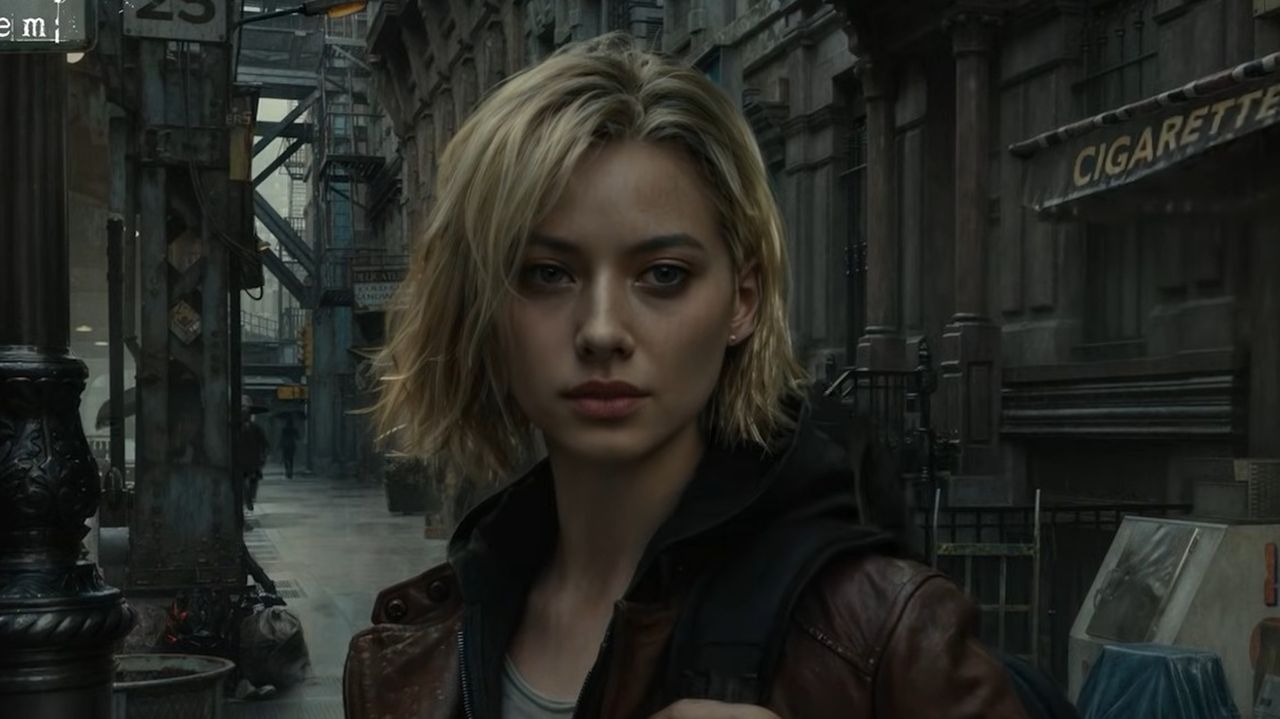
When Nvidia unveiled its AI-powered DLSS 5 tech earlier this year, Resident Evil Requiem was one of the titles on display. The yassified versions of Leon and Grace that accompanied the announcement were presented as next-generation graphics technology, but most people with eyes pretty quickly recognized them as a serious insult to the original game's art direction. For its part, Capcom is glad people hated the demo, since that means they liked the real Grace's look.
"The fact a lot of players commented they really liked the original design of Grace and didn't want to see it changed was a positive," producer Masato Kumzawa tells Eurogamer. "It meant we got the design right [and] points to the fact that Grace quickly established herself as a fan favourite, that people had such strong opinions on her design."
It's unclear how much input Capcom had into Requiem's appearance in Nvidia's DLSS 5 demonstration, but as part of the announcement executive producer Jun Takeuchi called the tech "another important step in pushing visual fidelity forward."
I guess some might argue that Grace did, indeed, look "better" under the DLSS 5 filter, but that's largely because of all the traditional beauty markers. She's got brighter eyes, plumper lips, and clearer skin with DLSS 5 on, but it's tough to say the actual graphical fidelity has actually improved at all. And, personally, Grace doesn't strike me as the type to apply her finest lipstick before delving into unknown horrors.
Nvidia has issued contradictory explanations of how DLSS 5 works, with CEO Jensen Huang insisting that it integrates with a game's internal rendering in order to apply its questionable magic. A few days later, another Nvidia employee confirmed that, nah, it really is just an AI filter applied over 2D images. DLSS has, up to this point, encompassed some genuinely cool and useful machine learning based upscaling tricks, but DLSS 5 is doing an incredible job of throwing that goodwill away.