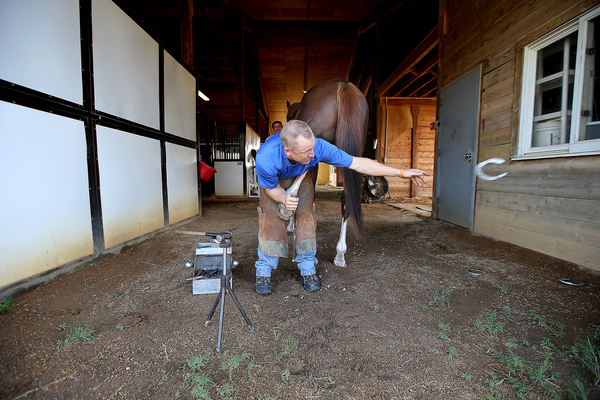
MINNEAPOLIS _ You can call Scott Rhone a farrier, which is the proper title for his profession. Or a horseshoer, which describes it in plainer terms. Around Canterbury Park, some refer to him as a race plater _ a reference to the aluminum shoes, or race plates, worn by the track's equine athletes _ or even a blacksmith.
Rhone will answer to that last term, though he noted it's something of an anachronism at a modern track. The six men who care for the hooves of thoroughbreds and quarter horses at Canterbury Park don't craft shoes out of iron, and most don't even have a forge.
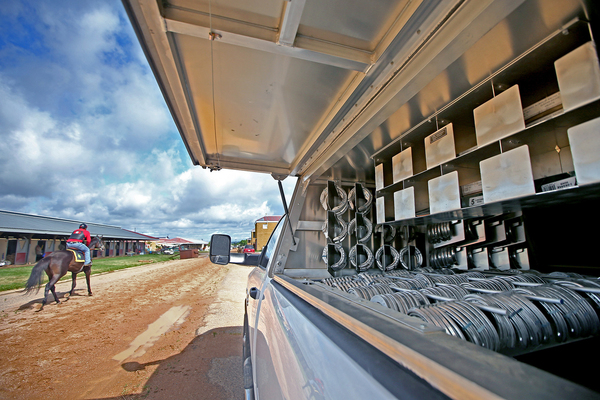
"I rarely use one, because they manufacture everything better than you can make it," Rhone said. "With the inventory I have in my truck and at my house, it's like having my own shoe store."
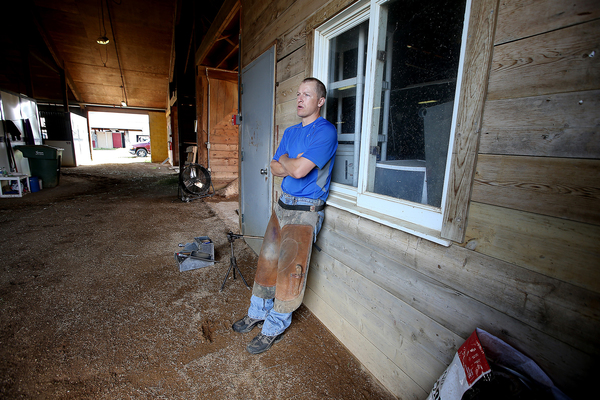
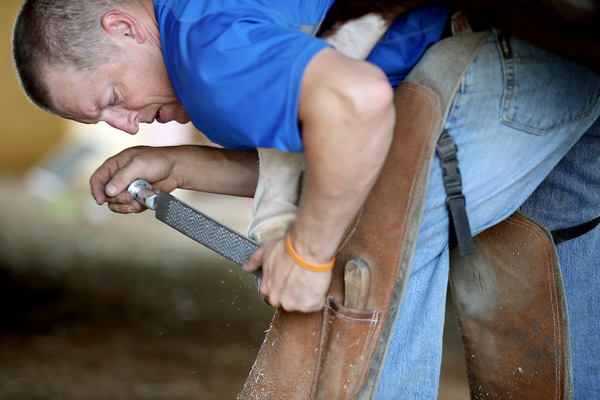
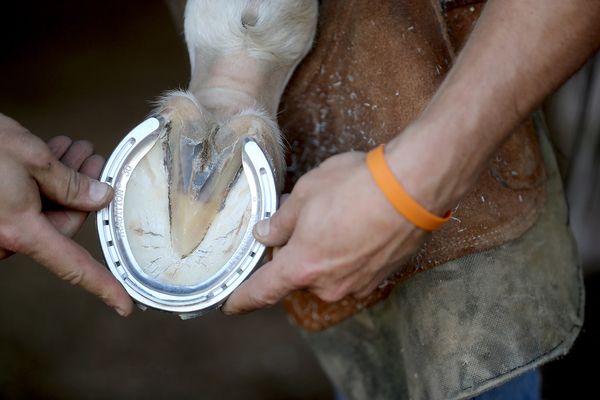
The 21st-century farrier is more a horse podiatrist than a village smithy, using a variety of techniques and technologies to keep clients running their fastest. Each of the more than 1,200 horses on the Canterbury grounds has unique feet, with many suffering from problems similar to those that plague humans.
Rhone and his colleagues can patch cracks, remedy flat soles or run-down heels, take pressure off a sore spot, treat corns, abscesses and bruises, correct conformation issues and improve traction. Their toolbox includes glue-on shoes for horses with brittle hooves, bar shoes and hoof pads to protect the underside of the foot, and high-tech acrylic to rebuild and repair damaged hooves.
Years ago, according to trainer Tony Rengstorf, many horses with hoof problems had to be given a long break from racing to allow the hoof to grow out. A farrier with the expertise to solve those issues is "an invaluable part of the team," he said, making it possible for those horses to continue their careers and run comfortably.
"There's an old saying: No foot, no horse," trainer Valorie Lund said. "That's especially true in racing, where these horses are running at very high speeds. Keeping those feet healthy is a huge part of the equation."