As the world’s Mad Men descend on the south of France for a wine-swilling week pursuing awards glory, there is a growing sense of change in the air. Cannes Lions, the annual festival at the epicentre of a $540bn global ad industry laser-focused on consumerism, has had an attack of the ethics.
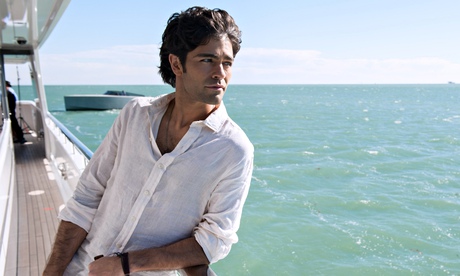
Amidst the usual star-studded campaigns featuring Lionel Messi and LeBron James, and squeezed around seminars adorned with seat fillers including Entourage’s Adrian Grenier and singer-actor Natalie Imbruglia, it seems that marketing for good causes is the new black.
The wave includes hotly-tipped LikeAGirl, the campaign that showed doing something “like a girl” is not an insult, for feminine brand Always; Australian telecoms firm Optus’ shark-averting buoys; and Four Weddings and a Funeral writer Richard Curtis’s bid to get media owners globally to get together to reach “7 billion people in 7 days” to promote a new United Nations bill of rights to end extreme poverty.
There’s more: Al Gore gets the Cannes LionHeart award for being an eco-warrior, and the ALS ice bucket challenge, a global social phenomenon so big even George W Bush couldn’t resist, is a shoo-in for the Grand Prix for Good created purely for charity entrants. There is even a new award, the Glass Lion for work challenging gender sterotypes in advertising, inspired by Facebook chief operating officer Sheryl Sandberg.
Dave Buonaguidi, chief creative officer at agency CP&B London, is sceptical about the motivations of the admen jumping on the good cause bandwagon.
“My instinct is that it’s a washing away of dirt exercise,” he says. “The ‘do good’ thing is fascinating, to have a missionary stance in a very mercenary business is very on-trend right now. Cannes is still steeped in the superficial and ego-driven side of the business. If it really cared, then spend the huge sums that are used to enter awards and put on lavish parties on doing good. A principle is only a principle when it costs you money.”
A bit of napkin maths illustrates how lucrative the Cannes machine, which is part-owned by the Guardian publisher GMG, has become. This year there were a record 40,133 entries; at an average cost of almost €700 each (plus 20% VAT if you happen to be a UK agency), that’s a crisp £20m.
A record 13,500 delegates have stumped up as much as €5,640 to €6,800 for four- to nine-day packages - all sold, and probably worth another £40m-£50m.
And that’s without the huge sums agencies and media companies spend securing coveted seminar slots, usually with high-priced guest names, hotels and corporate entertaining. Attractions this year include Jamie Cullum and Boy George.
Paul Frampton, chief executive of Havas Media, warns that many brands simply see an opportunity to piggy-back on the latest trend that shifts product.
“For many companies it is definitely a badging exercise,” he says. “There is too much short termisim designed to get a gong. You don’t change things on a good cause or community level unless a brand commits over the long term, a lot of this is short term [sales] spike stuff.”
Much of this desire to piggy-back derives from the bona fide success of a few early trailblazers, such as Unilever’s transformative “campaign for real beauty” for Dove.
Keith Weed, who handles Unilever’s €7.2bn global marketing budget, believes that authenticity is critical as a new generation of hyper-critical consumers emerges.
“As people become more aware and engaged around [issues such as] climate change and societal inequality, they are increasingly holding businesses and brands who aren’t part of the solution to account,” he says. “I expect to see this trend continue to increase especially in the age of social media. Brands need to have more depth and breadth to engage consumers. Connecting purpose to purchase.”
Money-making notwithstanding, Cannes has transcended its roots in old-school adland, attracting the cream of a new generation of global brands from Facebook and Google to SnapChat, Buzzfeed and Spotify.
And a glance at the seminar list shows that for every gratuitous Kim Kardashian West and ubiquitous Will.i.am session, there are talks on weighty issues such as Google’s policies and legal chiefs discussing how to “wield our most creative impulses for good in a world of Isis and Charlie Hebdo”.
Nelli Lähteenmäki, 30, founder of the Jamie Oliver-backed wellbeing app You-app, is one of the new breed of tech entrepreneurs gravitating to Cannes to build their business and cause-related marketing is a big part of that.
“I represent both a consumer interested in the true values of brands as well as an entrepreneur building an app that aims to create positive, sustainable behaviour change at scale,” she says. “I truly believe the trend of caring is here to stay – more conscious, genuinely good-willing businesses will be upvoted by consumers. Even if there is some money to be made out of it, the bigger picture is if the message is strong it is worth doing.”