The red carpets are being unrolled, tuxedos retrieved from the dry cleaners, stepladders set up by the paparazzi; Cannes is getting ready to welcome its annual influx of the flotsam and jetsam of the global film community. As ever, the entire industry will make the trip, from Seoul to Sacramento, from the buyers’ scouts who are forced to hop through scores of screenings a day, to the most lordly financiers lounging in their billion-dollar superyachts in the harbour. It looks like business as usual.
But there is also change in the air. The Cannes film festival has always been a contradictory beast: it is an event that thrusts itself so shamelessly into the glare of the international media machine, but is dedicated to showcasing the most recondite areas of world cinema. Steepled-fingered critics rub shoulders with nickel-and-dime movie hucksters. So while the broad mass of activities in Cannes remain unchanged – bar a currency crisis or two – subtle shifts in emphasis can have surprisingly far-reaching effects.
Most striking is the sense that the festival has tilted dramatically in the direction of its more serious, socially-concerned side. The opening film, a prestige slot that has in the recent past been concerned to parade a string of A-list Hollywood movie stars on the festival’s enormous red carpet, with the likes of The Great Gatsby, Robin Hood and The Da Vinci Code, has this year been handed to a French film, La Tête Haute (aka Standing Tall), from a little known director called Emmanuelle Bercot. No doubt this selection was influenced, at least in part, by the fiasco that was Grace of Monaco, the putatively glamorous biopic of Grace Kelly that attracted radioactive levels of ridicule. Of course, like every film festival, Cannes has hosted some appalling films, but never before in such a visible slot.
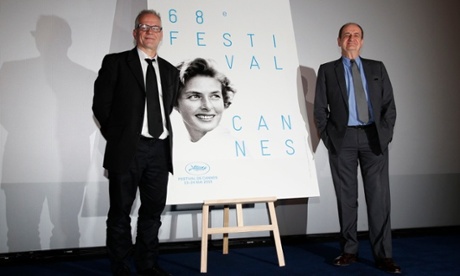
Festival chief Thierry Frémaux confirms that time has been called on the era of what he terms the “gala-glamour”. “I wanted to engineer a renewal,” he says, “and change the traditional idea that the opening film is a glamour event. This year we are kicking off with a film that could have easily have gone in the competition: a socially-concerned film, a political film. It’s a film that says, essentially, that the world may be suffering, but that we must believe that it can get better. The Cannes film festival wants to say the same thing.”
La Tête Haute follows the tough upbringing of a teenager in Paris and northern France as he is processed through various social agencies; it contrasts spectacularly with the culpably indulgent fripperies of Grace of Monaco. (However, the fact that France’s eternal queen of glamour, Catherine Deneuve, plays a key role, of a local judge, won’t have harmed the film’s chances of securing the red-carpet slot.) Cannes’ new seriousness is in keeping with Frémaux’s widely-reported desire to clamp down on red-carpet selfies, which he described as “a practice that’s often extremely ridiculous and grotesque” at the festival’s announcement of its programme in mid-April.
La Tête Haute also leads a strong French contingent at the festival which, despite Cannes’ international outlook and reputation, is also a forcing-house for the country’s homegrown cinema. As a result, there is always a significant French presence at the festival, with three or four films in competition - though occasionally they may be shown up in the heat of competing with the world’s biggest names. This year, there are five French directors in competition – though only one can be considered as issuing from a premier-league source: Dheepan from director Jacques Audiard, previously responsible for the likes of Rust and Bone, A Prophet and The Beat That My Heart Skipped. Frémaux has given another prestigious slot, the non-competing closing gala, to a French film-maker, March of the Penguins director Luc Jacquet, whose new climate-change documentary, La Glace et la Ciel (Ice and Sky) will receive its world premiere.
Frémaux says that, essentially, the festival is only responding to what it sees out there – “this is what the year is” – and that French cinema has not been especially favoured (“there are five American films in competition, and three Italian”); he says in 2014, French cinema was “weak”, but in 2015 it is “strong”. But he does go as far to say that the film industry in France is “well structured and organised”, and possesses “productive financial system”. “Cinema has a central place in French policy, and we see the results.” Frémaux is a diplomat to his fingertips, and this may or may not be a rebuke to Britain’s film-making hopes, in a year when only one British director, Asif Kapadia, made any impact on the Cannes selectors, whose documentary about Amy Winehouse was given a non-competing Midnight Screenings slot. However, French cinema strength runs throughout the festival’s parallel events, with homegrown directors being given high profile screenings at the Critics Week sidebar (including The Anarchists from Elie Wajeman, and Les Deux Amis, directed by actor Louis Garrel), and at the Director’s Fortnight, where the latest film from Garrel’s director father Philippe, In the Shadow of Women, has been picked as the opener, and My Golden Years, from Arnaud Desplechin, has been given house-room after controversially being rejected from Frémaux’s official competition.
Perhaps most significantly of all, however, Cannes is throwing its weight behind women film-makers, after attracting considerable criticism for its male-dominated line-up in 2012. Not only is Bercot leading the festival out – only the second time a woman has been picked to do so – but a rarely-awarded Honorary Palme d’Or is to be presented to veteran film-maker Agnes Varda, the idiosyncratic director of Jacquot de Nantes, The Gleaners and I, and Vagabond. The festival are also citing her 1954 feature film, La Pointe Courte, as the wellspring of the (largely male) French new wave.
With its rhetoric of politics and justice, Cannes remains extremely sensitive to accusations of sexism and paternalism. Film critic Agnès Poirier, who also acts as an independent adviser on British films for Cannes, says: “Every major festival is acutely aware of the issue; they try and promote women film-makers – as well as film-makers from countries which are under-represented in festivals as often as they can. The good news is that it’s going to becoming easier as a younger, more mixed generation will emerge.”
“Film selectors, in the end, go for the films they think are the strongest, whatever the nationality, language or gender of the director.”