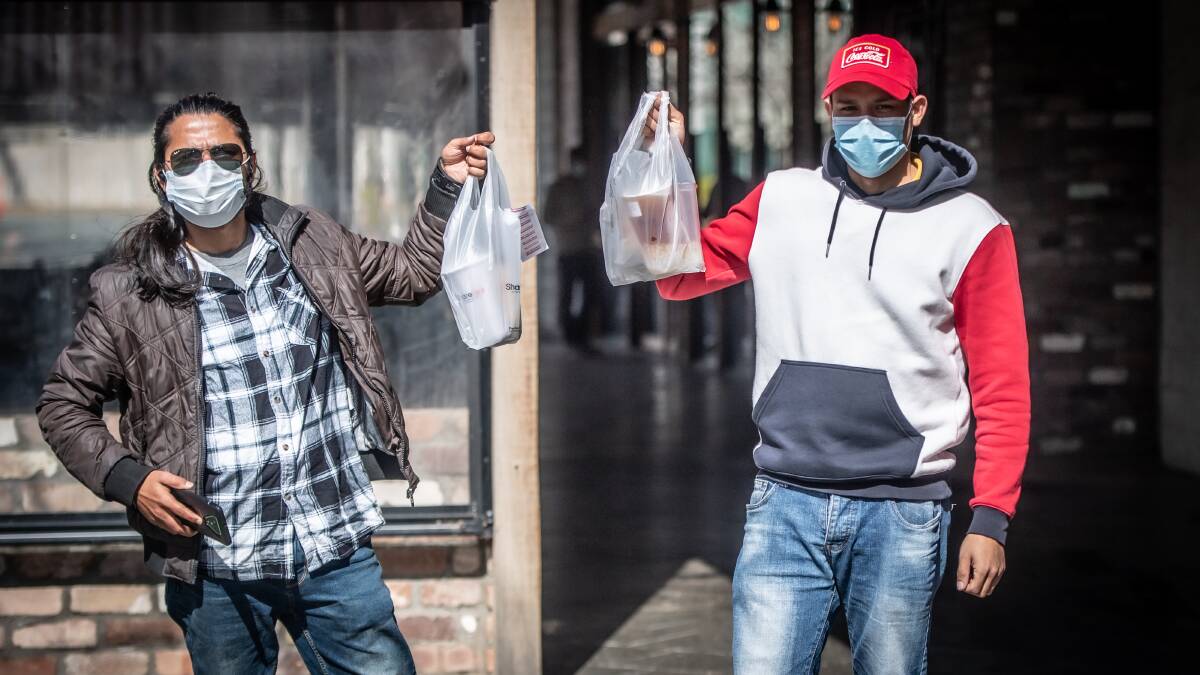
Delivery drivers who have kept food flowing in lockdown say they are the forgotten workers of the pandemic.
Nobody quite knows how many people there are delivering food in cars and on bikes in Canberra but they say they deserve recognition - and some rights.
There are a host of companies which organise deliveries of food and supermarket goods: Deliveroo, Uber Eats, Menulog, DoorDash, Easi, chowbus, Yello and Sherpa.
But the drivers the companies contract on a freelance basis feel vulnerable.
"We can't wait for a driver to get infected or to die before we are recognised," driver Nabin Adhikari said.
He said there was no priority given to drivers to get vaccinated even though their work entailed moving to all parts of Canberra, including sites where the infected had been. He was waiting for his first vaccination.
Their legal position is unclear. In NSW, there is a specific exemption from lockdown rules for "courier or delivery services" but nothing spelt out so specifically in the ACT.
The main complaint of the drivers The Canberra Times talked to was they were under intense - and increasing - pressure. They provide their own vehicles and in some cases pay the company an "administration fee".
The pay is not high. An order to pick up food from McDonald's in Fyshwick, for example, and deliver to Brindabella Circuit in Pialligo 2.7 kilometres away earned the driver $3.50.
There were safety issues in the industry, according to Rushkar Samal. Pressure of time meant it was not possible to stop during a delivery, but new destinations were coming in on the phone app as they drove.
The leader of the Transport Workers' Union Michael Kaine said the Canberra drivers were right to feel excluded.
They don't have the protections which employees have because they are deemed to be "independent contractors" to the companies rather than direct employees.
"They are under incredible pressure. It's really ugly. If the wheels don't turn, they don't get paid," the union leader said.
"It's the modern 'Hungry Mile'," he said, referring to the Depression in the 1930s where lines of men would wait for work.
The drivers don't confine themselves to one company (or "platform" as they call it) but carry apps on their phones with orders for pick-up and delivery for many of the companies. They don't have to accept the order.
Each company's contract is different.
One breakthrough came in May when the Fair Work Commission ruled a former Deliveroo rider was an employee and, therefore, entitled to the rights of an employee. That wouldn't necessarily apply to all delivery drivers but it still represented what they viewed as an improvement.
"The gig-economy has traditionally assumed its workers are independent contractors rather than employees and the financial viability of their operational model hinges on this assumption," according to the law firm Bird and Bird.