NEW YORK (Reuters) - The euro dipped against the greenback on Monday on renewed concerns about Italy’s budget, while the Canadian dollar gained after the United States and Canada reached a last-minute deal on Sunday to replace the North American Free Trade Agreement (NAFTA).
Italian Deputy Prime Minister Luigi Di Maio accused European Union officials of deliberately upsetting financial markets with negative comments about Italy's budget plans.
He was taking aim at European Economic Affairs Commissioner Pierre Moscovici, who earlier said that Rome's plans were "obviously" deviating from EU rules on fiscal discipline.
The deal between the United States and Canada, meanwhile, keeps intact a three-country, $1.2 trillion open-trade zone that had been about to collapse after nearly a quarter century.
"It’s headline driven trading still for many markets and it’s probably going to remain the focus for traders in the short run,” said Shaun Osborne, chief FX strategist at Scotiabank in Toronto.
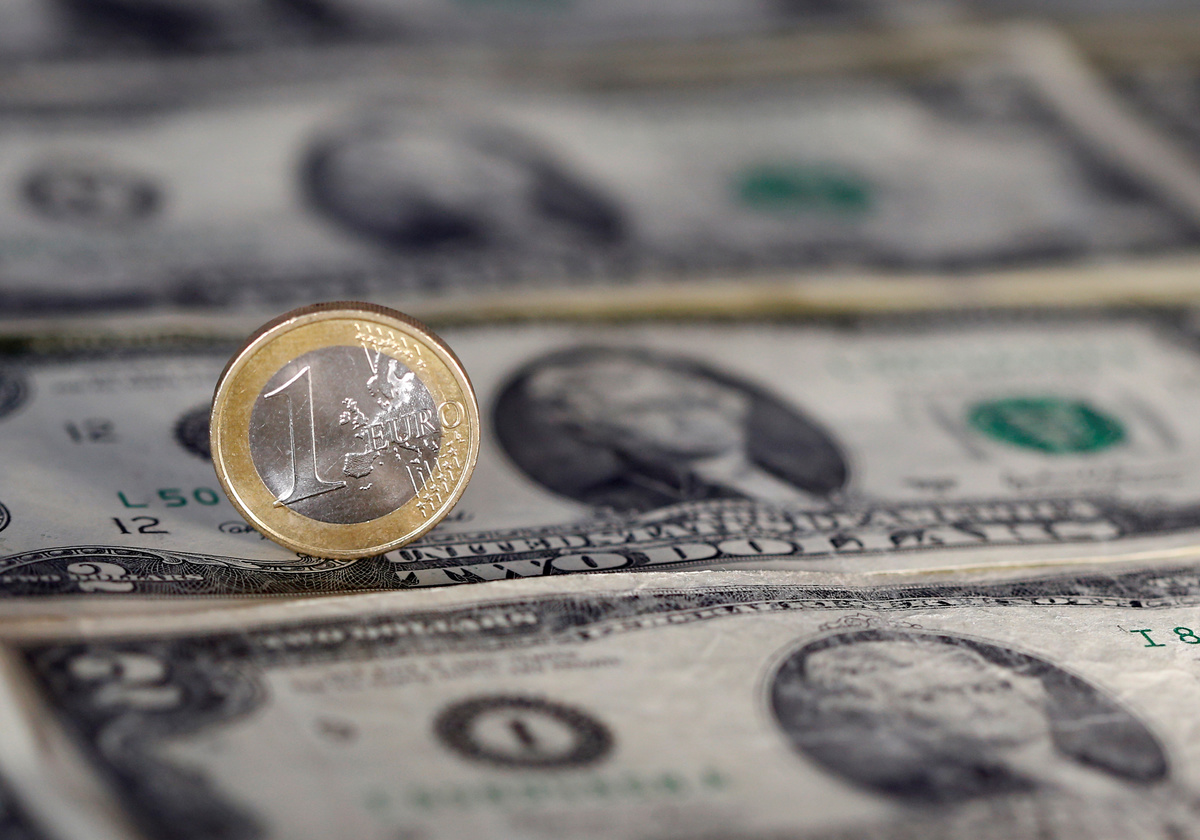
The euro was last down 0.27 percent against the greenback <EUR=> at $1.1577.
The single currency has been hurt by concerns that a significant increase in Italy’s budget will exacerbate the country’s already high debt levels.
Italian daily La Repubblica reported on Monday that the European Commission was set to reject Italy's plans to lift its budget deficit to 2.4 percent of gross domestic product in 2019.
The proposed deficit is three times the previous administration's target.
The U.S. dollar dropped 0.94 percent against the loonie <CAD=> to $1.2783.
The new United States-Mexico-Canada Agreement (USMCA), which avoids tariffs, will make it harder for global auto makers to build cars cheaply in Mexico and is aimed at bringing more jobs to the United States.
"The good news is that the risk of bad news has been removed. I don’t think there’s anything here that really changes the medium term outlook for the Canadian dollar or the Canadian economy. It's just removed an uncertainty," said Osborne.
(Editing by Chizu Nomiyama)