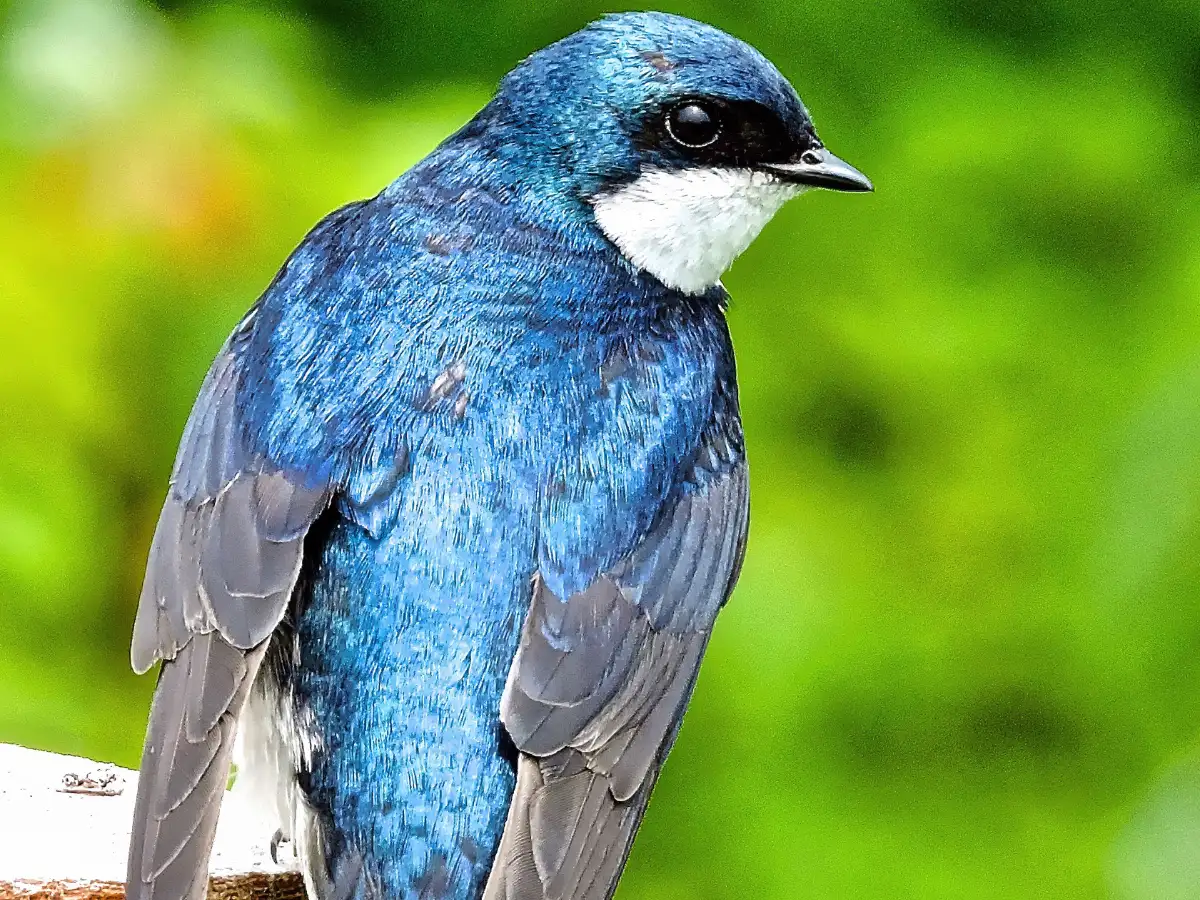
If you’ve noticed fewer bugs splattered on your windscreen on your summer road trips, you're probably not imagining it, and birds are probably feeling that loss more than we are.
A new study, ‘Resource declines shape phenological and morphological responses to climate change,’ led by the University of Michigan, found insect numbers at Canada’s Long Point Bird Observatory have declined by over 60% since the 1970s. As a direct result, tree swallows there are now smaller and produce fewer offspring than previous generations. The research, published in the Proceedings of the National Academy of Sciences, is among the first to examine how biodiversity loss and climate change together are reshaping wild birds, and the researchers say it could point to new ways to help them.
Tree swallows aren't struggling alone. The State of Canada's Birds report shows that aerial insectivores, the birds that catch insects in flight, have declined 59 percent across Canada since 1970, the fastest decline of any bird group in the country. The new University of Michigan study sheds light on why. It’s one of the first to detail how a real insect crash in the wild reshapes a bird species’ body size and reproduction over time.
Why tree swallows are the ultimate insect thermometer
Tree swallows are a rapidly declining species that feed almost exclusively on flying insects, so they are a near-perfect indicator of insect abundance. Tree swallow clutch size is tightly linked to the available insects, noted Charlotte Probst, the study’s lead author and a doctoral student at U-M’s School for Environment and Sustainability. Less insects mean smaller birds plus smaller broods.
The researchers made these discoveries using a rare, decades-long dataset: tree swallow records from 1969 to 2024 and insect abundance data from 1977 to 2011, all collected at Long Point, one of the oldest continuously operating bird observatories in North America. Founded in 1960, it has relied on generations of staff and volunteer scientists to keep the records going.
The researchers were able to draw these conclusions thanks to a rare, decades-long dataset: tree swallow records from 1969 to 2024 and insect abundance data from 1977 to 2011, all collected at Long Point, which, according to Birds Canada, runs the longest continuously operating bird migration monitoring program of its kind in the Americas. It's been gathering data since 1960.