A huge wildfire which has engulfed parts of Alberta province in central Canada may double in size, officials have warned.
The blaze, described by some residents as “hell on earth”, had grown to around 386 square miles by Friday, according to the Alberta provincial government. Smoke from the fire has been detected as far away as the southern US state of Florida.

So far, there have been no deaths reported, but around 80,000 people have been forced to leave their homes, mainly in the town of Fort McMurray where some 1,600 buildings have been burned to the ground.
Alberta's manager of wildfire prevention, Chad Morrison, said there was a "high potential that the fire could double in size" by the end of Saturday. He expected the fire to expand into a more remote forested area northeast and away from Fort McMurray.
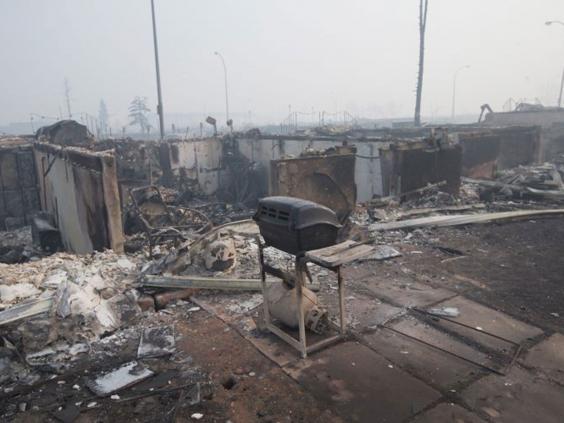
According to Mr Morrison, no amount of resources would put the fire out, and what was needed was rain.
"We have not seen rain in this area for the last two months of significance," he said. "This fire will continue to burn for a very long time until we see some significant rain."
Fanned by high winds, scorching heat and low humidity, the fire grew fast. On Tuesday, it was around 29 square miles and reached 39 square miles by Wednesday. However, on Thursday it was almost nine times that -- 330 square miles -- roughly the size of Calgary, the largest city in Alberta province.
The fire is now so large that it has been creating its own weather conditions, causing “pyrocumulus clouds intense enough to cause lightning", according to meteorologist Eric Holthaus.
More extremely dry conditions and temperatures of 27 Celsius were expected for Saturday along with strong winds, wildfire chief Mr Morrison said – perfect conditions to exacerbate the blaze. However, Mr Morrison said cooler conditions were expected on Sunday and Monday.
Residents forced to flee Fort McMurray, in the heart of Canada's oil sands, were staying in accommodation intended for oil workers, while others headed south to Edmonton.
The military has been overseeing the mandatory evacuation of residents from the area threatened by the fire, with at least 8,000 people airlifted out and around 4,000 more expected to be evacuated on Saturday.
Others escaped in convoys, escorted by the police. About 1,200 vehicles had passed through Fort McMurray by late Friday afternoon, despite a one-hour interruption due to heavy smoke, authorities said.
"It was shocking to see the damaged cars all burned on the side of the road. It made you feel lucky to get out of there," said Jim Dunstan, who was in the convoy with his family.
The mass evacuation also forced as much as a quarter of Canada's oil output offline and was expected to impact the country's economy, which has already been hit by a dramatic fall in the price of oil.
Associated Press contributed to this report