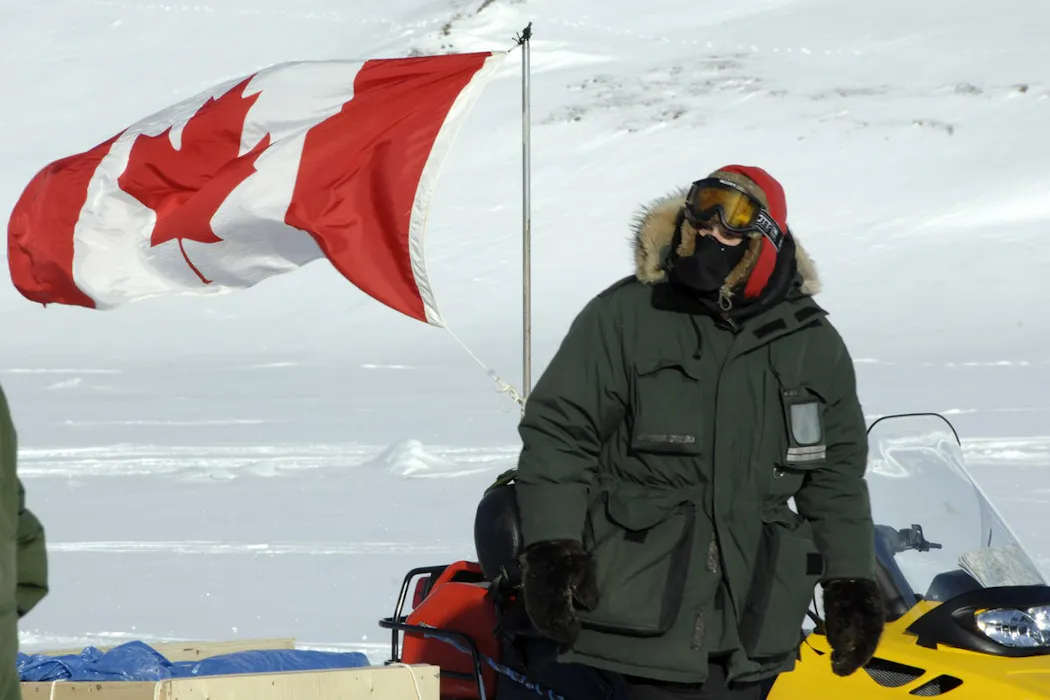
Canada is facing a new reality: Arctic security is no longer just about military presence. It’s increasingly about whether communities in the North have the people, infrastructure and capacity to sustain sovereignty in a rapidly changing region.
In February 2026, the Arctic Summit in Whitehorse brought together policymakers, defence experts and Indigenous leaders to address emerging challenges in the North.
Much of the discussion focused on rising geopolitical threats — particularly Russia’s military activity and China’s growing presence in the Arctic.
But a critical piece of the puzzle is often overlooked: the role of immigration and migration.
Security isn’t just military
A recent Canadian Senate report on Arctic security argues that the concept must extend beyond defence to include environmental, economic and social dimensions, especially the well-being of northern communities.
This reflects a broader shift in thinking. Climate change is opening Arctic waters, increasing shipping traffic and access to natural resources.
At the same time, new threats — including long-range missiles and cyber operations — mean geography alone no longer protects Canada’s North. Security also depends on something more basic: people.
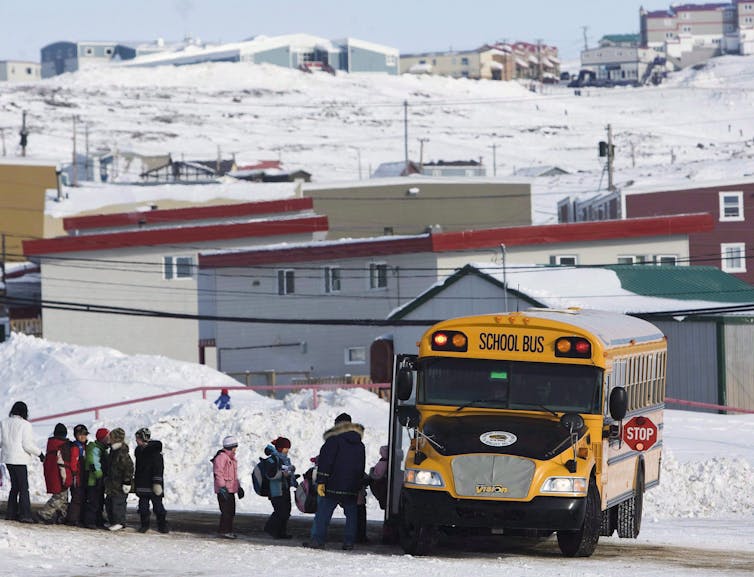
Northern Canada faces significant labour shortages, limited infrastructure and declining or stagnant populations. These challenges affect everything from emergency response and health care to transportation and construction. Without a stable work force and strong communities, Canada’s ability to maintain a consistent presence in the Arctic is weakened.
Immigration/migration as a security tool
Immigration and migration are usually considered part of economic policy. In the Arctic, they’re also a security strategy.
Research shows that immigration can help address demographic and labour challenges in rural and northern regions. However, attracting newcomers is only part of the equation — retaining them remains a major challenge.
Statistics Canada data shows that retention rates vary widely across regions, with northern and smaller communities often struggling to keep newcomers over the long term.
This matters for security. A temporary workforce doesn’t build resilient communities. Long-term settlement does. If newcomers to the North stay, they contribute to infrastructure development, local economies and essential services. They become part of the social fabric that supports everything from search-and-rescue operations to climate adaptation efforts.
Geopolitical situation is changing
The urgency of this issue is rapidly growing. Russia has invested heavily in Arctic military infrastructure while China has declared itself a “near-Arctic state,” increasing its research and economic activities in the region.
Read more: Chinese scientists are increasingly shaping the future of the Arctic amid China’s rising presence
At the same time, Canada is working closely with the United States through NORAD to monitor emerging threats, including hypersonic weapons.
In response, Canada is investing billions in Arctic defence, including surveillance systems and infrastructure upgrades. The federal government has also launched a new Defence Industrial Strategy aimed at strengthening domestic capacity and supply chains.
But these investments require people — skilled workers, engineers, technicians, health professionals and community members — to be effective. Without a strong population base, infrastructure cannot be built or maintained, and defence capabilities cannot be fully realized.
Read more: Indigenous women in Northern Canada creating sustainable livelihoods through tourism
Indigenous partnership is central
Any discussion of immigration and migration in the North must also recognize that Indigenous Peoples are not stakeholders — they are rights holders.
Indigenous communities have lived in the Arctic for thousands of years and play a central role in Canada’s sovereignty. Policies that ignore this reality risk repeating past harms.
The Senate report emphasizes that Arctic security decisions must involve Indigenous governments and reflect their knowledge and priorities. This applies equally to immigration and migration.
Newcomer attraction and settlement must be aligned with Indigenous governance, local economic goals and community needs. When done properly, immigration or migration can support Indigenous-led development and expand opportunities without undermining existing communities.
From policy gap to opportunity
Canada already has some tools in place. Yukon and the Northwest Territories use nominee programs to attract workers, while Nunavut relies more heavily on federal mechanisms. But these systems are not yet fully aligned with Arctic security objectives.
A more co-ordinated approach could link immigration and migration policy with defence planning, infrastructure investment and regional economic development.
For example, new defence infrastructure projects could include workforce strategies that prioritize both local and newcomer employment. Settlement supports — such as housing, language services and community integration — could be expanded to improve retention.
Read more: Canada’s Arctic defence policy update: All flash, no bang
Canada’s Arctic sovereignty has long been associated with geography and military presence. But sovereignty is now also about resilience — the ability of communities to live, work and thrive in the North.
The Centre for Immigrant Research, a Calgary-based Canadian think tank, argues in its recent work on the North that immigration and migration — when thoughtfully designed and implemented in partnership with Indigenous and territorial governments — can play a key role in strengthening regional resilience and national sovereignty.
Therefore, Canada has an opportunity to rethink its approach. While defence investments are essential, they aren’t sufficient on their own. In the Arctic, security ultimately depends on people — and on ensuring they are able to build and sustain long-term lives in the North.

Hamed Kazemzadeh does not work for, consult, own shares in or receive funding from any company or organisation that would benefit from this article, and has disclosed no relevant affiliations beyond their academic appointment.
This article was originally published on The Conversation. Read the original article.