

Can you tumble dry a duvet? As Ideal Home’s Sleep Editor, I’ve tested more than my fair share of duvets, and the answer to whether or not a particular duvet can be tumble-dried is…. maybe.
That’s because the best method of drying your duvet depends on the materials it’s made from and its care instructions. When it comes to how to wash a duvet and get it dry afterwards, a lot of duvets can be washed and tumble-dried in a machine, whilst others need dry-cleaning or line drying.
Here’s how to work out if you can tumble dry the duvet that’s on your bed, and *how* to tumble dry it if the care label gives you the green light. After all, the best duvets don’t come cheap, so it’s important to care for your bedding correctly.

1. Check the care label
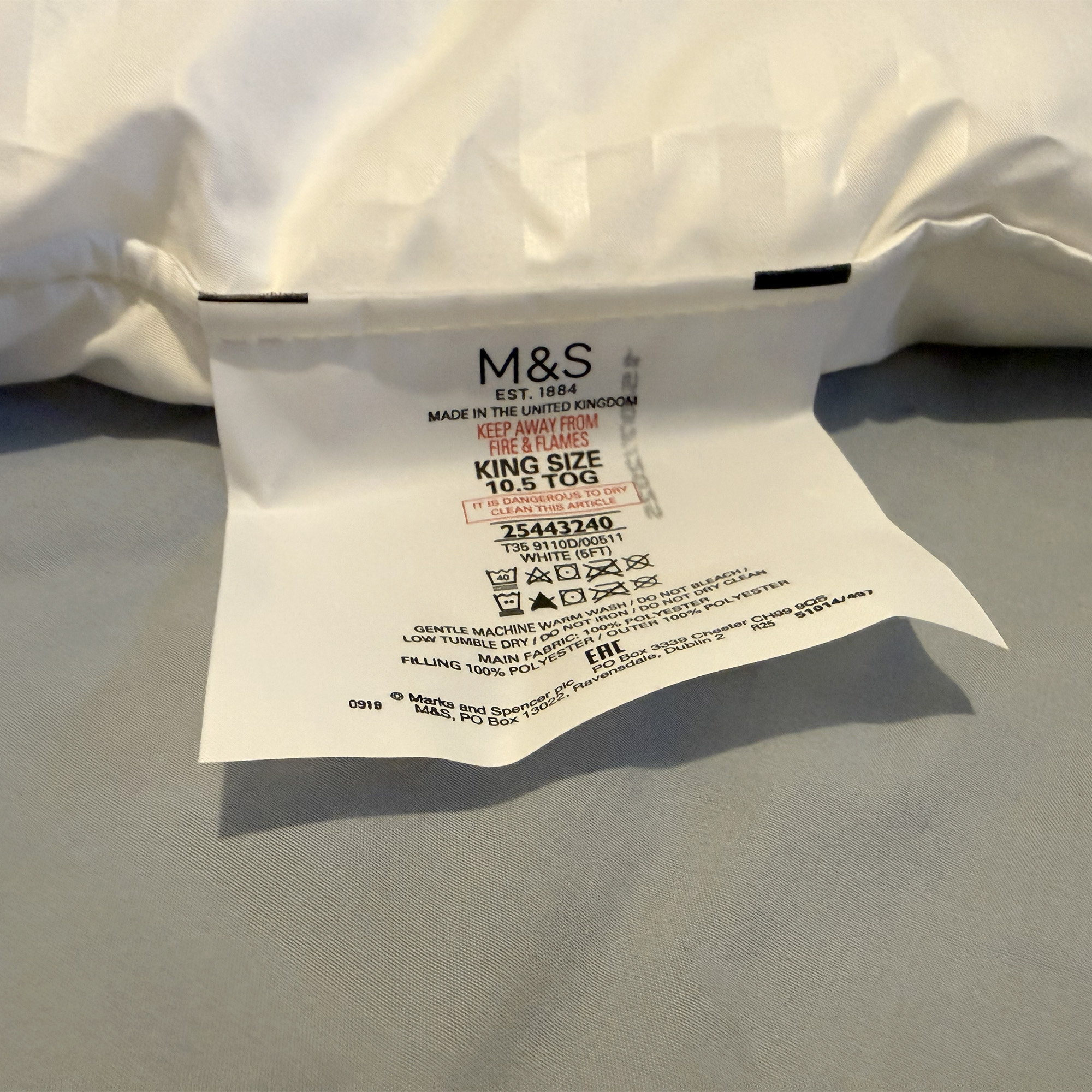
First, check your duvet's care label. You'll usually find this sewn onto one of the corners or the side of your duvet.
The care label will have the manufacturer's instructions for washing and drying your duvet, and it's important to follow the guidelines they offer to keep your duvet looking and feeling its best.
'Always read the instructions on the care label and follow these to ensure you are caring for your bedding correctly,' confirm Emily and Jonathan Attwood, founders of feather-and-down bedding brand scooms.
'Not all duvets are the same,' agrees Petya Holevich, domestic cleaning and laundry expert at cleaning services provider Fantastic Services. 'Some duvets may recommend professional dry cleaning only or have special care instructions'.
As a general rule, synthetic duvets – such as those filled with hollowfibre or microfibre polyester – can be washed and tumble-dried. Feather and down duvets often can too, although they usually need a much lower heat setting, and wool-filled duvets generally need to be line-dried.
However, these aren't hard and fast rules. That's why it's important to check the care label on your particular duvet and follow its individual instructions.
2. Tumble-dry on the lowest heat setting
If your duvet's care label gives you the go-ahead to tumble dry it, then you can pop it into the machine. The care label will also tell you what temperature setting to use.
However, if you want to protect any item you're tumble-drying, then it's generally best to use a low heat setting. This minimises the risk of damaging the material's fibres, and the same applies to a duvet, so if in doubt, start cool.
'Set the dryer to a low or air-dry setting,' agrees Petya. 'The duvet can also be air-dried on a clothesline or drying rack if you can't tumble dry'.
A duvet is a bulky item, so it's also best to avoid overfilling your tumble dryer. Dry the duvet on its own rather than adding in other items at the same time.

3. Check, fluff, or use dryer balls
'Keep in mind that it can take around three or more hours for your duvet to be completely dry,' says Petya. 'While your duvet is in the dryer, check periodically to make sure that the fluff is distributed evenly.'
'Sometimes, you may need to take it out and hand-fluff it,' adds Petya. To do this, pause the dryer, take out the duvet, and give it a good shake. You'll usually be able to tell if the duvet filling has clumped together in one place. If so, gently tease it apart so it's redistributed throughout the duvet.
Redistributing the filling in this way helps the duvet to keep its shape, and will help to speed up the drying process.
'You can also use wool dryer balls in the dryer as they'll help the hot air to circulate more evenly and efficiently,' advise Emily and Jonathan. 'This not only reduces the duvet's drying time but can save you money on your energy bills too, as the dryer doesn't need to be on for so long.'
You can find lots of reasonably priced wool dryer balls, and there are also plastic options. I've rounded up three popular options below.
4. Make sure the duvet is fully dry
Whether you're tumble drying or line drying your duvet, it's important to make sure it's fully dry before you pop it back on the bed.
'Always make sure the duvet is fully dry,' warns Petya. Why? 'Because duvets that aren’t entirely dry carry the risk of mildew development and odour onset'.
Once you're sure that you're duvet is fully dry, it's then time to pop the duvet cover back on and get it back on the bed.
FAQs
How long does it take to tumble dry a duvet?
As you might expect, duvet drying times differ depending on the size of your duvet and on the type of duvet fill involved. Synthetic polyester duvets are usually the quickest to dry, whereas feather and down will take longer.
But as a general rule, ‘a single duvet typically takes between 1.5 to 2 hours to dry, a double duvet 2 to 2.5 hours, and a king orqueen duvet 2.5 to 3 hours,’ advises Gwil Snook, heated laundry expert at AO.com.
Can you tumble dry a down duvet
I've now put a lot of feather and down duvets through Ideal Home's duvet testing process, and I'd say around half of the down duvets I've tested could be tumble dried, and half advised against tumble drying.
To find out for sure, check the down duvet's care label for its washing and drying instructions. Some can be machine-washed and tumble dried, some require hand washing and line drying, and some are dry-clean only.

Why can't I tumble dry my duvet?
If your duvet's care label says no tumble drying, it's likely to be because various elements of it's construction don't respond well to heat.
It may be a synthetic duvet and the manufacturer has found the polyester fill can melt at high heats, or it could be a wool duvet which tends to felt together when machine-washed or tumble dried. Some feather and down duvets are also too delicate to be tumble dried.
However, if you find that you can't tumble dry your particular duvet, don't worry, there are usually still solutions for cleaning it, whether that's dry cleaning, line drying outdoors, or drying it indoors.
If drying indoors, just make sure you lay the duvet down flat on a drying rack and ensure it has good air circulation for faster drying. You can also use one of the best dehumidifiers or the best heated airers to help speed up the drying process.
But heed my parting words of wisdom, having learnt this the hard way. Unless you have a spare duvet to sleep under, I highly recommend washing your duvet first thing in the morning, so that it has the entire day to dry fully, if you can.
Otherwise, you risk a cold sleep or a damp-smelling bedroom, and no one wants that!