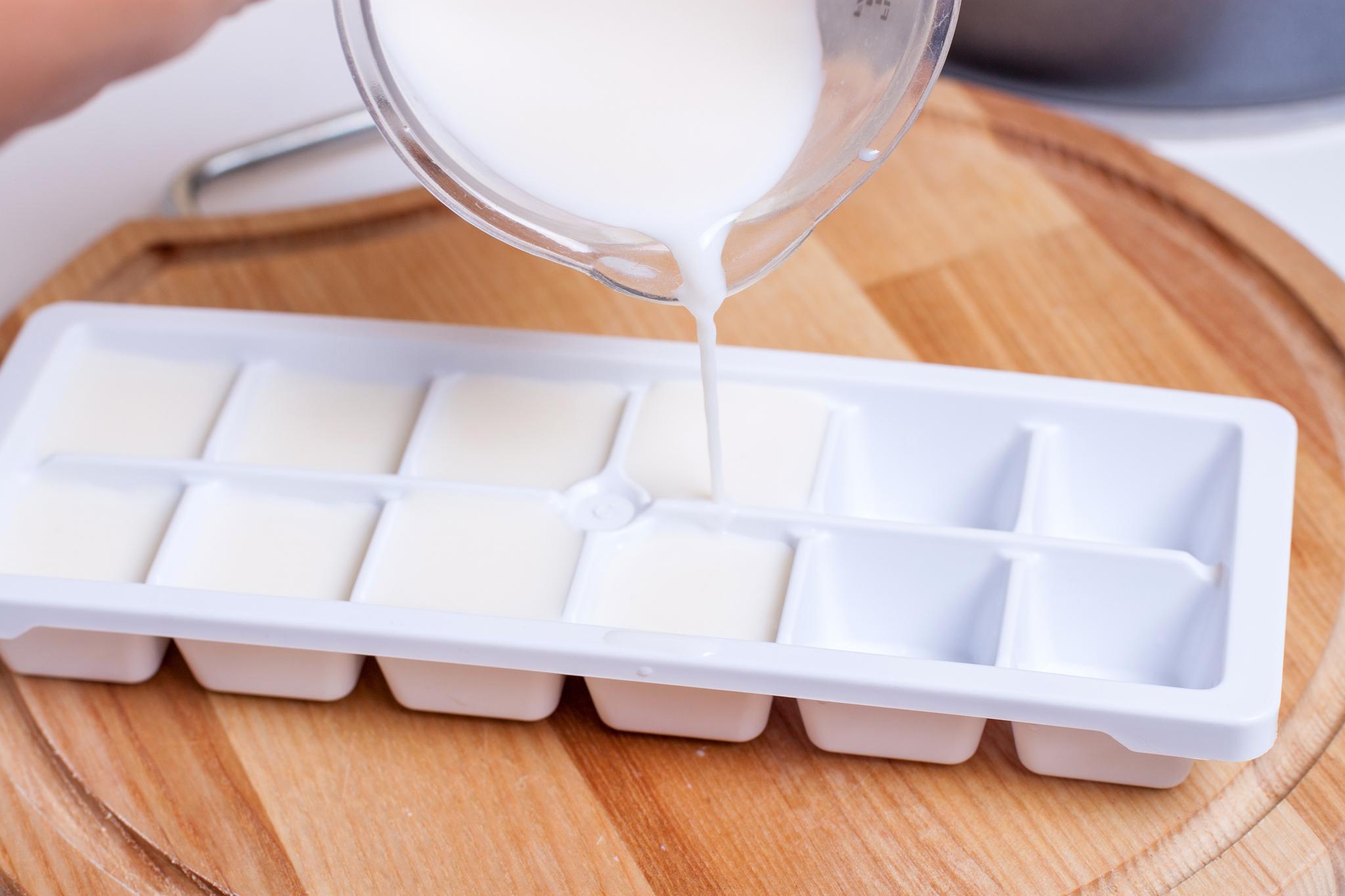
The age-old questions asked in kitchens across the UK: Does this milk smell off? Does milk ever smell good? Can you freeze it? We've found out the truth behind the last of these milk-based mysteries.
According to the Dairy Council for Northern Ireland (DCNI), yes, it is possible to freeze milk, but with certain precautions.
Firstly, it is crucial to freeze milk that is still within its ‘use by’ date. If it’s been open for a few days, and you’re already giving it an inquisitive sniff, it’s probably too late.
The biggest danger when it comes to freezing milk is that it expands. For this reason you should never freeze it in a glass bottle because it will crack. Giving the carton extra space in the freezer also caters for this expansion, and stops it getting wedged in the freezer.
Another thing to bear in mind is that milk turns yellow when frozen, so do drink yellow milk but don't eat yellow snow.
Whole milk doesn’t freeze as well as semi-skimmed because of its higher fat content. This is due to fat requiring a much lower temperature than the -18 degrees that typical household freezer can offer.
For years, Mumsnet has been the platform for milk-freezing-based debate. Here are some dos and don’ts given by mums up and down the country:
- Freezing the milk upright deals with potential leakage issues.
- Defrosting can take an eternity in the fridge, so put it in cold water or on the draining board if time is of the essence.
- Giving it a good shake once defrosted gets rid of the watery layer which can form at the top.
- Once it has defrosted, it’s important to use it within a couple of days. Freezing it doesn’t magically extend its life when it’s back in liquid form.
- Organic milk doesn’t go as yellow as non-organic.
- Do not defrost in the microwave, or use any other source of heat.
- Like milk, butter also freezes well.
Beware though; unlike milk, some cheeses do not fare well when frozen. While harder cheeses will probably be fine, softer cheeses, such as cottage cheese or cream cheese, will not.
Even hard cheeses can go crumbly when frozen, so the DCNI recommend grating your cheese before freezing and storing it in an airtight food bag. This is perfect for sandwiches, toppings and sauces, one Mumsnet commenter said.
This article was originally published in December 2017